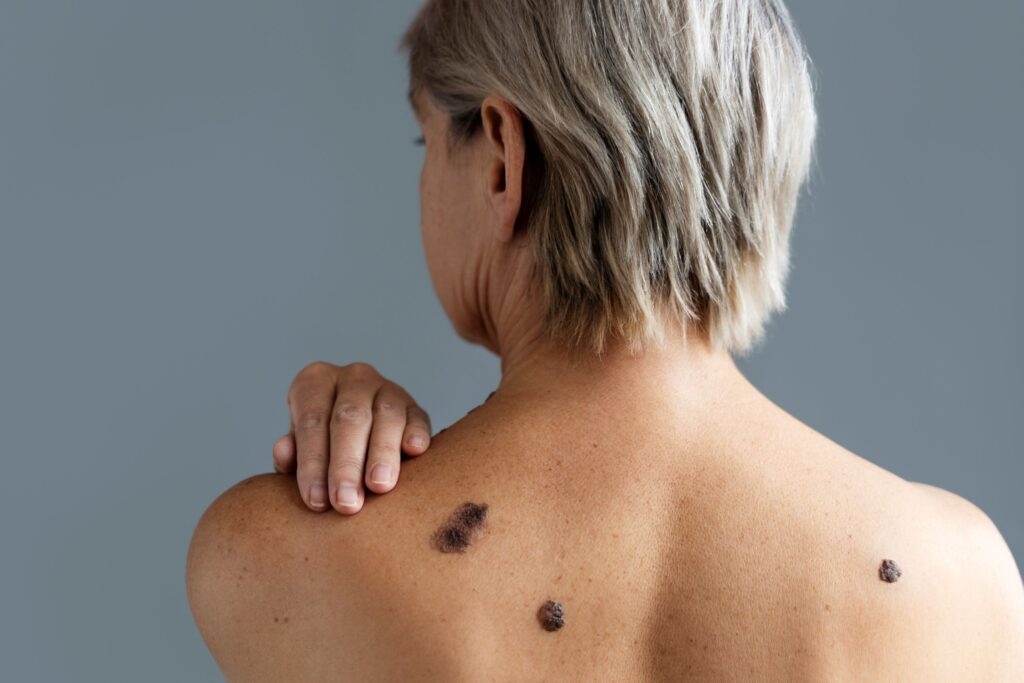
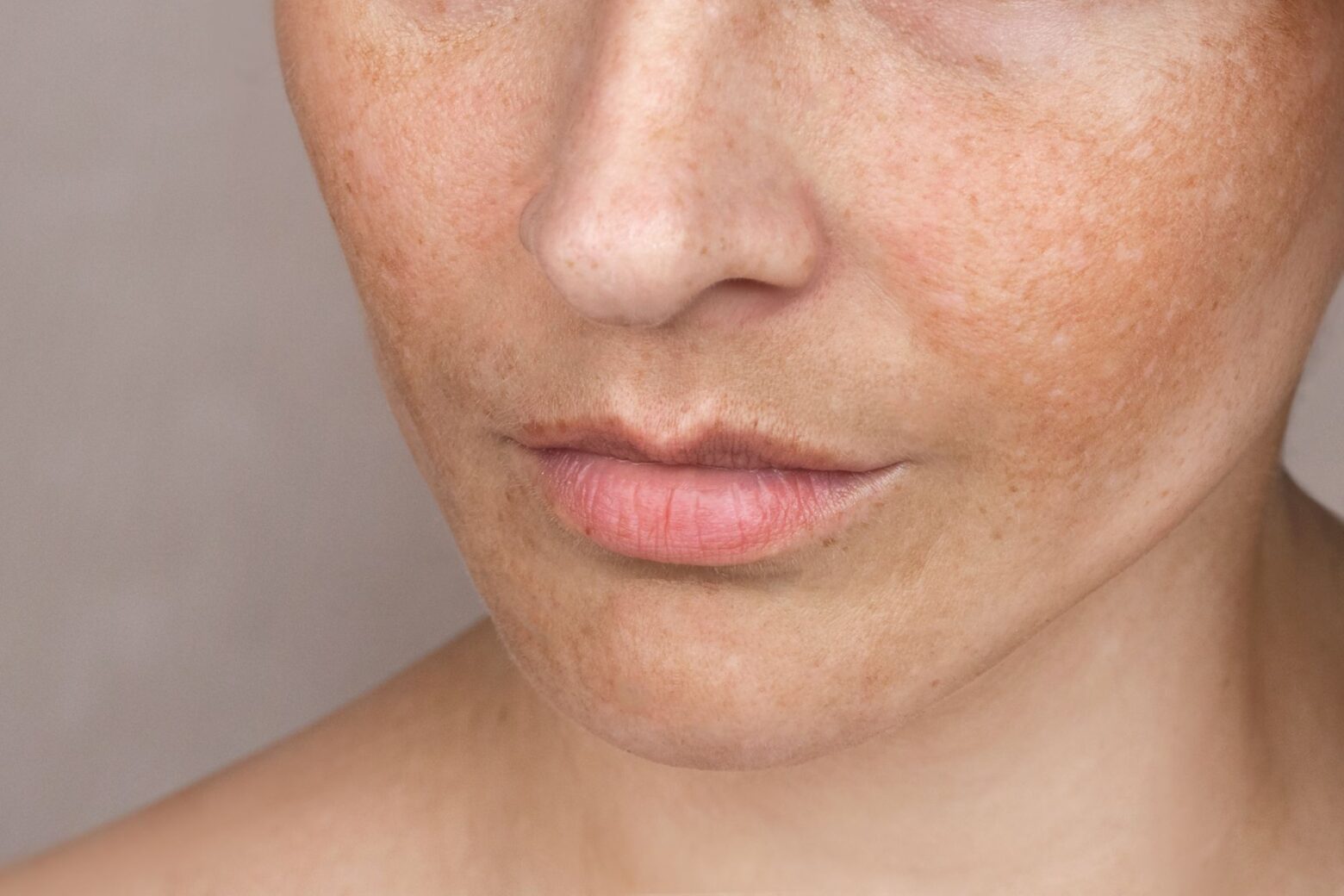
Cutaneous melanoma accounts for 2% of all malignant tumors diagnosed in Spain. Although less common than other types of skin cancer, it is the most aggressive. Detecting it early is crucial.
Melanoma is a type of skin cancer that originates in melanocytes, the cells that produce melanin, the pigment that gives color to the skin, hair, and eyes. While it can appear anywhere on the body, it is more common in areas exposed to the sun. In men, it usually appears more frequently on the trunk (chest and back) and in women, on the legs and arms.
It can also develop in less exposed areas, such as the palms of the hands, the soles of the feet, under the nails, or on mucous membranes (mouth, nose, genitals). Melanoma is less common than other types of skin cancer, such as basal cell carcinoma and squamous cell carcinoma, but it is much more aggressive and has a greater chance of spreading to other parts of the body (metastasis) if it is not detected and treated early. Melanoma accounts for only 1% of all skin cancers, but it is responsible for the majority of deaths related to this type of cancer.
Symptoms of melanoma
Recognizing the signs of melanoma is essential for early detection. The “ABCDE” rule can help you identify suspicious moles or new, unusual-looking pigmented bumps on your skin:
A for Asymmetry:
half of the mole does not match the other half.
B for Borders:
the edges of the mole are jagged, blurred, or irregular.
C for Color:
the mole features different shades of brown, black, blue, red, or white. A color variation within the same mole is an important warning sign.
D for Diameter:
the mole has a diameter greater than 6 millimeters. However, some melanomas can be smaller.
E for Evolution:
the mole changes in size, shape, color, or elevation, or presents new symptoms such as itching, bleeding, or crusting. Any change, however small, should be evaluated.
It is important to remember that not all moles with these characteristics are melanomas, but any change in an existing mole or the appearance of a new mole should be evaluated by a dermatologist. In addition to the ABCDE rule, other warning signs may include:
A mole that stands out from the rest.
A mole that itches, hurts, or bleeds.
A sore that does not heal.
A dark spot under a nail.
Redness or swelling around a mole.
Melanoma classification
Melanoma is classified into different types according to its appearance and how it grows:
Superficial spreading melanoma: it is the most common type and usually appears as a flat or slightly raised patch with irregular edges and varied colors.
Nodular melanoma: it grows rapidly and appears as a raised lump, often black or dark brown in color.
Lentigo maligna melanoma: it develops slowly, usually on the face or neck of older people, as a flat, light brown patch that darkens over time.
Acral lentiginous melanoma: it appears on the palms of the hands, the soles of the feet, or under the nails, and is more common in people with dark skin.
Amelanotic melanoma: it lacks pigment and can be pink, red, or even the same color as the skin, making it difficult to detect.
Causes of melanoma
Exposure to ultraviolet (UV) radiation from the sun or tanning beds is the main cause of melanoma. UV radiation damages the DNA of skin cells, which can lead to mutations that result in cancer. Intermittent and intense sun exposure, such as sunburn, especially during childhood and adolescence, significantly increases the risk of melanoma. The use of tanning beds, regardless of age, also increases the risk.
In addition to exposure to UV radiation, other risk factors include:
Fair skin: people with fair skin, light eyes, and blond or red hair have a higher risk of getting sunburned or developing freckles more easily.
Family history of melanoma: having a first-degree relative (mother, father, sibling, or child) with melanoma increases the risk.
Many moles or freckles: having more than 50 moles increases the risk. Freckles, especially large and irregular ones, are also a risk factor.
Weakened immune system: people with weakened immune systems, such as those who have received an organ transplant, have a higher risk.
History of severe sunburn, especially in childhood.
Age: although melanoma can occur at any age, it is more common in older adults.
Diagnosis of melanoma
The diagnosis of melanoma begins with a physical examination of the skin by a dermatologist. Many dermatologists use a technique called dermatoscopy to observe areas of the skin more clearly.
If a suspicious mole is found, a portion of the suspicious area is removed (biopsy). There are different types of skin biopsy: shave biopsy, needle biopsy, incisional biopsy, or excisional biopsy. If the biopsy confirms the diagnosis of melanoma, in some cases additional tests may be performed to determine the extent of the cancer, such as sentinel lymph node biopsy, computed tomography (CT), magnetic resonance imaging (MRI), and positron emission tomography (PET).
At HM Hospitales, we have expert dermatologists and advanced technology for the accurate diagnosis of melanoma. We use techniques such as dermatoscopy, a non-invasive examination that allows visualization of the internal structures of moles, and excisional biopsy, which removes the entire mole for analysis.
Melanoma treatment
The treatment of melanoma depends on the stage of the cancer, its location, the patient’s overall health, and other factors. Treatment options may include:
Surgery It is the main treatment for early-stage melanoma. The tumor and a margin of healthy skin are removed. In more advanced stages, lymph node surgery may be necessary.
Radiotherapy It uses high-energy X-rays to destroy cancer cells. It can be used after surgery to remove any remaining cancer cells or to treat melanoma that has spread to other parts of the body.
Targeted therapy It uses medications that target specific mutations in cancer cells. These medications can be more effective and have fewer side effects than chemotherapy.
Immunotherapy It helps the immune system fight cancer. It can be used to treat advanced or recurrent melanoma.
Chemotherapy It uses medications to destroy cancer cells. It can be administered intravenously or orally. It may be an option to use when immunotherapy or targeted therapy does not work.
The management of melanoma requires a multidisciplinary team of experts in its diagnosis and treatment, including dermatologists, medical and surgical oncologists, radiation oncologists, and other health professionals. Early diagnosis and treatment are crucial for a better prognosis and to minimize the impact of the disease on the patient’s life.
At HM Hospitales, we offer a comprehensive range of treatments for melanoma, tailored to each patient’s individual needs. We have specialists in Mohs micrographic surgery, a precise technique for removing skin cancer, intensity-modulated radiation therapy, which minimizes damage to surrounding healthy tissue, and the most innovative therapies, such as immunotherapy and targeted therapy.https://www.hmhospitales.com/especialidad/dermatologia/
Prognosis and complications of melanoma
The prognosis for melanoma depends on the stage of the cancer at the time of diagnosis. Early detection is crucial for a good prognosis. If melanoma is detected and treated at an early stage, the chances of a cure are high. However, if the cancer has spread to other parts of the body, the prognosis is less favorable.
Complications of melanoma may include:
Metastasis: spread of cancer to other organs, such as the lungs, liver, or brain.
Recurrence: the cancer can recur after treatment.
Lymphedema: swelling in the arm or leg due to the removal of lymph nodes.
Melanoma prevention
Melanoma prevention focuses on protecting oneself from exposure to UV radiation:
Avoid direct sun exposure, especially during the middle of the day (between 11 a.m. and 4 p.m.).
Use sunscreen with an SPF of 30 or higher, even on cloudy days.
Wear wide-brimmed hats, long-sleeved shirts, and long pants that protect the skin from the sun’s rays.
Avoid tanning beds.
Check the skin regularly for changes in existing moles or the appearance of new moles.
See a dermatologist for an annual skin exam.
Remember that this article is for informational purposes only and does not replace professional medical advice. If you suspect you have melanoma, consult a specialist to obtain an accurate diagnosis and an appropriate treatment plan tailored to your needs.
Our doctors
Contact and make an appointment with the professionals in this area