Early detection of breast cancer is crucial for successful treatment. At HM Hospitals, we understand your concerns and offer clear, accessible information about breast MRI, a valuable tool in diagnosing this disease.
We want you to feel informed and at ease, knowing you have the technology and support to care for your health.
Below, we explain how MRI can diagnose breast cancer and why it can be helpful.
What Is a Breast MRI, and How Can It Help You?
A breast MRI is an advanced, non-invasive imaging technique that uses a strong magnetic field and radio waves to create detailed images of the inside of your breasts. Unlike mammography, which uses X-rays, MRI does not expose you to ionising radiation, making it a safe option for obtaining precise images of breast tissue.
This procedure is beneficial for visualising areas that might be missed on a mammogram, especially in women with dense breast tissue. Dense breast tissue can make it harder to detect minor abnormalities on mammograms, as both normal and tumour tissue appear white in the images. MRI, conversely, can better differentiate between these tissues, increasing the likelihood of detecting tumours at early stages.
What Happens During a Breast MRI?
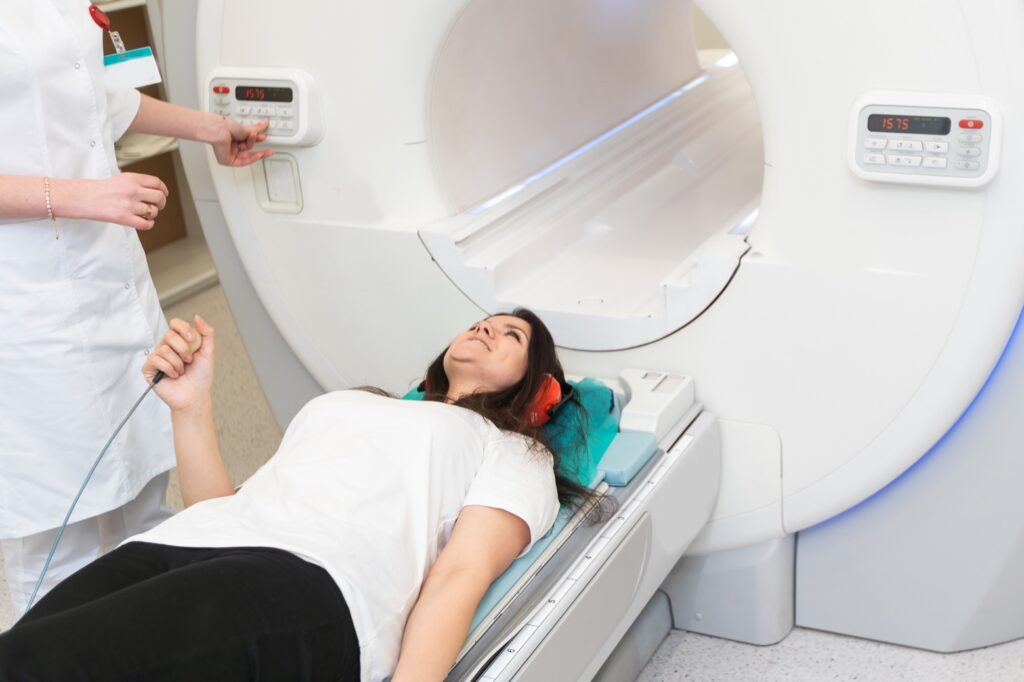
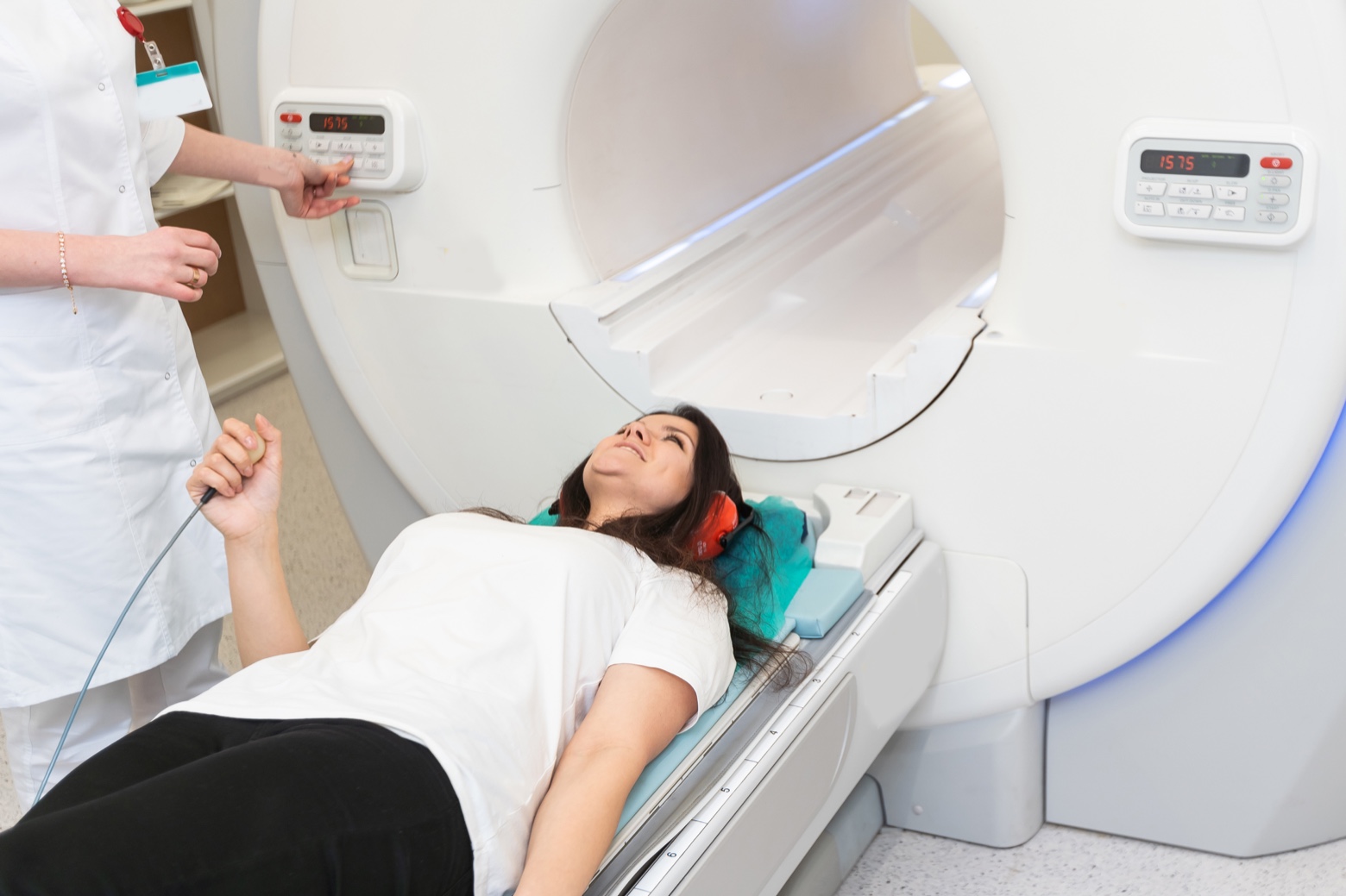
During the MRI, you will lie face down on a unique table that slides into the MRI machine, a large tube-shaped device open at both ends; it’s essential to remain as still as possible to obtain clear, high-quality images. A contrast agent, a safe substance that helps highlight tissues and blood vessels in the pictures, will be administered through an intravenous (IV) line in your arm or hand, making it easier to identify potential abnormalities.
The test usually takes between 30 and 60 minutes, and while the MRI machine can produce loud noises, the procedure is generally painless. If you experience claustrophobia or anxiety, inform the medical staff, who will provide the necessary support to ensure your comfort. Sometimes, relaxation techniques or even mild sedation may be used to minimise discomfort.
When Is a Breast MRI Recommended?

Breast MRI is not used as a primary screening tool for all women. Your doctor may recommend an MRI if:
- You are at high risk of breast cancer: This includes women with genetic mutations such as BRCA1 or BRCA2, a family history of breast cancer, or a personal history of the disease.
- You need further evaluation after an abnormal mammogram or ultrasound. MRI can help clarify findings from other tests and determine if a biopsy is required.
- You have already been diagnosed with breast cancer. In this case, an MRI can help determine the extent of the tumour, the size of the tumour, and whether it has spread to the lymph nodes. This information is crucial for planning treatment.
- You have breast implants: MRI can help detect ruptures or leaks in the implants.
- If you have a suspicious lump in your breast, an MRI, along with other tests like mammography and ultrasound, can help determine the nature of the lump.
Does MRI Always Detect Breast Cancer?
Breast MRI is a highly sensitive diagnostic tool capable of detecting microscopic abnormalities in breast tissue. However, it’s essential to understand that no medical test is perfect, and MRI is no exception. While it is highly effective, there are scenarios where the results may be less accurate.
One such scenario is the occurrence of false positives. A false positive occurs when the MRI identifies an abnormality that appears suspicious for cancer but, upon further evaluation, such as a biopsy, turns out to be benign. This can cause unnecessary anxiety and worry, but it’s important to remember that false positives are more common in women with dense breast tissue or a history of previous breast surgeries.
On the other hand, false negatives, though rare, can also occur. A false negative happens when the MRI fails to detect a present cancer. This can occur due to the tumour’s location or size or the breast tissue’s specific characteristics.
If your MRI result is positive, your doctor will explain the next steps in detail, which usually include additional tests such as a biopsy to confirm or rule out cancer. Don’t panic if the result is positive, as it doesn’t necessarily mean you have cancer. Trust the expertise of your medical team, who will guide and support you through every stage of the process.
How Can I Prepare for a Breast MRI?

Preparing for a breast MRI is straightforward, but following some recommendations will help ensure a more comfortable experience and high-quality images. Your doctor will provide specific instructions, but here are some general tips:
- Inform your doctor about any implanted medical devices: If you have a pacemaker, artificial heart valve, cochlear implants, surgical metal clips, or other devices, it’s essential to inform your doctor before the test. Some devices may be affected by the MRI’s magnetic field.
- Remove all metal objects: Before entering the MRI room, you must remove all jewellery, watches, piercings, hairpins, dentures, and other metal objects. Metal can interfere with the images and, in some cases, even pose a safety risk.
- Inform your doctor about allergies or medical conditions: If you have allergies to any medications, especially gadolinium (the contrast agent used in MRI), claustrophobia, kidney disease, or other medical conditions, it’s essential to let your doctor know.
- Discuss your medications: Some medications may interfere with the MRI. Consult your doctor about whether you must stop any medicines before the test.
- Follow dietary instructions: Your doctor may advise you to fast for a few hours before the MRI.
- Arrive early: Arriving ahead will allow you to complete the necessary paperwork and prepare calmly for the test.
- Please wear comfortable clothing: We recommend wearing comfortable, metal-free clothing.
- Relax: MRI is a painless procedure. Take deep breaths and try to relax during the scan. If you feel claustrophobic, inform the medical staff, who will support you.
At HM Hospitals, we offer a comprehensive approach to your breast health. We have state-of-the-art MRI equipment, and a team of expert radiologists specialised in breast imaging. If you have any questions about breast MRI or breast cancer in general, don’t hesitate to contact us. We’re here to support you every step of the way.
Remember: This article is for informational purposes only and does not replace medical consultation. If you have any doubts, consult a healthcare professional.