Craniopharyngioma is a type of benign brain tumor that originates near the pituitary gland, a vital structure at the base of the brain that controls many hormonal functions. A craniopharyngioma develops from embryonic cell remnants of Rathke’s pouch, a structure that gives rise to the pituitary gland during fetal development. These cellular remnants can persist and, in some cases, begin to grow uncontrollably, forming a tumor. Craniopharyngioma is usually slow-growing and is located near the pituitary gland and the optic chiasm (the point where the optic nerves cross). This proximity to vital structures explains the variety of symptoms it can cause, affecting vision, growth, and hormonal function.
It is estimated to account for between 1.2% and 4% of all brain tumors in children, making it a relatively rare condition but with a significant impact on patients’ quality of life.
Symptoms of craniopharyngioma
The symptoms of craniopharyngioma can manifest in various ways, and their intensity varies according to the size and location of the tumor, as well as the patient’s age. Some symptoms may appear early in the course of the disease, while others develop as the tumor grows and puts pressure on the surrounding structures.
Initially, patients may experience headaches, nausea, and vomiting, similar to those of a migraine. Vision problems, such as blurred vision, double vision, or loss of peripheral vision (hemianopsia), are also common in the early stages.
As the tumor grows, hormonal alterations may occur, which manifest in different ways depending on the patient’s age. In children, growth may be affected, resulting in short stature. Puberty may be early or delayed. In adults, hormonal problems can include menstrual irregularities in women, erectile dysfunction in men, diabetes insipidus (excessive thirst and frequent urination), and hypothyroidism (fatigue, weight gain, cold intolerance). Behavioral changes, such as irritability, lethargy, or sleep disturbances, can also be a sign of craniopharyngioma.
Craniopharyngioma classification
Craniopharyngioma is classified into two main types according to its histological characteristics:
Adamantinomatous: this type is more common in children and is characterized by the presence of calcifications, cholesterol crystals, and a “cauliflower”-like appearance on magnetic resonance imaging.
Papillary: this type is more common in adults and usually presents as a solid tumor without calcifications.
Causes of craniopharyngioma
Despite advances in research, the exact causes of craniopharyngioma are still not fully known. It is not considered a hereditary disease, meaning it is not passed from parents to children. It is believed to originate from an abnormal proliferation of residual cells in Rathke’s pouch, but the factors that trigger this uncontrolled growth are unclear.
Since the cause of craniopharyngioma is unknown, no specific risk factors have been identified that increase the likelihood of developing the disease. Age is a factor to consider, as craniopharyngioma can appear at any time in life, but it is more common in children and older adults.
Complications of craniopharyngioma
Craniopharyngioma, due to its location and growth, can cause various complications that affect health in the short and long term. Some of the most common complications include:
Hormonal deficiencies: compression or damage to the pituitary gland can cause hormonal deficiencies that require lifelong treatment with hormone replacement. These deficiencies can affect growth, sexual development, metabolism, thyroid function, and adrenal function.
Vision problems: pressure from the tumor on the optic chiasm can cause vision loss, double vision, or visual field disturbances. In some cases, vision loss may be permanent.
Hydrocephalus: the tumor can obstruct the flow of cerebrospinal fluid, causing hydrocephalus. This accumulation of fluid in the brain can increase intracranial pressure and cause headaches, nausea, vomiting, and, in severe cases, brain damage.
Obesity: damage to the hypothalamus, a brain structure that regulates appetite and metabolism, can cause hypothalamic obesity. This condition is characterized by uncontrolled and difficult-to-treat weight gain.
Cognitive problems: craniopharyngioma and its treatment can affect cognitive functions, such as memory, concentration, and learning. These problems can be temporary or permanent.
Diabetes insipidus: a deficiency of the antidiuretic hormone (ADH), produced by the pituitary gland, can cause diabetes insipidus. This condition is characterized by excessive production of dilute urine and increased thirst.
It is essential to seek medical attention if a craniopharyngioma is suspected. Early diagnosis and treatment can help to minimize complications and improve quality of life.
Diagnosis of craniopharyngioma
The diagnosis of craniopharyngioma is based on a combination of clinical evaluation, imaging tests and, in some cases, biopsy. The diagnostic process generally begins with a medical consultation in which the patient’s symptoms and medical history are reviewed. Subsequently, imaging tests are performed to visualize the tumor and determine its characteristics.
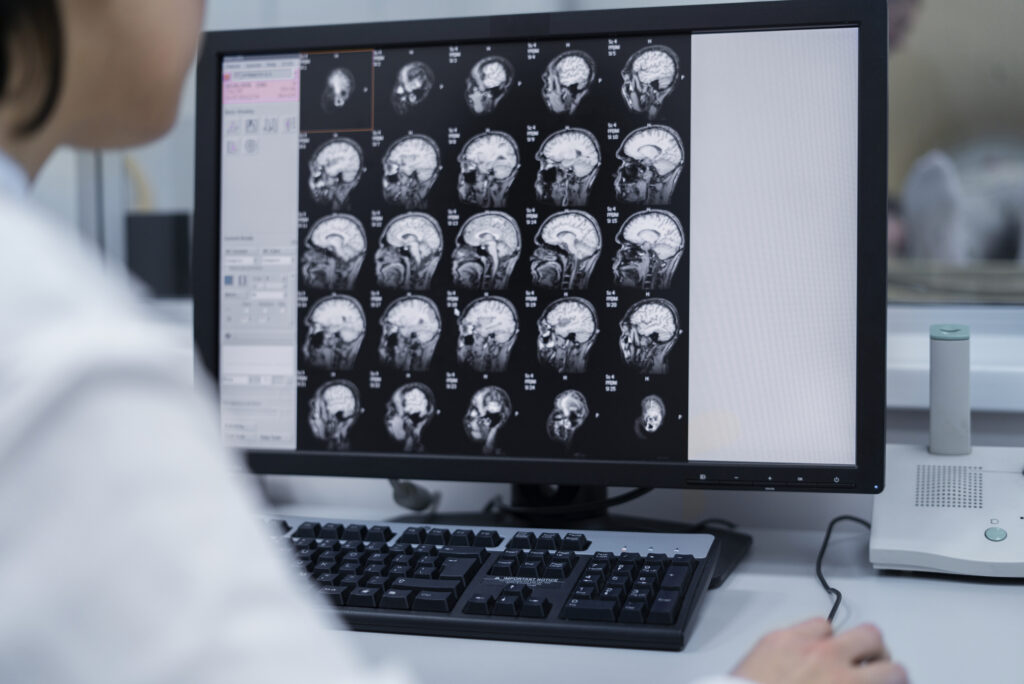
Brain magnetic Resonance Imaging (MRI): it is the most commonly used imaging test to diagnose craniopharyngioma. It provides detailed images of the brain and pituitary gland, allowing visualization of the tumor, its size, location, and relationship to surrounding structures. MRI can detect the presence of calcifications, cysts, and solid components within the tumor, which helps to differentiate between the adamantinomatous and papillary types. In addition, MRI with gadolinium contrast can improve the visualization of the tumor and its blood vessels.
Brain computerized tomography (CT scan): CT scans can be useful for detecting calcifications within the tumor, a common feature in adamantinomatous craniopharyngioma. However, MRI generally provides more detailed information about the tumor and surrounding structures.
Endocrine tests: since craniopharyngioma can affect pituitary gland function, endocrine tests are performed to evaluate hormone levels. These tests may include blood tests to measure hormone levels such as growth hormone (GH), adrenocorticotropic hormone (ACTH), thyroid-stimulating hormone (TSH), luteinizing hormone (LH), follicle-stimulating hormone (FSH), and prolactin. Hormonal deficiencies may indicate the need for hormone replacement therapy.
Biopsy: in some cases, a biopsy may be performed to confirm the diagnosis. A biopsy involves removing a small sample of the tumor for microscopic analysis. This procedure can be performed through open surgery or through a minimally invasive technique such as stereotactic biopsy.
Differential diagnosis is important to rule out other conditions that can cause similar symptoms, such as pituitary adenomas, Rathke cysts, and gliomas.
Craniopharyngioma treatment
The treatment of craniopharyngioma is managed with a multidisciplinary approach, where the choice of therapeutic strategy is based on a thorough evaluation of each case, considering factors such as the type and size of the tumor, its precise location, the patient’s age, and their overall health status. The main goal of treatment is to control tumor growth, relieve symptoms, and minimize the risk of long-term complications. The main treatment options include surgery, radiotherapy, and pharmacological therapy, which can be used individually or in combination.
Therapy: physical, occupational, and psychological therapy can be beneficial for patients with craniopharyngioma.
Surgery: it is the first-line treatment for most craniopharyngiomas and its objective is the total or partial removal of the tumor. The extent of the resection depends on the location of the tumor and its relationship to critical structures such as the optic chiasm, the pituitary gland, and the hypothalamus. There are different surgical approaches, including craniotomy, which involves opening the skull to access the tumor, and transsphenoidal surgery, a minimally invasive technique that accesses the tumor through the nose and paranasal sinuses. At HM Hospitales, we offer minimally invasive surgery using the Da Vinci robot, which provides greater precision and faster recovery. This robotic system allows the surgeon to perform more precise movements in confined spaces, minimizing damage to surrounding tissues. Transsphenoidal surgery is especially suitable for tumors located in the sella turcica, where the pituitary gland is located. In cases of larger tumors or those with suprasellar extension, craniotomy may be the preferred option. The choice of surgical approach is made on an individual basis, considering the characteristics of the tumor and the patient’s preferences.
Radiotherapy: it can be used after surgery to destroy any remaining tumor cells or as the primary treatment if surgery is not possible. There are different types of radiotherapy, such as external beam radiotherapy and stereotactic radiosurgery (Gamma Knife or CyberKnife). At HM Hospitales, we have state-of-the-art radiotherapy, including intensity-modulated radiotherapy (IMRT) and image-guided radiotherapy (IGRT), which allow for greater precision and effectiveness in treatment. The choice of type of radiotherapy is made on an individual basis, considering the characteristics of the tumor and the patient’s general condition.
Medications: drug therapy can be used to control the symptoms of craniopharyngioma or to treat hormonal deficiencies caused by the tumor. In some cases, medications can be used to reduce tumor size, such as kinase inhibitors, which block the signals that promote tumor growth. Hormone replacement therapy is essential for patients with hormonal deficiencies caused by the pressure of the tumor on the pituitary gland. This treatment may include thyroid hormones, glucocorticoids, mineralocorticoids, and sex hormones, depending on the individual needs of the patient. Our team of endocrinology specialists can provide personalized hormone treatment. In some cases, medications can be used to control symptoms such as headaches, nausea, and vomiting.
Intracystic therapy: it is an option for cystic craniopharyngiomas, which contain fluid inside. This procedure involves inserting a catheter into the cyst to drain the fluid and, in some cases, injecting medication directly into the cyst. Different agents, such as alpha interferon, bleomycin, or radioisotopes, can be used to reduce the size of the cyst and control tumor growth. This therapy can be especially useful in patients who are not candidates for surgery or conventional radiotherapy.
Other therapies: new therapies for craniopharyngioma are being studied, including targeted therapies that focus on specific molecular pathways that drive tumor growth. An example is the use of BRAF and MEK inhibitors in papillary craniopharyngiomas with BRAF gene mutations. Immunotherapy, which stimulates the immune system to fight cancer, is also being explored as a possible treatment option. These advances in research offer new hope for patients with craniopharyngioma.
Craniopharyngioma treatment often requires a multidisciplinary approach involving neurosurgeons, endocrinologists, radiation oncologists, ophthalmologists, and other specialists. The medical team will work together to develop a personalized treatment plan that addresses the patient’s individual needs.
Remember that this article is for informational purposes only and does not replace professional medical advice. If you suspect you have craniopharyngioma, consult a specialist to obtain an accurate diagnosis and an appropriate treatment plan tailored to your needs.
Our doctors
Contact and make an appointment with the professionals in this area