Bladder cancer develops when the cells lining the bladder—called urothelial cells—begin to grow abnormally and uncontrollably. This uncontrolled growth can form a tumor that, over time, can invade other parts of the body. Bladder cancer affects the patient’s health by interfering with normal urinary function and, in advanced cases, can compromise the function of other organs.
According to the World Health Organization (WHO), it is one of the most common types of cancer worldwide.
Symptoms of bladder cancer
The symptoms of bladder cancer can vary, and some people may not experience any symptoms in the early stages. It is important to be attentive to any changes in urinary habits. Some of the most common symptoms are:
Blood in the urine (hematuria):
it is the most common symptom, and can be visible or microscopic (only detectable with a urine test).
Pain or burning sensation when urinating.
Frequent urination.
Urgent need to urinate, even when the bladder is not full.
Feeling of not being able to completely empty the bladder.
Pain in the lower back or abdomen:
(in more advanced stages).
It is important to note that these symptoms can be caused by conditions other than bladder cancer. The severity and presentation of symptoms can vary from person to person.
Classification of bladder cancer
Bladder cancer is primarily classified into two categories based on the depth of tumor invasion into the bladder wall, non-muscle-invasive bladder cancer and muscle-invasive bladder cancer. This classification is fundamental for determining the course of treatment and prognosis.
In non-muscle-invasive bladder cancer (NMIBC) the tumor cells are confined to the superficial layers of the bladder, without invading the muscular layer. NMIBC is subdivided into:
Carcinoma in situ (Tis): the cancer cells are found only in the innermost layer of the bladder, without invading the underlying connective tissue.
Stage Ta: the tumor is located in the inner layer of the bladder and has not invaded the lamina propria (layer of connective tissue beneath the urothelium).
Stage T1: the cancer has invaded the lamina propria, but not the muscular layer.
Furthermore, in muscle-invasive bladder cancer (MIBC), the tumor invades the muscular layer of the bladder and has a higher risk of spreading to other parts of the body (metastasis). MIBC is classified into:
Stage T2: the cancer has invaded the muscular layer of the bladder.
T2a: the cancer has invaded the inner muscle layer.
T2b: the cancer has invaded the outer muscle layer.
Stage T3: the cancer has grown through the muscle layer and invaded the perivesical fat (fat surrounding the bladder).
T3a: the cancer has only invaded the perivesical fat.
T3b: the cancer has invaded the prostate, urethra, or vagina.
Stage T4: the cancer has invaded the pelvic or abdominal wall.
T4a: the cancer has invaded the pelvic or abdominal wall.
T4b: the cancer has invaded the abdominal wall.
Causes of bladder cancer
While the exact cause of bladder cancer is not yet fully understood, research has identified several factors that may increase the risk of developing the disease. These factors can damage the DNA of bladder cells, leading to abnormal cell growth.
There are several factors that can increase the likelihood of developing bladder cancer. Some of these factors are modifiable, while others are not. These include:
Smoking: it is the most important risk factor, since the chemicals in tobacco seep into the urine and damage the cells of the bladder.
Exposure to certain chemicals, such as aromatic amines used in the dye industry, arsenic in drinking water, and some chemicals used in the rubber, leather, paint, and printing industries.
Chronic bladder infections: irritation and chronic inflammation of the bladder may increase the risk.
Old age: the risk increases with age, being more common in people over 55 years old.
Sex: men are approximately four times more likely to develop bladder cancer than women.
Previous cancer treatments: radiotherapy or chemotherapy for other types of cancer may increase the risk of bladder cancer.
Complications of bladder cancer
Without proper treatment, bladder cancer can lead to a number of complications that affect the patient’s health and quality of life.
Cancer spread (metastasis) to other organs: bladder cancer can spread to nearby lymph nodes, as well as to distant organs such as the lungs, bones, and liver.
Blockage of urinary flow: the tumor can obstruct the flow of urine from the bladder, causing pain, infections, and even kidney damage.
Kidney failure: if the urinary blockage is severe or prolonged, it can cause irreversible kidney damage and kidney failure.
Recurring urinary tract infections: bladder cancer can weaken the immune system and increase susceptibility to urinary tract infections.
Anemia: blood loss due to hematuria can cause anemia, leading to fatigue and weakness.
Pain: bladder cancer can cause pain in the pelvis, lower back, bones, and other areas of the body if it has spread.
Diagnosis of bladder cancer
Accurate diagnosis of bladder cancer is essential to determine the most effective treatment. Various tests and procedures are used to achieve this goal. The diagnostic process usually begins with a review of the patient’s symptoms and medical history.
Physical examination: the doctor may perform a physical exam, including a rectal or vaginal exam to feel the bladder and detect any masses or abnormalities.
Urine cytology: a urine sample is examined under a microscope to determine whether cancer cells are present. This test is useful for detecting high-grade cancers, but may not be as effective for detecting low-grade cancers.
Urine analysis for tumor markers: tests can be performed to detect certain proteins or substances in the urine that may indicate the presence of bladder cancer, such as bladder tumor antigen (BTA) and NMP22. However, these tests are not definitive and are used together with other diagnostic tests.
Cystoscopy: this is the main procedure for diagnosing bladder cancer. A thin tube with a camera (cystoscope) is inserted through the urethra to visualize the inside of the bladder. It allows the doctor to directly observe the lining of the bladder and detect any tumors or abnormalities. A biopsy can be performed during the cystoscopy.
Biopsy: during a cystoscopy, a tissue sample (biopsy) can be taken to examine it under a microscope and confirm the diagnosis. A biopsy is the only definitive way to diagnose bladder cancer.
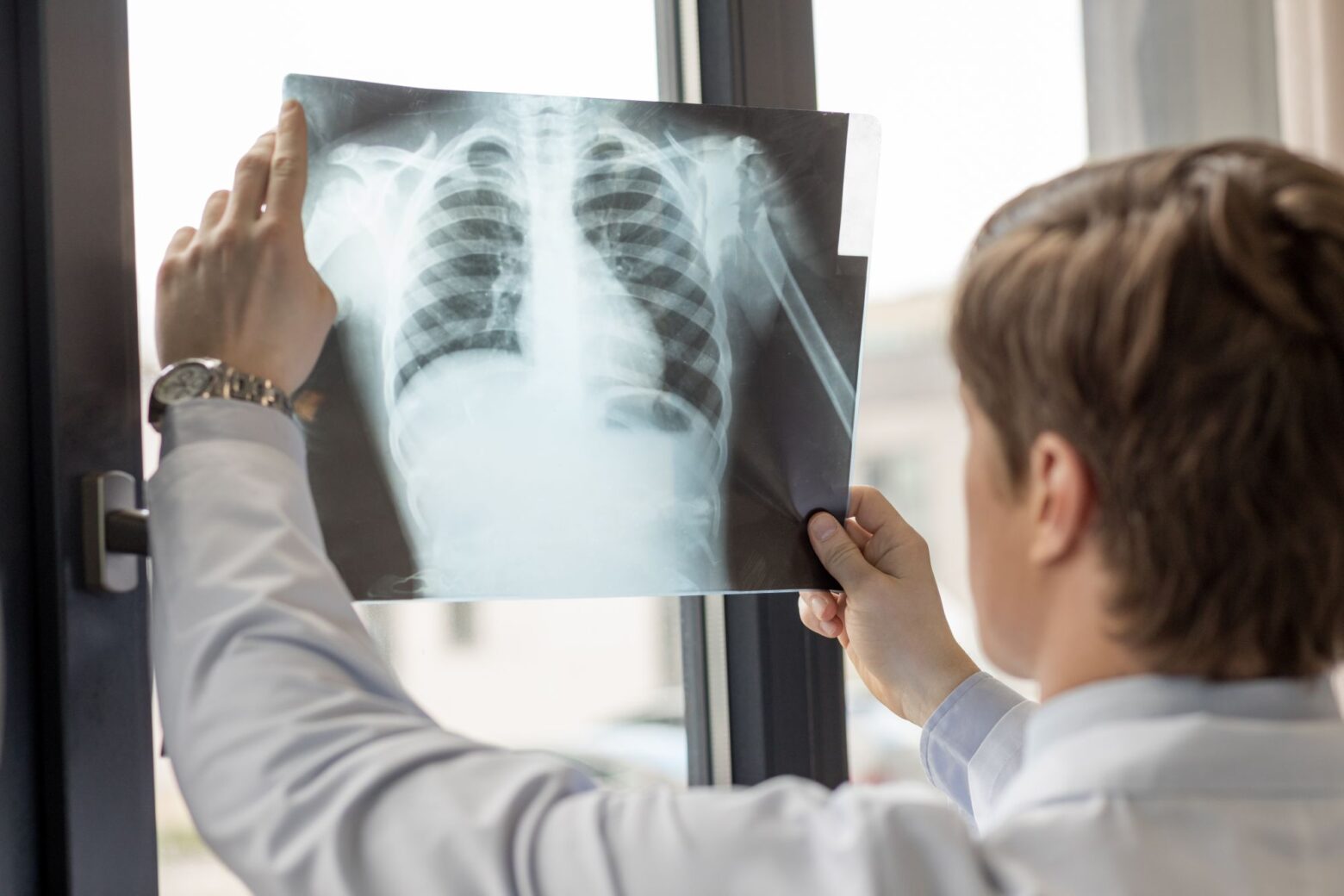
Imaging tests: they are key tools for the diagnosis and evaluation of bladder cancer, as they allow the doctor to obtain detailed information about the tumor and its possible spread. Computed tomography (CT) uses X-rays to generate precise images of the inside of the body, helping to determine the size and location of the tumor, as well as its spread to lymph nodes or other organs. Magnetic resonance imaging (MRI), which uses magnets and radio waves, is especially useful for assessing the extent of cancer in the bladder wall and surrounding tissues. Positron emission tomography (PET) uses a small amount of radioactive material to show the metabolic activity of cells, allowing the detection of cancer spread to lymph nodes or other organs. Finally, intravenous pyelography (IVP) involves injecting a contrast dye into a vein and taking X-rays of the kidneys, ureters, and bladder, and is useful for identifying blockages in the urinary tract.
Blue light cystoscopy: a photosensitizing agent is used that accumulates in cancer cells. During cystoscopy, a special blue light is used to illuminate cancer cells, making them easier to detect.
Narrow-band imaging cystoscopy (NBI): it uses special filters to highlight blood vessels on the surface of the bladder, which can help identify areas suspected of being cancerous.
At HM Hospitales, we are committed to innovation in diagnostics. Our Hyper-early Cancer Diagnosis program uses advanced techniques, such as specific blood tests and high-resolution imaging tests, to detect bladder cancer at very early stages, even before symptoms appear. https://www.hmhospitales.com/hm-ciocc/prevencion-temprana/This allows treatment to begin at an earlier stage, which significantly improves the chances of success.
Bladder cancer treatment
Treatment options for bladder cancer vary depending on the stage and type of cancer, as well as the patient’s overall health. The goal of treatment may be curative (to completely eliminate the cancer) or palliative (to relieve symptoms and improve quality of life). The main treatment options for non-muscle-invasive bladder cancer (NMIBC) and muscle-invasive bladder cancer (MIBC) are described below:
Non-muscle-invasive bladder cancer (NMIBC):
Transurethral resection of the bladder tumor (TURBT): it is the most common initial treatment for NMIBC. An instrument is inserted through the urethra to remove the tumor.
Intravesical immunotherapy: after TURBT, immunotherapy can be administered directly into the bladder to destroy any remaining cancer cells and reduce the risk of recurrence.
Intravesical chemotherapy: chemotherapy can be administered directly into the bladder after TURBT to destroy any remaining cancer cells and reduce the risk of recurrence.
Muscle-invasive bladder cancer (MIBC):
Radical cystectomy: it is the surgical removal of the bladder, nearby lymph nodes, and, in men, the prostate and seminal vesicles. In women, the urethra, uterus, ovaries, and part of the vagina can be removed. It is the most common treatment for MIBC.
Chemotherapy: chemotherapy can be given before surgery (neoadjuvant) to reduce the size of the tumor and make it easier to remove, or after surgery (adjuvant) to destroy any remaining cancer cells.
Radiotherapy: it can be used in combination with chemotherapy as an alternative to surgery in patients who are not candidates for cystectomy, or as palliative treatment to relieve symptoms.
Trimodal therapy (TMT): it combines TURBT, chemotherapy and radiotherapy. It can be considered for patients who wish to preserve their bladder or who are not candidates for cystectomy.
The treatment of bladder cancer often requires a multidisciplinary approach, involving urologists, medical oncologists, radiation oncologists, pathologists, radiologists, oncology-specialized nurses, social workers, and other healthcare professionals.
Remember that this article is for informational purposes only and does not replace professional medical advice. If you suspect you have bladder cancer, consult a specialist to obtain an accurate diagnosis and a treatment plan tailored to your needs.
Our doctors
Contact and make an appointment with the professionals in this area