Amyotrophic lateral sclerosis (ALS), also known as Lou Gehrig’s disease, is a progressive neurological disorder that affects motor neurons, the nerve cells that control voluntary muscle movement. In ALS, motor neurons degenerate and die, leading to a gradual loss of muscle control. This degeneration affects the ability to speak, walk, breathe, and swallow, significantly impacting patients’ quality of life.
ALS does not affect sensory capacity, so patients retain sensitivity and the ability to feel pain, touch, heat, and cold. It also does not affect cognitive functions in most cases, although some patients may develop frontotemporal dementia. Ocular motility is not affected.
ALS symptoms
The progression and severity of ALS symptoms can vary considerably among affected individuals. Some patients may experience rapid progression of the disease, while others may have a slower progression. The most common symptoms are:
Muscle weakness, especially in the arms and legs:
initially, it may manifest as difficulty lifting objects, climbing stairs, or performing everyday activities.
Difficulty speaking (dysarthria):
speech may become slow, slurred, or nasal, making communication difficult.
Dysphagia (difficulty swallowing):
it can cause choking, coughing when swallowing, and difficulty eating and drinking.
Muscle cramps and fasciculations:
cramps are painful muscle contractions, while fasciculations are small, involuntary muscle twitches.
Muscle stiffness (spasticity):
muscle stiffness can make movement difficult and cause pain.
Loss of muscle mass (atrophy):
muscle atrophy occurs as the muscles weaken and shrink.
Shortness of breath:
as the respiratory muscles weaken, shortness of breath may occur, especially during activity or while lying down.
In the early stages, the symptoms can be subtle and mistaken for other conditions. However, as the disease progresses, the symptoms become more evident and debilitating. It is important to recognize these symptoms in order to seek early medical attention.
Classification of ALS
ALS can be classified in different forms according to its presentation and progression:
Sporadic ALS: the most common form, which accounts for the majority of cases and has no known genetic cause. Environmental and genetic factors are believed to contribute to the development of sporadic ALS.
Familial ALS: it occurs in families and is associated with inherited genetic mutations. About 10% of ALS cases are familial.
Bulbar-onset ALS: it begins with difficulty speaking and swallowing. Bulbar-onset symptoms can progress rapidly and affect the ability to communicate and eat.
Limb-onset ALS: it begins with weakness in the arms or legs. The weakness can be asymmetrical, affecting one side of the body more than the other.
Causes of ALS
The exact cause of ALS remains unknown in most cases. However, it is believed that a combination of genetic and environmental factors may play a role in the development of the disease. Current research focuses on identifying the underlying mechanisms that lead to motor neuron degeneration in ALS.
Although the cause of ALS is unknown, there are some factors that may increase the risk of developing the disease. These are some of the factors associated with an increased risk of ALS:
Age: ALS is more common in people between 40 and 70 years old.
Gender: men are slightly more likely to develop ALS than women.
Family history: having a relative with ALS increases the risk of developing the disease.
Genetic factors: certain genetic mutations have been associated with familial ALS. The genes most commonly associated with ALS are SOD1, TARDBP, FUS and C9ORF72.
Exposure to toxins: exposure to certain environmental toxins, such as lead, could increase the risk. Other environmental factors, such as exposure to pesticides and herbicides, have also been investigated.
Complications of ALS
ALS can have a significant impact on health and well-being. These are some of the complications that can arise as a result of the disease:
Respiratory problems, which may require the use of assisted ventilation.
Difficulty speaking and communicating, which can affect social relationships and quality of life.
Nutritional problems due to difficulty swallowing, which may require the insertion of a feeding tube.
Paralysis, which can limit mobility and independence.
If you suspect that you or a loved one may have ALS, it is crucial to seek medical attention immediately to obtain an accurate diagnosis and appropriate treatment plan. inmediato para obtener un diagnóstico preciso y un plan de tratamiento adecuado.
Diagnosis of ALS
Diagnosing ALS can be challenging, as there is no single test to confirm the disease. Doctors typically use a combination of clinical evaluations, laboratory tests, and imaging studies to rule out other conditions and confirm the diagnosis. The diagnostic process may include:
Neurological examination: a thorough examination of nerve function, muscle strength, reflexes, and coordination.
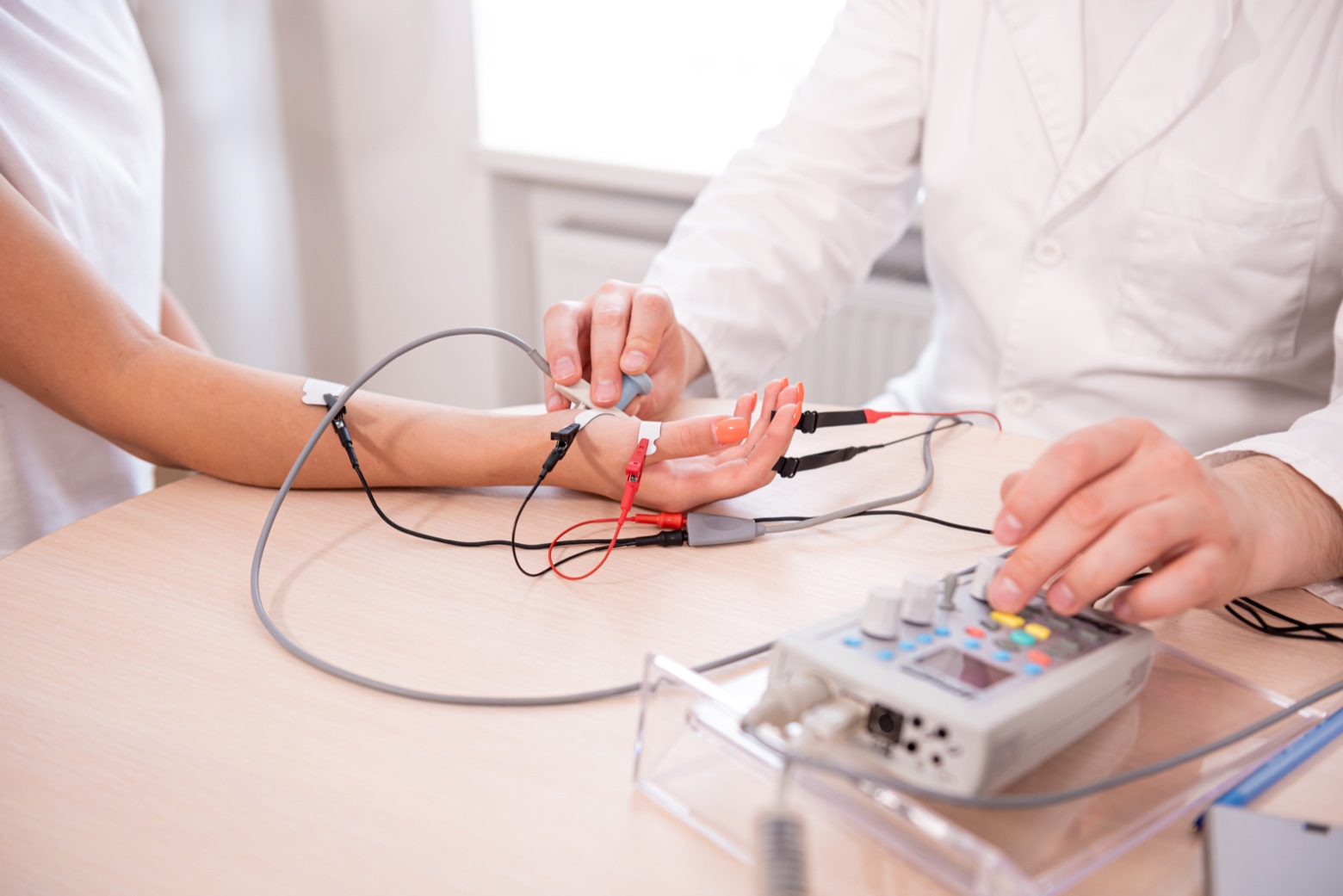
Electromyography (EMG): this test measures the electrical activity of the muscles and can help detect motor neuron dysfunction.
Nerve conduction studies: these tests measure the speed at which electrical impulses travel through the nerves and can help rule out other conditions, such as peripheral neuropathy.
Magnetic Resonance Imaging (MRI): an MRI of the brain and spinal cord can help rule out other conditions that might be causing the symptoms.
Blood and urine tests: blood and urine tests can be performed to rule out other medical conditions.
Lumbar puncture: in some cases, a lumbar puncture may be performed to analyze cerebrospinal fluid.
It is important to note that an ALS diagnosis can take time and may require repeated testing over time to confirm disease progression.
Treatments for ALS
While there is no cure for ALS, there are treatments available to help manage symptoms and improve patients’ quality of life. ALS treatment often requires a multidisciplinary approach involving physicians, therapists, and other healthcare professionals. Treatment options may include:
Medications: neuroprotective agents help slow the progression of ALS and prolong survival. There are other medications that help control symptoms such as muscle cramps, spasticity, and pain.
Physiotherapy: physical therapy can help maintain muscle strength, flexibility, and mobility.
Occupational therapy: occupational therapy can help patients adapt to changes in their abilities and maintain their independence.
Speech therapy: speech therapy can help patients with difficulties speaking and swallowing.
Nutritional support: a dietitian can help patients maintain proper nutrition and manage eating difficulties.
Respiratory support: as ALS progresses, patients may need respiratory support, such as non-invasive ventilation or tracheostomy.
It is important to emphasize that ALS treatment is individualized and tailored to the specific needs of each patient. A multidisciplinary team of healthcare professionals works together to provide comprehensive and personalized care.
Remember that this article is for informational purposes only and does not replace professional medical advice. If you suspect you have ALS, consult a specialist to obtain an accurate diagnosis and an appropriate treatment plan tailored to your needs.
Our doctors
Contact and make an appointment with the professionals in this area