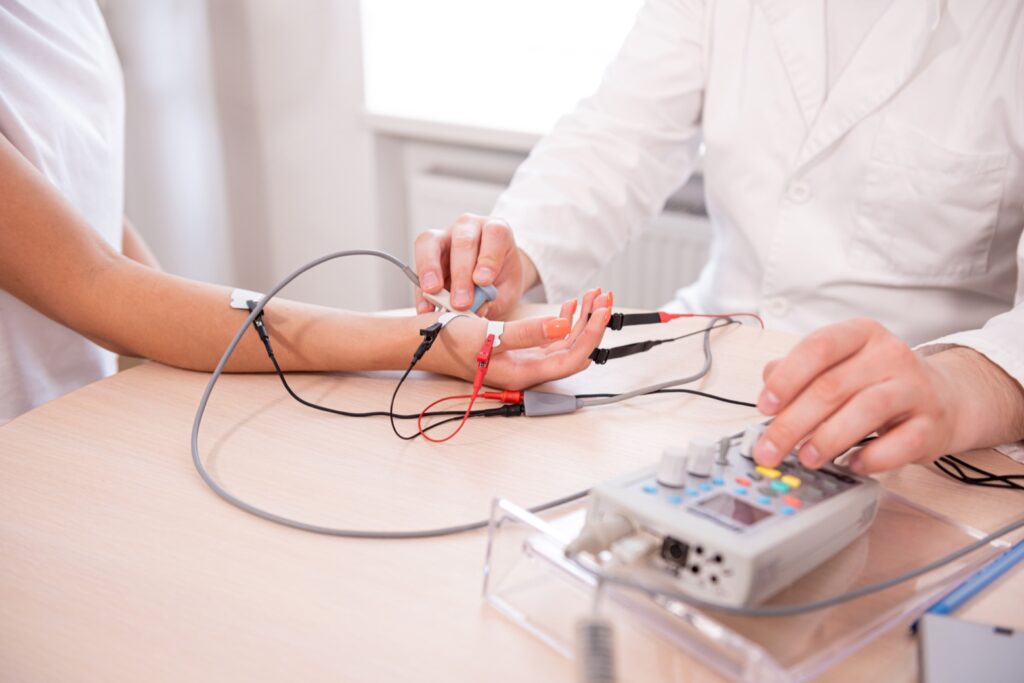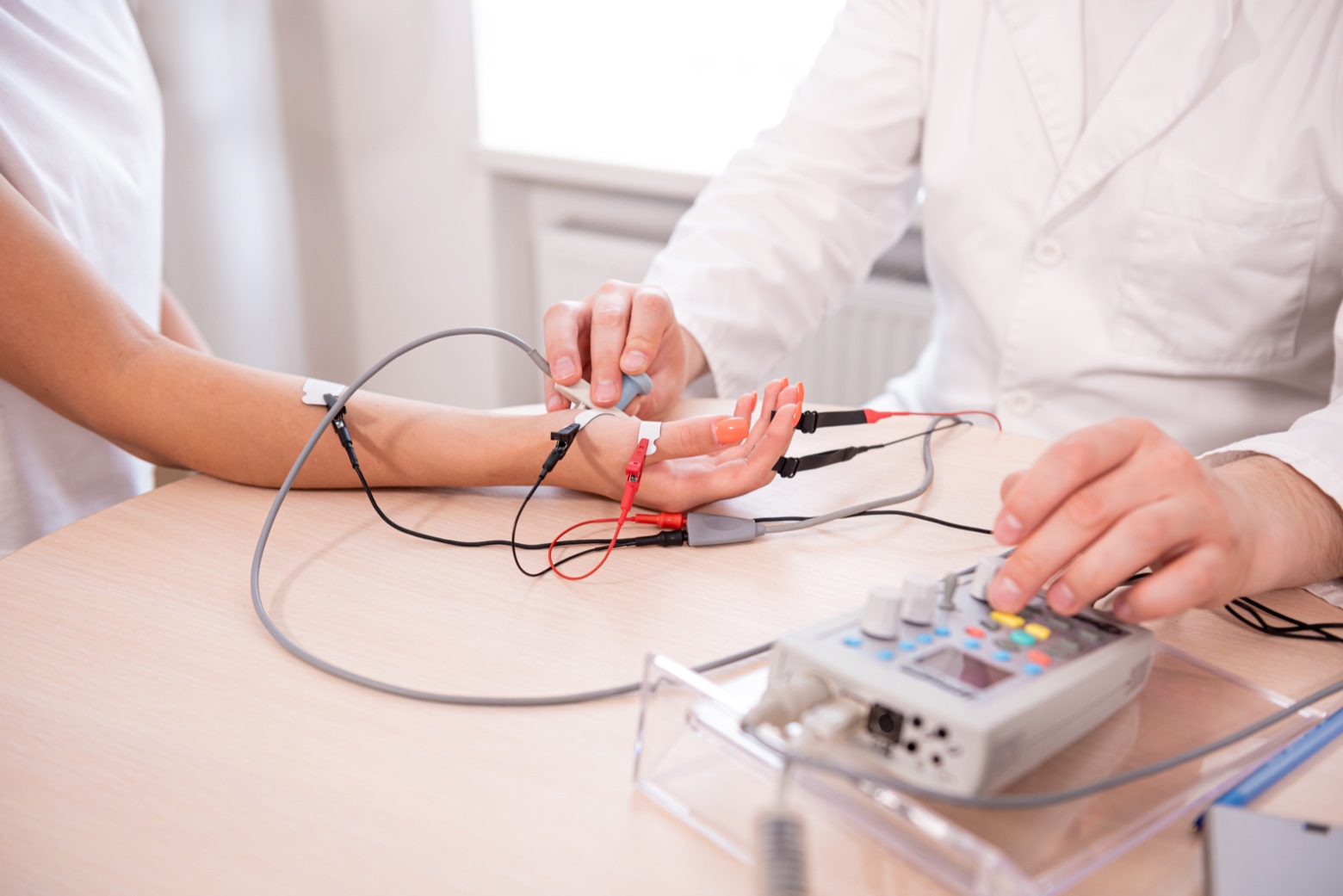
An electromyogram (EMG) is a diagnostic test that evaluates the health of muscles and the nerve cells that control them (motor neurons).
If you experience muscle weakness, numbness, tingling, or pain, your doctor may recommend an EMG to identify the cause of your symptoms. It is often performed with a nerve conduction study (NCS or ENG) to assess peripheral nerves. In this article, we will explain in detail what these tests are, how they are performed, what they are used for, what they detect, and how they can help you obtain an accurate diagnosis and appropriate treatment.
What is an Electromyogram (EMG) / Nerve Conduction Study (ENG)?
These are diagnostic tests performed by a specialist in Clinical Neurophysiology. The electromyogram (EMG) measures the electrical activity of muscles. Motor neurons transmit electrical signals that cause muscle contraction. Small electrodes are used to detect and record these electrical signals. By analyzing the patterns of electrical activity, specialists can identify abnormalities that indicate problems in the muscles, nerves, or neuromuscular junction.
The EMG is performed both at rest and during muscle contraction. At rest, a healthy muscle typically shows minimal electrical activity. During contraction, the EMG records the electrical activity generated by muscle fibres. The amplitude, morphology, frequency, and duration of these electrical signals provide information about the health of the muscle and its innervation.
What Are the Main Types of EMG?
The choice of EMG type depends on the suspected condition and the information needed. Below are the main types of EMG:
- Surface EMG: In this type of EMG, surface electrodes—small metal discs—are attached to the skin over the muscle being evaluated. The electrodes detect the overall electrical activity of the muscle. Surface EMG is less invasive than needle EMG but provides less specific information. It helps assess muscle activity and study movement disorders (e.g., tremors, dystonia).
- Needle EMG:In this type of EMG, a thin, sterile needle is inserted directly into the muscle. The needle acts as an electrode and records the electrical activity of individual muscle fibres. Needle EMG provides more detailed information about muscle activity and is more sensitive for detecting abnormalities. It is the most commonly used type of EMG for diagnosing neuromuscular disorders.
The nerve conduction study (ENG) evaluates peripheral nerves using surface electrodes placed on the skin. Small, controlled electrical stimuli are applied to specific points along the nerve being examined during the test. This generates an electrical signal that can be measured to calculate the speed and intensity of nerve transmission.
The test is generally painless, although the stimuli may cause muscle contractions and a transient tingling sensation.
Both tests (EMG and ENG) are often used together for a comprehensive evaluation.
What is an EMG/ENG Used For?
These neurophysiological tests help diagnose a wide range of neuromuscular conditions. Below are some of the conditions they can help diagnose:
- Neuropathies: Conditions that damage peripheral nerves outside the brain and spinal cord. EMG/ENG can help determine the location and severity of nerve damage, identify the underlying cause of neuropathy, and monitor recovery. Examples include carpal tunnel syndrome (compression of the median nerve in the wrist) and sciatica (compression of the sciatic nerve in the lower back).
- Multiple Sclerosis (MS): An autoimmune disease affecting the brain and spinal cord. EMG/ENG and other neurophysiological studies can help detect peripheral nerve involvement in MS patients.
- Myasthenia Gravis: An autoimmune disease affecting the neuromuscular junction, causing muscle weakness. EMG can help confirm the diagnosis.
- Muscular Dystrophy: A group of genetic diseases causing progressive muscle weakness. EMG can help identify the type of muscular dystrophy.
- Amyotrophic Lateral Sclerosis (ALS): A neurodegenerative disease affecting motor neurons. EMG/ENG can help confirm the diagnosis.
- Guillain-Barré Syndrome: An autoimmune disorder causing progressive muscle weakness. EMG/ENG can help confirm the diagnosis.
How is an EMG/ENG Performed?
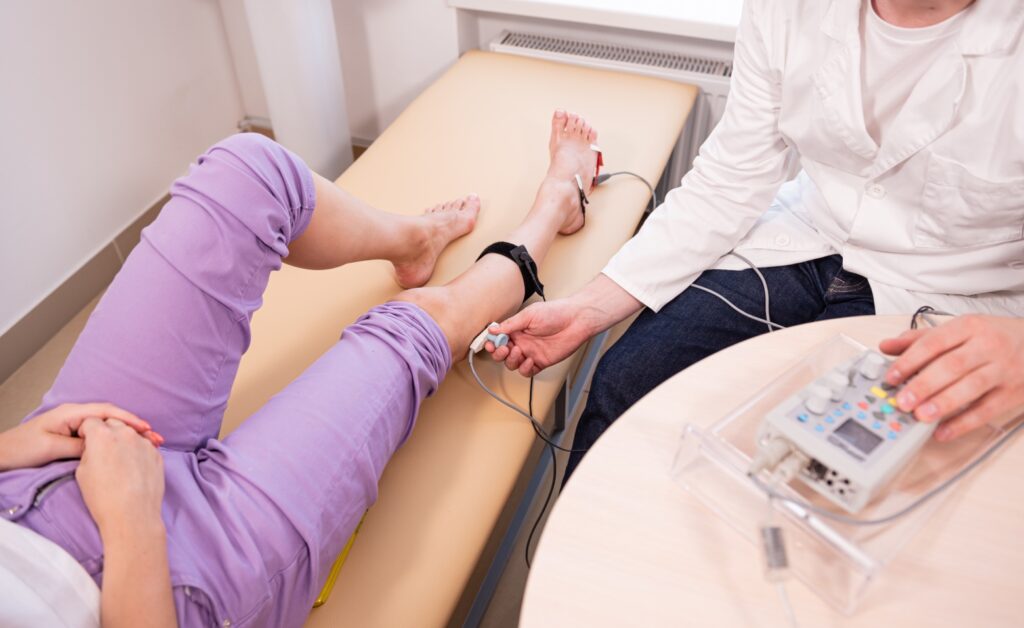
An EMG/ENG is a diagnostic procedure that, while it may sound intimidating, is generally well-tolerated. Understanding how the test is performed, what to expect during the process, and the sensations you may experience will help you feel more comfortable and prepared. Below is an overview of the procedure:
- Preparation: You will be asked to lie down on an examination table in a comfortable position. The skin where the electrodes will be placed will be cleaned.
- Surface Electrodes for Nerve Conduction Studies: Similar to stickers, small surface electrodes will be placed on the skin over the examined muscle. Low-intensity electrical stimuli will be applied to specific points along the nerve being evaluated. The nerve responses generated by the electrical stimulus will be recorded as waves, which the doctor will measure to calculate the speed and amplitude of the response.
- Needle Electrodes for Intramuscular Examination: A thin, sterile needle will be inserted into the muscle being studied. The needle acts as an electrode and records the electrical activity of individual muscle fibres. Multiple muscles may be examined during the test.
- Recording Electrical Activity: Once the electrodes are in place, you will be asked to relax and contract the muscles being examined. The EMG records the electrical activity in both states. The neurophysiologist may ask you to perform different movements or maintain a contraction for a specific period.
- Visualization of Signals: The electrical activity is displayed on a screen as waves with a distinct sound. The specialist will analyze these waves to detect abnormalities.
What Does an EMG/ENG Detect?
An EMG/ENG can detect abnormalities in muscle electrical activity, which may indicate various muscle, nerve, or neuromuscular junction issues. Below are some of the abnormalities it can detect:
- Muscle Damage: In a healthy muscle, electrical activity at rest is minimal. In a damaged muscle, the EMG may show abnormal electrical activity at rest, such as fibrillations (small spontaneous contractions of muscle fibres) or positive waves. These abnormalities and changes in the duration, amplitude, and morphology of the waves generated during contraction may indicate myopathies—a group of diseases directly affecting the muscles.
- Nerve Damage: When a nerve controlling a muscle is damaged, electrical activity during muscle contraction may be reduced or absent. The EMG will show a decrease in the number of active motor units during contraction and changes in the shape and duration of the electrical signals. These abnormalities may indicate nerve damage.
- Neuromuscular Junction Problems: The neuromuscular junction is the connection point between the nerve and the muscle. In conditions like myasthenia gravis, communication between the nerve and muscle is impaired. Repetitive electrical stimuli are applied to a peripheral nerve to evaluate the neuromuscular junction. In cases of neuromuscular junction dysfunction, the amplitude of the electrical signals may decrease. A more specific EMG (single-fibre EMG or jitter analysis) may also be used. In normal conditions, signals reach the muscle precisely and regularly, allowing normal movement. However, in myasthenia gravis, this process is disrupted, and signals may arrive out of sync or with slight delays. Jitter analysis measures these variations in the time it takes for signals to reach and activate the muscle. If this variation is more significant than usual, it suggests a problem in the nerve-muscle connection, as seen in myasthenia gravis.
How Can an EMG/ENG Help You?

An EMG/ENG diagnostic tool is crucial for understanding and addressing muscle and nerve problems. Specifically, an EMG/ENG can help you:
- Obtain an Accurate Diagnosis: It provides valuable information for diagnosing various muscle and nerve conditions.
- Guide Treatment: An accurate diagnosis allows the doctor to recommend the most appropriate treatment for your condition.
- Monitor Disease Progression: It can be used to monitor the progression of neuromuscular diseases.
The EMG/ENG is a neurophysiological diagnostic test that helps evaluate the health of muscles and nerves. If you experience muscle weakness, numbness, tingling, or pain, consult your doctor to determine if an EMG/ENG is correct. HM Hospitales has a team of expert neurophysiologists skilled in performing and interpreting EMG/ENG tests. We are committed to providing you with the best possible medical care. Contact us for more information or to schedule an appointment.
Remember: This article is for informational purposes only and does not replace medical consultation. If you have any concerns, consult a healthcare professional.