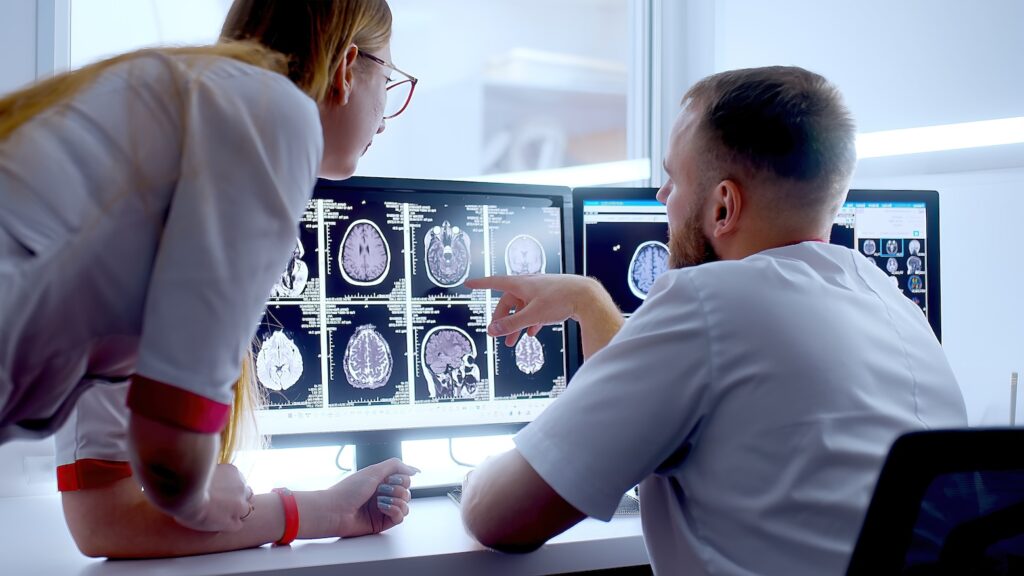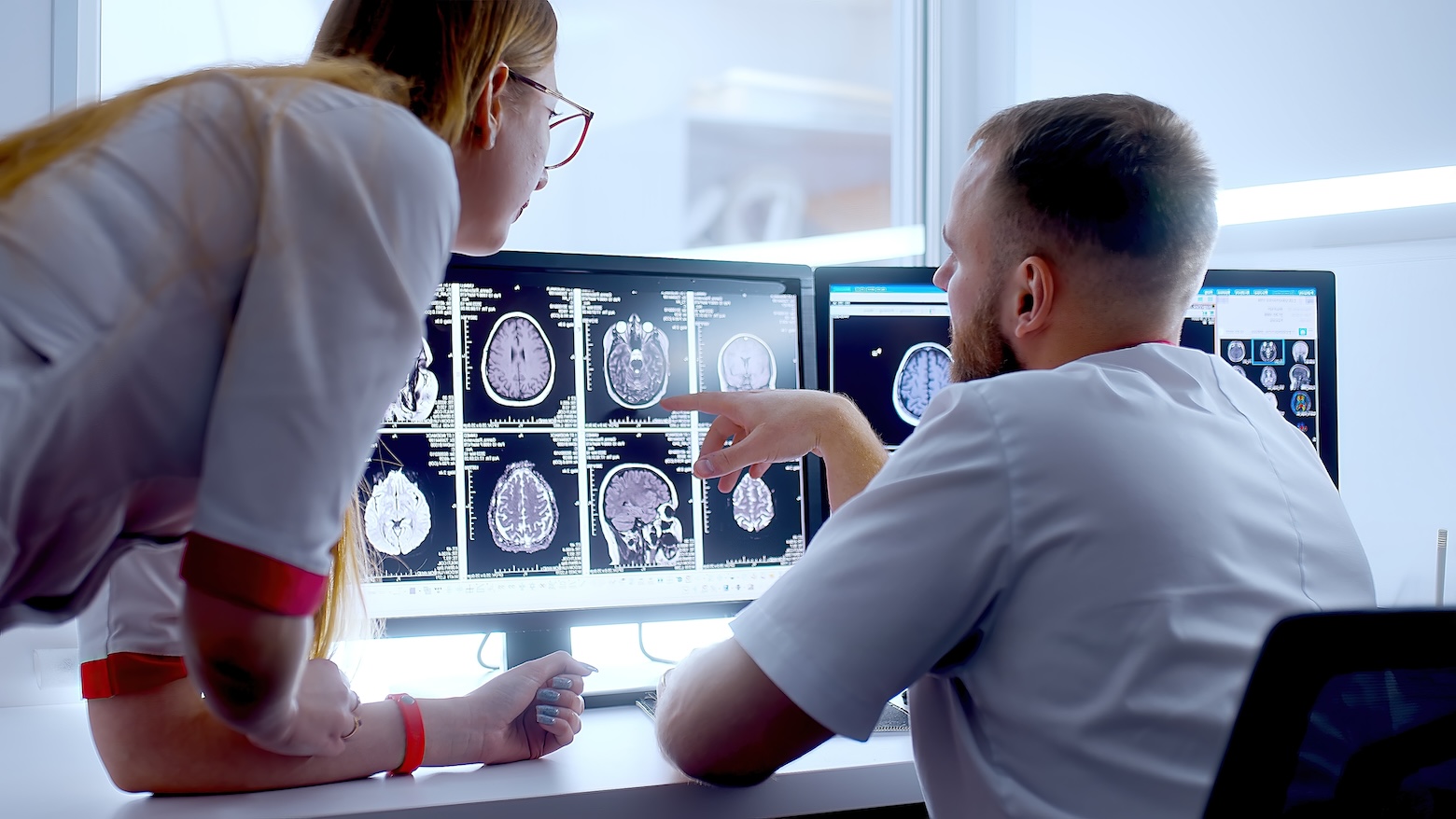
A cranial CT scan, or computed axial tomography (CAT) scan of the skull or brain tomography, is an imaging diagnostic tool that uses X-rays to create detailed brain images.
This non-invasive test provides crucial information that helps doctors diagnose various neurological conditions. This article will explore what a cranial CT scan can detect and explain the difference between a simple cranial CT scan and one with contrast.
What Can a Cranial CT Scan Detect?
The cranial CT scan is a versatile tool that allows visualisation of the skull’s bony structures, the brain’s soft tissues, blood vessels, and cerebral ventricles. This test can detect a wide range of conditions, including:
- Head injuries: A cranial CT scan is essential for assessing the severity of head injuries identifying skull fractures, brain haemorrhages (epidural, subdural, and intracerebral haematomas), contusions, and cerebral oedema.
- Strokes: A cranial CT scan can differentiate between an ischaemic stroke (caused by a blood clot) and a haemorrhagic stroke (caused by a brain haemorrhage). This distinction is crucial for determining the appropriate treatment.
- Brain tumours: A cranial CT scan can help identify the presence, size, and location of brain tumours, both benign and malignant.
- Brain infections: A cranial CT scan can detect signs of diseases such as brain abscesses, meningitis, and encephalitis.
- Hydrocephalus: A cranial CT scan can show the excessive accumulation of cerebrospinal fluid in the brain’s ventricles, a characteristic of hydrocephalus.
- Congenital malformations: A cranial CT scan can identify congenital brain and skull malformations.
- Neurodegenerative diseases: In some cases, it can show the brain changes associated with neurodegenerative diseases such as Alzheimer’s.
How Is a Cranial CT Scan Performed?
The procedure is quick, painless, and non-invasive. The patient lies on a table that slides into a ring-shaped scanner. The scanner rotates around the patient’s head, emitting X-ray beams and collecting information with detectors. During the procedure, the patient must remain still to obtain clear images. The scanning process usually takes only a few minutes. Once the scan is complete, a computer processes the information and reconstructs cross-sectional pictures of the brain.
There are two main types of cranial CT scans:
- Simple cranial CT scan (or plain skull tomography): This type of CT scan is performed without administering a contrast medium. It is the most common option and is used to assess skull fractures, acute haemorrhages, cerebrospinal fluid accumulation, and other structural abnormalities. It is instrumental in emergencies, as it is quick and requires no prior preparation.
- Cranial CT scan with contrast: An iodine-based contrast medium is administered intravenously before the scan. The contrast helps highlight blood vessels and soft tissues in the brain, making detecting tumours, infections, inflammation, and vascular abnormalities easier. A CT scan with contrast provides additional information that can be crucial for diagnosis. It is important to note that some people may be allergic to the contrast medium, so any known allergies should be reported to the doctor before the procedure.
The choice between a simple cranial CT scan and one with contrast depends on the clinical suspicion and the information sought. The doctor will determine the most appropriate type of CT scan for each case.
Benefits and Limitations of a Cranial CT Scan

The cranial CT scan is a widely used imaging diagnostic tool due to its speed, accessibility, and ability to provide detailed information about brain structures. However, like any medical procedure, it has both benefits and limitations. It is crucial to understand both aspects to make informed decisions about its use.
Benefits of a Cranial CT Scan:
- Speed: A cranial CT scan is a quick procedure, ideal for emergencies such as trauma or strokes, where a rapid diagnosis is essential to initiate immediate treatment.
- High accuracy in detecting structural abnormalities: Thanks to its high precision, a cranial CT scan visualises skull structures, haemorrhages, fractures, and tumours, facilitating treatment decisions.
- Accessibility: Cranial CT scans are available in most hospitals, making them easily accessible to patients. This widespread availability makes them an essential diagnostic tool in daily clinical practice.
- Less sensitive to patient movement: A cranial CT scan tolerates patient movement better than an MRI, which is helpful for children or individuals in pain who may struggle to remain still.
- Aids in medical decision-making: The information provided by a cranial CT scan is essential for guiding medical decisions, such as the need for surgery, the type of pharmacological treatment, or radiotherapy planning.
Limitations of a Cranial CT Scan:
- Diagnosis of certain diseases: Although a cranial CT scan visualises structural abnormalities well, magnetic resonance imaging (MRI) is more sensitive for detecting certain neurological diseases, offering greater detail of the brain’s soft tissues.
- Radiation exposure: A cranial CT scan uses X-rays (radiation), which, although at low doses, can increase the risk of cancer with repeated exposure. For children and pregnant women, alternatives such as MRI are preferred.
- Allergic reaction to the contrast medium (in contrast CT scans): A cranial CT scan with contrast carries a small risk of an allergic reaction to iodine, ranging from mild (hives, itching) to severe (difficulty breathing). Inform your doctor of any allergies before the test.
The decision to perform a cranial CT scan should be made in consultation with a doctor, considering the potential diagnostic benefits and possible risks.

When Should You Consult a Specialist for a Cranial CT Scan?
While a cranial CT scan is a powerful diagnostic tool, it is not a routine test. It is essential to consult a doctor to determine whether a cranial CT scan is necessary in your specific case. The doctor will evaluate your symptoms and medical history and perform a physical examination to determine if this test is the most appropriate for your situation. Your doctor may recommend a cranial CT scan if you experience any of the following symptoms or conditions:
- Head injuries: After a blow to the head, a car accident, or another type of head trauma, a cranial CT scan is crucial to assess the presence of skull fractures, brain haemorrhages, contusions, or other injuries. The speed of diagnosis in these cases is essential to initiate appropriate treatment and minimise potential complications.
- Severe or persistent headaches: If you experience severe, sudden headaches or headaches that do not respond to your usual treatments, a cranial CT scan can help rule out serious underlying causes, such as a brain tumour, haemorrhage, or infection. It is also considered in cases of headaches accompanied by other symptoms, such as fever, neck stiffness, vomiting, or changes in mental state.
- Dizziness or vertigo: If you experience intense dizziness, vertigo, or loss of balance, a cranial CT scan can help identify the underlying cause, such as an inner ear problem, brain injury, or stroke.
- Blurred or double vision: Sudden changes in vision, such as blurred vision, double vision, or vision loss, can be a sign of a neurological problem. A cranial CT scan can help rule out serious causes, such as a brain tumour or stroke.
- Seizures: Seizures can be caused by various conditions, including epilepsy, brain tumours, infections, or brain injuries. A cranial CT scan can help identify the underlying cause of your seizures.
- Numbness or weakness: Sudden numbness, weakness, or paralysis in one part of your body can indicate a stroke. A cranial CT scan is essential to confirm the diagnosis and determine the type of stroke.
- Changes in mental state: Confusion, disorientation, difficulty speaking or understanding, personality changes, or memory loss can be signs of a neurological condition. A cranial CT scan can help identify the underlying cause.
- Suspected brain tumour: If your doctor suspects the presence of a brain tumour based on your symptoms or other diagnostic tests, a cranial CT scan can help confirm the diagnosis and determine the size and location of the tumour.
- Treatment monitoring: In some cases, a cranial CT scan may be performed to monitor the progression of a disease or your response to treatment, such as in the case of a brain tumour or infection.
It is important to remember that this list is not exhaustive. If you experience any concerning neurological symptoms, you must consult a doctor for a complete evaluation. The doctor will determine whether a cranial CT scan or another diagnostic test is necessary in your case. HM Hospitales has a team of expert neurologists and radiologists to provide you with an accurate diagnosis and appropriate treatment.