Alzheimer’s is a neurodegenerative disease that affects millions of people worldwide, including over 800,000 in Spain. As the population ages, the search for effective treatments has become a priority for the scientific community.
One of the most promising research areas is neurogenesis, the process of forming new neurons in the brain. But can neurogenesis truly offer hope in the treatment of Alzheimer’s? Let’s explore this question.
What is Neurogenesis?
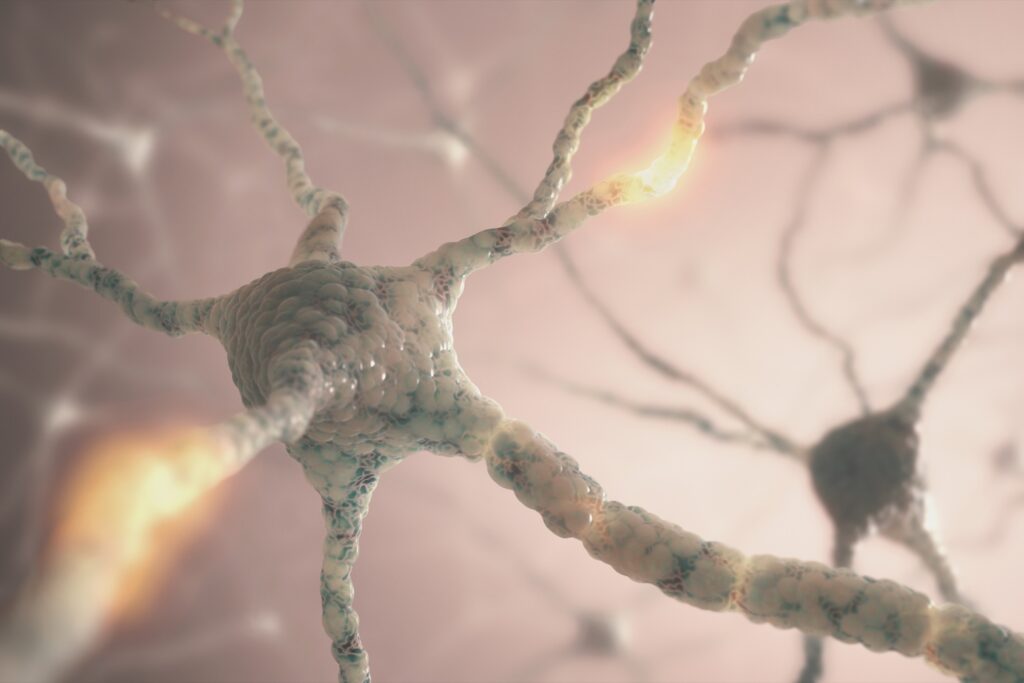
Neurogenesis is the process by which the brain generates new neurons. Although it was once believed that the adult brain could not produce new neurons, recent research has shown that this process occurs throughout life, even in the adult brain.
Neurogenesis primarily occurs in two regions of the brain:
- The hippocampus is crucial for memory and learning.
- The subventricular zone contributes to forming different layers of the cerebral cortex. Even after embryonic development, this area remains active, producing neurons that migrate to the olfactory bulb, responsible for the sense of smell.
Alzheimer’s and Neuronal Loss

Alzheimer’s is a neurodegenerative disease that primarily affects memory and other cognitive functions. It is characterized by the gradual and progressive loss of nerve cells (neurons), especially in brain areas responsible for memory and cognitive skills. As the disease progresses, patients experience symptoms such as:
- Memory loss
- Difficulty performing everyday tasks
- Trouble finding the right words or following conversations (language problems)
- Confusion about time or place (disorientation)
- Changes in mood and behaviour, such as anxiety, depression, or irritability
Current Treatments for Alzheimer’s
Currently, there is no cure for Alzheimer’s. Available treatments focus on alleviating symptoms and slowing the progression of the disease. Some of the most common treatments include:
- Cholinesterase inhibitors: These medications help maintain levels of acetylcholine, a neurotransmitter essential for memory and learning, which is often reduced in people with Alzheimer’s.
- NMDA receptor antagonists: These regulate the activity of glutamate, another key neurotransmitter that, in excess, can damage neurons.
- Non-pharmacological therapies: Such as cognitive stimulation and occupational therapy.
While these treatments are limited, new research is emerging every day, offering hope for improving the quality of life for patients at any stage of the disease.
Neurogenesis as a Potential Treatment for Alzheimer’s
One of the most promising lines of research in Alzheimer’s treatment is neurogenesis, the brain’s ability to generate new neurons. The idea is that if we can stimulate the production of new neurons, we could potentially replace lost neurons and improve brain function. Many studies are focused on understanding how to harness this brain capability to develop future treatments.
Neurogenesis: A Hope in Alzheimer’s Treatment

- Replacement of lost neurons: Neurogenesis could help replace neurons lost to the disease.
- Improved brain plasticity: New neurons generated through neurogenesis could form new connections, enhancing the brain’s ability to adapt, learn, and retain memories.
- Reduced inflammation: Neurogenesis has been observed to have anti-inflammatory effects, which is beneficial since inflammation plays a significant role in Alzheimer’s.
- Increased growth factors: Neurogenesis is associated with increased neuronal growth factors crucial for neuron survival and function.
Promising Research
Several studies have shown hopeful results in stimulating neurogenesis as a potential treatment for Alzheimer’s. These trials are still in the early stages of research but have demonstrated improvements in memory and cognitive function in animal models:
- A study published in Nature Medicine suggests that stimulating neurogenesis in mice with Alzheimer’s significantly improves their memory and cognition.
- Research from the University of Illinois shows that regular physical exercise can increase neurogenesis and improve cognitive function in animal models of Alzheimer’s.
- A team of Spanish scientists has identified a compound that stimulates neurogenesis and improves memory in Alzheimer’s models.
These findings open the door to future therapies that could benefit patients.
Challenges and Considerations
Despite these advances, several significant challenges must be addressed before neurogenesis can become a viable option for Alzheimer’s patients:
- Human data: Most studies have been conducted on animal models. It’s necessary to determine if these results can be replicated in humans.
- Targeted integration: For this approach to be practical, new neurons must adequately integrate into existing neural networks, which is a significant conceptual and practical challenge, mainly since Alzheimer’s affects multiple neural networks.
- Long-term effects: More research is needed to determine the long-term impact of stimulating neurogenesis.
- Timing of intervention: Neurogenesis stimulation may be more effective in the early stages of the disease.
Is There a Cure for Alzheimer’s?
While neurogenesis offers a promising new avenue, it’s essential to understand that there is currently no cure for Alzheimer’s. However, research continues to advance, and each discovery brings us one step closer to finding more effective treatments.
Other Treatments for Alzheimer’s
In addition to neurogenesis, other areas of research are exploring new treatments for Alzheimer’s:
- Immunotherapy: Aims to use the body’s immune system to combat abnormal proteins associated with Alzheimer’s.
- Gene therapy: Seeks to correct genes that may increase the risk of Alzheimer’s.
- Stem cell therapies: Explore using stem cells to regenerate damaged brain tissue.
- Tau-targeted treatments: Focus on preventing the abnormal accumulation of tau protein in the brain.
How to Treat Alzheimer’s in Its Early Stages?
Although there is no cure for Alzheimer’s, early treatment can help manage symptoms and, in some cases, slow the progression of the disease. If you suspect that you or a loved one may be developing Alzheimer’s, it’s crucial to seek medical help as soon as possible.
Receiving an Alzheimer’s diagnosis can be overwhelming, but there are ways to manage the disease to compensate for or adapt to deficits and maintain a good quality of life. Treatment in the early stages of Alzheimer’s typically involves:
- Medications to manage cognitive symptoms
- Non-pharmacological therapies: Activities designed to maintain memory and thinking skills, such as memory games, reading, and mental exercises, or to preserve independence in daily activities
- Lifestyle changes: Including a healthy diet, regular exercise, and good sleep hygiene
- Management of other health conditions that may exacerbate symptoms
A Hopeful Future
Although there is still no cure for Alzheimer’s, research into neurogenesis offers an exciting new pathway for the development of more effective treatments.
At HM Hospitales, we are committed to providing the most advanced and effective treatments for Alzheimer’s. Our team of neurologists and specialists in neurodegenerative diseases stays up-to-date on the latest scientific advances and collaborates with other pioneering groups in treatment and research.
If you or a loved one is dealing with Alzheimer’s, don’t hesitate to contact us. We are here to provide the best possible care and inform you about the latest advances in treating this disease.
While the path to a cure for Alzheimer’s may be extended, each new research discovery brings us closer to that goal. In the meantime, early diagnosis, appropriate treatment, and ongoing support can make a significant difference in the quality of life for people living with Alzheimer’s and their families.
Remember: This article is for informational purposes only and does not replace medical advice. If you have any concerns, consult a healthcare professional.