Parkinson’s disease is a neurodegenerative condition that affects thousands of people in Spain. Tremors, rigidity, and slow movement are motor symptoms that can make daily life challenging.
In this article, we present HIFU (High-Intensity Focused Ultrasound), a minimally invasive treatment for this disease that is transforming the lives of many patients.
What is Parkinson’s Disease, and What Are Its Symptoms?
Parkinson’s disease affects the central nervous system and involves the progressive loss of dopamine-producing neurons, a neurotransmitter essential for controlling movement. This leads to difficulties in controlling body movements. Among the cardinal motor signs of Parkinson’s disease are:
- Tremor: Involuntary rhythmic movements, especially in the hands, arms, legs, jaw, and face.
- Rigidity: feeling of muscle tension that can make movement difficult or cause painful discomfort.
- Bradykinesia: Slowness of movement, making everyday tasks like dressing or walking more challenging.
Over time, some people may experience balance and coordination problems, difficulty walking, trouble speaking or swallowing, mood changes, and cognitive issues, significantly affecting the quality of life of patients and their families. These symptoms can vary in presentation and intensity from person to person.
Despite advances in research, a cure for Parkinson’s disease has not yet been found. However, some treatments can help manage symptoms and improve a patient’s quality of life. Among these innovative treatments is High-Intensity Focused Ultrasound (HIFU), which offers a minimally invasive alternative.
What is HIFU?
HIFU, or High-Intensity Focused Ultrasound, is an advanced procedure that uses high-energy ultrasound waves to treat various medical conditions, including Parkinson’s disease. This minimally invasive treatment is performed without surgery or radiation, significantly reducing the risks associated with more traditional procedures.
How Does HIFU Work in Treating Parkinson’s?
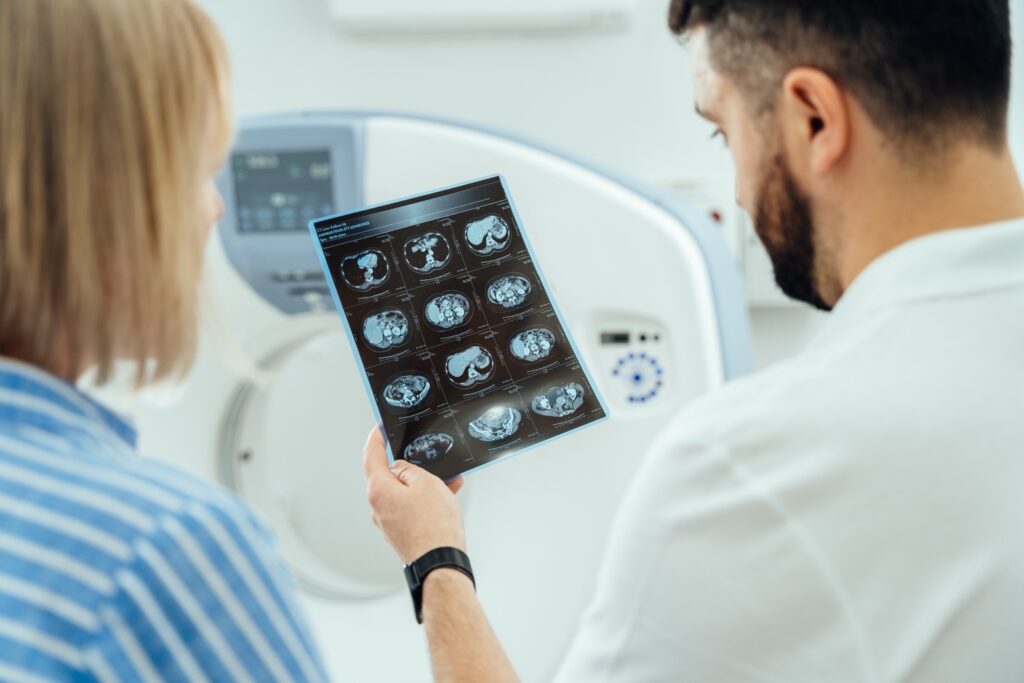
HIFU is based on a simple yet effective physical principle. The device emits high-frequency ultrasound waves focused on a specific brain area, similar to how a magnifying glass concentrates sunlight into a single point. The ultrasonic energy generates heat in the target area, allowing for controlled modification or “lesioning” of the brain region responsible for the cardinal motor symptoms of Parkinson’s disease (mentioned earlier).
The procedure is carried out under the supervision of a specialised medical team and with the aid of real-time magnetic resonance imaging (MRI). This allows specialists to visualise the brain throughout the treatment, ensuring millimetre precision in applying HIFU.
The brain area typically treated with HIFU in Parkinson’s patients is the subthalamic nucleus or, less frequently, the internal globus pallidus. These brain structures play a crucial role in movement control, and their dysfunction is directly associated with the motor symptoms of Parkinson’s disease.
Benefits of HIFU in Treating Parkinson’s
HIFU is an innovative technique for treating Parkinson’s disease that uses ultrasound to target specific areas of the brain without the need for surgery. Below, we explain why this technology offers multiple benefits compared to other treatments:
- Minimally invasive treatment: As it does not require surgical incisions, HIFU avoids the risks and complications associated with traditional surgeries, such as infections and side effects from general anaesthesia.
- Quick recovery: Patients often notice immediate improvement in their symptoms and can be discharged the day after the treatment.
- Greater precision: Real-time imaging technology allows the treatment to be directed precisely to the affected brain areas, maximising its effectiveness.
- Higher effectiveness: Many patients have experienced significant improvements in their symptoms after treatment.
- Greater flexibility: Unlike some surgical procedures, HIFU allows for adjustments and repeat treatments if necessary, offering flexibility in managing the disease.
- Lower risk of infections: As it does not require cuts or incisions, the risk of post-operative infections is minimised.
HIFU vs. Deep Brain Stimulation: Key Differences in Treating Parkinson’s
Deep Brain Stimulation (DBS) is one of the most commonly used treatments for advanced Parkinson’s disease. Both DBS and HIFU are effective, but there are significant differences to consider when selecting the best treatment option for each patient:
- Invasiveness: DBS is a surgical procedure that requires opening the skull to implant electrodes in the brain and a pulse generator in the chest (similar to a pacemaker). HIFU treatment does not require incisions; it uses focused ultrasound to treat the affected area without needing a skull opening.
- Risks: DBS surgery carries a higher risk of infection, brain haemorrhage, and complications related to general anaesthesia. HIFU avoids these risks, as it is non-invasive and does not require general anaesthesia.
- Adjustments: DBS requires periodic adjustments to optimise electrode function, and, in some cases, the pulse generator battery needs to be replaced over time. HIFU does not require post-treatment adjustments or maintenance.
- Side effects: DBS can cause side effects such as speech problems, balance issues, or mood changes, which may vary depending on electrode placement. Side effects after HIFU can also occur, with the main one being a feeling of instability, but they are mostly mild and temporary.
- Reversibility: One advantage of DBS is its reversibility, which can be adjusted, turned off, or removed if necessary. On the other hand, the effects of HIFU are generally permanent, as the treatment directly alters the tissue.
- Unilaterality vs. bilaterality: DBS allows for the placement of two electrodes on each side of the brain to improve the cardinal signs of Parkinson’s disease on both sides of the body. HIFU treatment is performed unilaterally, affecting one side of the body, so patients with more asymmetric clinical presentations may benefit more from this technique. Research is underway to explore the possibility of performing bilateral HIFU treatments for Parkinson’s disease at separate times.

Patient Experiences with HIFU
Many patients who have tried this therapy to treat their Parkinson’s disease have noticed significant improvements in their quality of life. These patients have experienced reduced tremors, greater ease of movement, and decreased muscle rigidity. Thanks to these advances, they have resumed previously tricky activities, such as writing, eating, or dressing themselves.
It is important to note that although HIFU has proven effective in many cases, not all Parkinson’s patients are candidates for this treatment. Therefore, it is essential to consult a specialist to evaluate each case individually. Proper medical care determines the best treatment option and ensures a personalised approach.
The Future of HIFU in Treating Parkinson’s
Research on using HIFU in treating Parkinson’s disease continues to advance significantly. Scientists are exploring new applications of this technology, which could alleviate motor symptoms and address non-motor symptoms of the disease. Additionally, its use in earlier stages of Parkinson’s is being evaluated, which could allow for more effective disease management from the outset.
Innovation for a Better Quality of Life
HIFU represents a valuable advancement in the treatment of Parkinson’s disease. This minimally invasive procedure has demonstrated effectiveness and offers new hope to patients battling this condition. At HM Hospitals, we are committed to providing innovative treatments as part of our dedication to excellence in healthcare. Our goal is to improve the quality of life of our patients through cutting-edge treatment approaches.
If Parkinson’s disease directly affects you or a loved one and you would like to learn more about HIFU treatment, do not hesitate to contact us. Our team of professionals will happily provide you with all the information you need and evaluate whether this treatment suits your specific case.
Every step in the fight against Parkinson’s disease is a step towards a better quality of life. We are here to support you on this journey towards well-being.
Remember, this article is for informational purposes only and does not replace medical consultation. If you have any doubts, consult a healthcare professional.