
The health of our kidneys is essential for our overall well-being. When assessing kidney health, ultrasound is a handy diagnostic tool.
In this article, we explain a renal ultrasound, what the procedure involves, and, most importantly, what diseases it can help detect.
What is a Renal Ultrasound?
Before discussing the diseases it can detect, it’s essential to understand what a renal ultrasound is. This imaging test uses high-frequency sound waves to create detailed images of the kidneys and nearby structures. It is a non-invasive, painless, and safe procedure that provides valuable information about the shape and function of the kidneys.
How is a Renal and Urinary Tract Ultrasound Performed?
If you’re wondering how a renal ultrasound is done, the process is relatively simple and comfortable for the patient. Below, we explain the procedure step by step:
- Preparation: In most cases, no special preparation is required. However, you may be asked to drink several glasses of water before the exam to fill your bladder, improving the urinary tract’s visibility during the ultrasound.
- Positioning: You will lie on an examination table, exposing your abdomen and lower back to allow better kidney access.
- Application of Gel: The technician will apply a conductive gel to your skin. This gel helps the sound waves transmit better and facilitates the acquisition of clear images.
- Scanning: The technician will use a transducer to move gently over your skin. This device emits sound waves that bounce off your organs, generating echoes that are captured to create images.
- Images: The sound waves are translated into images displayed on a monitor, allowing the specialist to examine the structure and condition of your kidneys and urinary tract.
- Duration: The procedure usually takes between 20 and 30 minutes.
What is a Renal Ultrasound?
A renal ultrasound is also known as a kidney ultrasound. Although “ultrasound” and “sonogram” are used interchangeably, they refer to the same imaging technique. To better understand, an ultrasound captures images obtained through sound waves, hence the name.
What Diseases Can a Renal Ultrasound Detect?
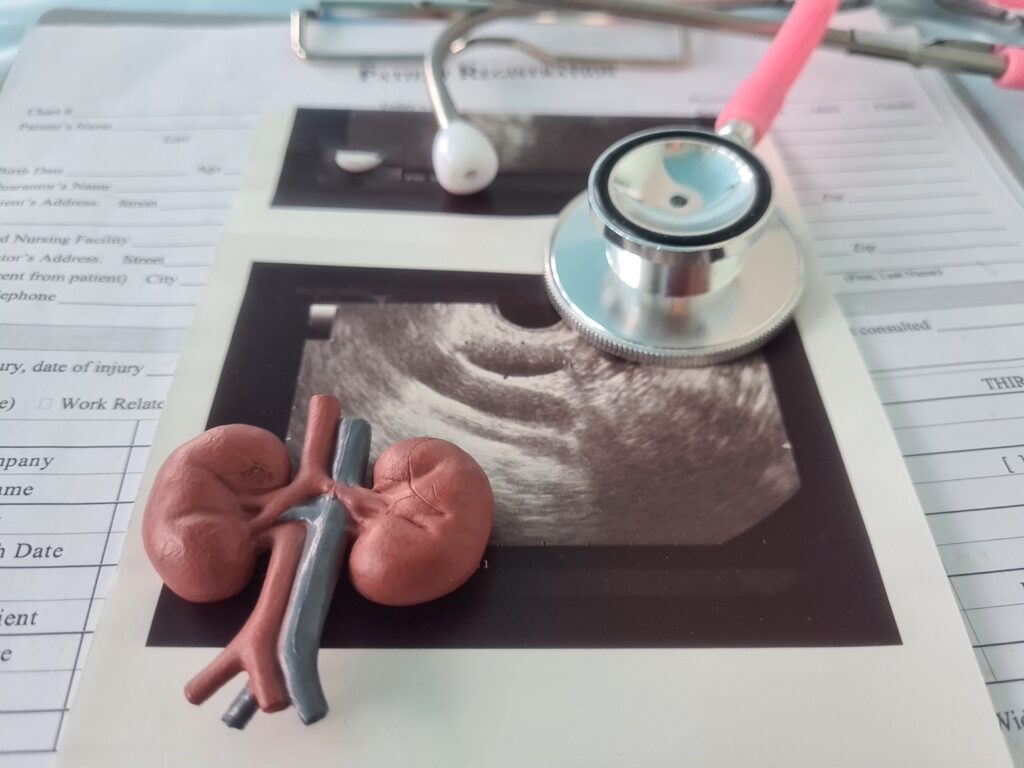
A renal ultrasound is a handy diagnostic tool that can detect various kidney and urinary tract conditions. Here are some of the most common diseases it can identify:
- Kidney Stones: The ultrasound can detect the presence of stones in the kidneys or urinary tract, helping to identify their size and location.
- Renal Cysts: This allows for the visualisation of fluid-filled sacs in the kidneys, which can be simple (benign) or complex (requiring further evaluation).
- Kidney Tumours: Although ultrasounds cannot determine whether a tumour is benign or malignant, they can detect abnormal masses in the kidneys, which will need to be further evaluated by a specialist.
- Polycystic Kidney Disease: The ultrasound can reveal multiple kidney cysts characteristic of this genetic condition. Detecting them early is key to managing the condition.
- Congenital Malformations: Abnormalities in the structure of the kidneys or urinary tract present from birth can be identified.
- Urinary Tract Infections (UTIs): Although it cannot directly diagnose an infection, the ultrasound can show signs of inflammation or abscesses, suggesting the presence of a UTI.
- Urinary Tract Obstructions and Hydronephrosis: It can detect dilation in any part of the urinary tract and the blockages causing it, helping to locate the source of urinary symptoms.
- Changes in Kidney Size: It allows for observing whether the kidneys are abnormally large or small, which may indicate various kidney pathologies requiring medical attention.
- Kidney Injuries: Damage to the kidneys caused by trauma or disease can be identified, providing key information for treatment.
How is an Urinary Tract Ultrasound Performed?
A urinary tract ultrasound is a test that examines the entire urinary system, including the kidneys, ureters, and bladder. Although it is similar to a renal ultrasound, it differs in that it analyses not only the kidneys but also the connected structures. Below, we explain the procedure and how to prepare for it:
- Bladder Preparation: Your bladder must be complete for this exam, as this facilitates visualisation. Therefore, you will be asked to drink several glasses of water before the test and to avoid urinating until it is completed.
- Complete Scan: During the test, the technician will examine the kidneys, bladder, and ureters to the extent possible. This provides a comprehensive view of the entire urinary system.
- Post-Void Evaluation: In some cases, you will be asked to empty your bladder, after which a second scan will be performed to assess whether the bladder has been completely emptied. This helps detect potential urine retention issues.
Benefits of Renal and Urinary Tract Ultrasound
Renal ultrasound is fundamental for diagnosing and treating kidney and urinary system conditions. Below, we explain the advantages of this technique:
- Non-Invasive: It does not require incisions or the insertion of instruments into the body.
- No Radiation: Unlike X-rays or computed tomography (CT), ultrasound does not use ionising radiation, making it a safe option.
- Safe: It has no known side effects, making it suitable for pregnant women.
- Real-Time Results: It provides moving images, allowing for the real-time evaluation of blood flow and kidney function.
- Cost-Effective: It is more affordable than other advanced imaging techniques, making it a first-line test for evaluating kidney and urinary problems.
When Should You Consider a Renal Ultrasound?

A renal ultrasound is a test that can help detect problems in the kidneys and urinary tract. Your doctor may recommend this test if you experience any of the following symptoms:
- Pain in the lower back or side
- Blood in the urine
- Difficulty urinating
- Frequent urinary tract infections
- Unexplained high blood pressure
Additionally, your doctor may suggest a renal ultrasound as part of a routine check-up, especially if you have risk factors for kidney disease, such as diabetes, chronic hypertension, or a family history of kidney disease.
Limitations of Renal Ultrasound
Although renal ultrasound is a valuable tool, it has some limitations:
- It cannot definitively determine whether a tumour is benign or malignant.
- It may have difficulty visualising very deep kidneys, especially in obese patients.
- The quality of the images largely depends on the technician’s skill.
Sometimes, your doctor may recommend additional tests, such as a CT scan or MRI, to obtain more information.
Renal Ultrasound: A Window into Your Kidney Health
Renal ultrasound is a powerful and versatile diagnostic tool for detecting various kidney and urinary tract diseases. Its non-invasive nature, safety, and ability to provide real-time images make it an excellent option for assessing kidney health.
HM Hospitales has state-of-the-art equipment and highly trained professionals to perform renal and urinary tract ultrasounds. Our commitment is to provide accurate and timely diagnoses, which are essential for the effective treatment of kidney diseases.
If you experience symptoms suggesting kidney or urinary tract problems, do not hesitate to consult our specialists. Early detection of kidney diseases can make a significant difference in prognosis and treatment.
Your kidneys play a crucial role in your overall health. Taking care of them means taking care of yourself. A renal ultrasound can be the first step in ensuring the health of these vital organs.
Remember, this article is for informational purposes only and does not replace medical consultation. If you have any concerns, consult a healthcare professional.