The thyroid is a small, butterfly-shaped gland located at the base of the neck.
The thyroid gland produces hormones that influence essential bodily functions, such as heart rate, body temperature, and metabolism. Thyroid cancer begins when cells in this gland start growing uncontrollably, forming a tumor. This abnormal growth can affect the production of thyroid hormones and, if left untreated, can spread to other parts of the body.
Thyroid cancer is more common in adults, especially women, and its incidence increases with age.
Symptoms of thyroid cancer
In its early stages, thyroid cancer often does not present any symptoms. However, as the tumor grows, the following signs may appear:
A palpable lump or nodule in the neck:
it is the most common symptom and is often discovered accidentally.
Neck or throat pain:
the pain may be persistent or intermittent.
Dysphagia (difficulty swallowing):
the sensation that food is getting stuck in the throat.
Hoarseness or changes in the voice:
the tumor may press on the vocal cords.
Persistent cough:
that is not related to a cold or other infection.
It is essential to remember that these symptoms can be caused by other benign conditions. If you experience any of these symptoms, consult a doctor for an accurate diagnosis.
Classification of thyroid cancer
There are four main types of thyroid cancer, each with distinct characteristics and prognoses:
Papillary carcinoma: it is the most common type of thyroid cancer, accounting for about 80% of cases. It usually grows slowly and has an excellent prognosis, with high cure rates, especially if detected in early stages. It often spreads to the lymph nodes in the neck, but rarely to other parts of the body.
Follicular carcinoma: it accounts for approximately 10% of thyroid cancer cases. Similar to papillary carcinoma in terms of prognosis, follicular carcinoma can be slightly more aggressive and have a higher likelihood of spreading to other parts of the body, such as the lungs or bones.
Medullary carcinoma: this type of thyroid cancer originates in the parafollicular C cells of the thyroid, which produce the hormone calcitonin. It represents about 4% of cases and can be hereditary, associated with genetic syndromes such as multiple endocrine neoplasia (MEN). Medullary carcinoma can be more aggressive than papillary and follicular types.
Anaplastic carcinoma: it is the rarest and most aggressive type of thyroid cancer, accounting for less than 2% of cases. It grows rapidly and is often diagnosed at advanced stages, making it difficult to treat and leading to an unfavorable prognosis.
Causes and risk factors of thyroid cancer
Although the exact cause of thyroid cancer is often unknown, there are several factors that can increase the risk of developing it. These include:
Certain genetic conditions: some rare genetic syndromes, such as familial adenomatous polyposis (FAP), Cowden syndrome, and multiple endocrine neoplasia type 2 (MEN 2), increase the risk of thyroid cancer.
Exposure to radiation: exposure to high levels of radiation, especially during childhood or adolescence, such as that which occurs during radiotherapy for other types of cancer or after nuclear accidents, significantly increases the risk of thyroid cancer.
Family history of thyroid cancer: if you have close relatives, such as parents, siblings, or children, who have had thyroid cancer, your risk is also higher. This suggests a genetic predisposition to the disease.
While thyroid cancer can often be treated successfully, it is important to be aware of the potential complications that may arise. These complications can vary depending on the type and stage of the cancer, as well as the individual response to treatment. The following are some of the most common complications:
Metastasis: cancer can spread to other parts of the body, such as the lymph nodes in the neck, lungs, and bones. Metastases can cause pain, difficulty breathing, bone fractures, and other problems.
Hypothyroidism: surgical removal of the thyroid or treatment with radioactive iodine can affect the production of thyroid hormones, leading to hypothyroidism. This condition is characterized by fatigue, weight gain, depression, cold intolerance, and other symptoms. It requires lifelong thyroid hormone treatment.
Damage to the vocal cords: in some cases, surgery or treatment for thyroid cancer can damage the recurrent laryngeal nerves, which control the vocal cords. This can cause hoarseness, changes in voice, or even loss of voice.
Hypoparathyroidism: accidental removal of the parathyroid glands during thyroid surgery can cause hypoparathyroidism, a condition in which the body does not produce enough parathyroid hormone. This can lead to low levels of calcium in the blood, causing muscle cramps, tingling in the hands and feet, and other symptoms.
Diagnosis of thyroid cancer
An accurate and timely diagnosis is essential for the effective treatment of thyroid cancer. At HM Hospitales, we have a team of specialists and advanced technology for an accurate and complete diagnosis. The diagnostic process generally involves the following steps:
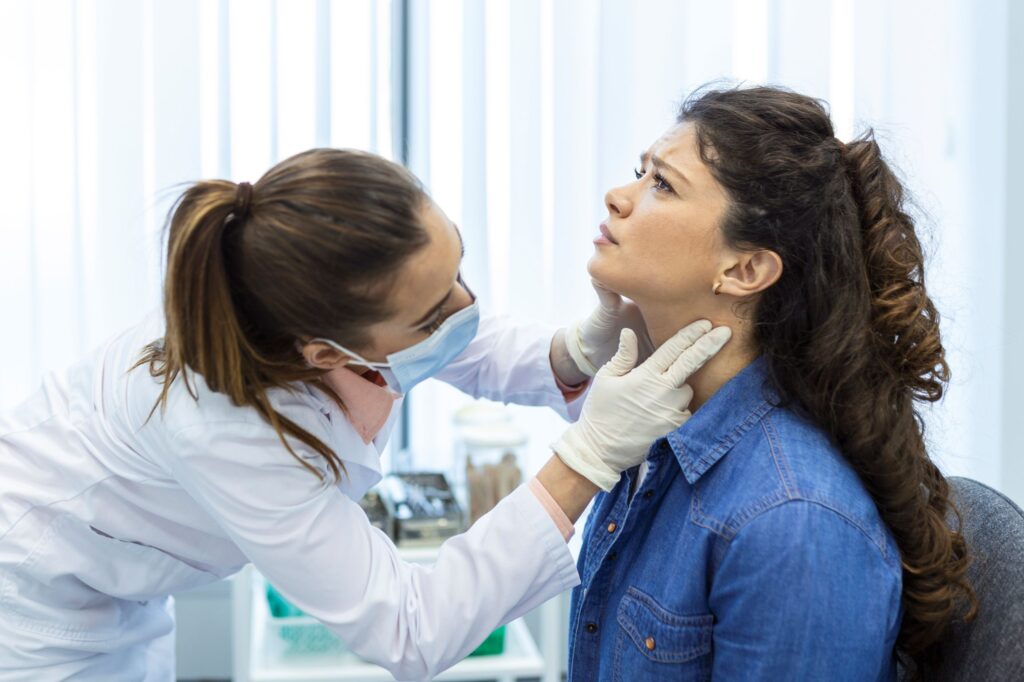
Physical examination: the doctor will feel the neck to detect any lumps, nodules, or abnormalities in the thyroid.
Blood tests: blood tests are performed to measure the levels of various parameters including calcium, phosphorus, PTH, vitamin D, thyroid hormones (TSH, T3 and T4), thyroglobulin, and in some cases calcitonin.
Thyroid ultrasound: this imaging test uses ultrasound to create images of the thyroid gland and nodules. It allows for the evaluation of the size, shape, and characteristics of the nodules, helping to distinguish between benign and malignant nodules.
Fine needle aspiration biopsy (FNAB): this procedure involves inserting a fine needle into the thyroid nodule to extract a sample of cells. The sample is examined under a microscope to determine whether cancer cells are present. At HM Hospitales, FNAB is performed with ultrasound guidance for greater accuracy and safety.
Thyroid scintigraphy: this test uses a small amount of radioactive iodine to obtain images of the thyroid gland. Thyroid cells absorb radioactive iodine, allowing visualization of the gland and detection of areas of abnormal activity, such as hyperfunctioning nodules (hot nodules) or hypofunctioning nodules (cold nodules).
Laryngoscopy: in some cases, a laryngoscopy is performed to evaluate the vocal cords and rule out any involvement by thyroid cancer.
Thyroid cancer treatment
Treatment for thyroid cancer is individualized based on the specific characteristics of each case, including the type and stage of the cancer, the patient’s overall health, and their personal preferences. Treatment options include:
Surgery (thyroidectomy): it is the most common treatment for thyroid cancer. A thyroidectomy involves the surgical removal of all or part of the thyroid gland.
Radioactive iodine therapy: after surgery, in selected cases, radioactive iodine may be administered to destroy any remaining cancer cells in the thyroid or that have spread to other parts of the body. This treatment is especially effective for papillary and follicular thyroid cancer.
Hormone therapy: after total thyroidectomy, patients require lifelong thyroid hormone therapy to replace the hormones that the thyroid no longer produces. This helps regulate metabolism and prevent the symptoms of hypothyroidism.
Targeted therapy: it uses drugs that target specific characteristics of cancer cells, such as genetic mutations or specific proteins.
Chemotherapy: it is rarely used for thyroid cancer, generally being reserved for cases of advanced or anaplastic cancer that do not respond to other treatments.
External beam radiotherapy: it uses high-energy radiation to destroy cancer cells. It can be used to treat thyroid cancer that cannot be surgically removed or that has recurred after other treatments.
Remember that this article is for informational purposes only and does not replace professional medical advice. If you suspect you have thyroid cancer, consult a specialist to obtain an accurate diagnosis and a treatment plan tailored to your needs.
Our doctors
Contact and make an appointment with the professionals in this area