
Meningiomas are tumors that originate in the meninges, the membranes that surround and protect the brain and spinal cord. Although most are benign, they can cause significant health problems.
These tumors are usually slow-growing and, in many cases, do not cause obvious symptoms for years. However, as they grow, they can put pressure on the surrounding brain tissue, nerves, and blood vessels, which can lead to a variety of neurological problems.
Symptoms of meningiomas
The manifestation of symptoms in a meningioma is variable and depends on several factors. The symptoms of a meningioma vary depending on its size and location. Some meningiomas may not cause any noticeable symptoms, especially if they are small and slow-growing. However, as the tumor grows, it can put pressure on specific areas of the brain, potentially causing the following:
Persistent headaches.
Changes in vision (double or blurred vision).
Hearing loss or ringing in the ears.
Loss of smell.
Seizures.
Weakness in the arms or legs.
Changes in personality or behavior.
Memory problems.
Difficulty speaking.
It is important to remember that these symptoms can also be caused by other medical conditions. If you experience any of these symptoms, it is essential to consult a doctor for an accurate diagnosis.
Classification of meningiomas
The classification of meningiomas is crucial to determine their behavior and to plan the appropriate treatment. Meningiomas are classified according to their grade, which indicates how quickly they are likely to grow and spread. The World Health Organization (WHO) classifies meningiomas into three grades:
Grade I (benign): these are the most common and slowest-growing meningiomas. They are considered benign and have a high probability of being cured after treatment.
Grade II (atypical): these tumors have a faster growth rate and a higher likelihood of recurrence than grade I meningiomas.
Grade III (anaplastic or malignant): these are the least common and fastest-growing meningiomas. They are considered malignant and have a higher probability of recurrence; they are also called anaplastic.
Causes of meningiomas
Despite current research, the exact causes of meningiomas are still not fully understood. The exact causes of meningiomas are not fully understood. However, it is believed that a combination of genetic and environmental factors may play a role in their development.

Identifying risk factors can help in understanding the likelihood of developing meningiomas. While the exact cause of meningiomas is not always clear, there are several known risk factors:
Radiation: exposure to radiation, especially to the head, has been associated with an increased risk of meningiomas.
Age: meningiomas are more common in older adults.
Sex: women are more likely to develop meningiomas than men.
Genetic disorders: certain genetic conditions, such as neurofibromatosis type 2, increase the risk of meningiomas.
Complications of meningiomas
If left untreated, meningiomas can lead to various complications that affect health and quality of life. Meningiomas can cause a variety of complications, depending on their location, size, and grade. These complications may include:
Neurological deficits: meningiomas can press on cranial nerves, leading to problems with vision, hearing, smell, or movement.
Increased intracranial pressure: as the tumor grows, it can increase pressure inside the skull, causing headaches, vomiting, and changes in mental status.
Seizures: meningiomas can irritate the surrounding brain tissue, causing seizures.
Hydrocephalus: in some cases, meningiomas can block the flow of cerebrospinal fluid, leading to a buildup of fluid in the brain (hydrocephalus).
If you suspect you have a meningioma, it is important to seek medical attention immediately. Early diagnosis and treatment can help prevent serious complications.
Diagnosis of meningiomas
An accurate diagnosis is essential for effective treatment. The diagnosis of a meningioma usually involves a combination of:
Neurological examination: a neurological examination can help assess brain and nerve function.
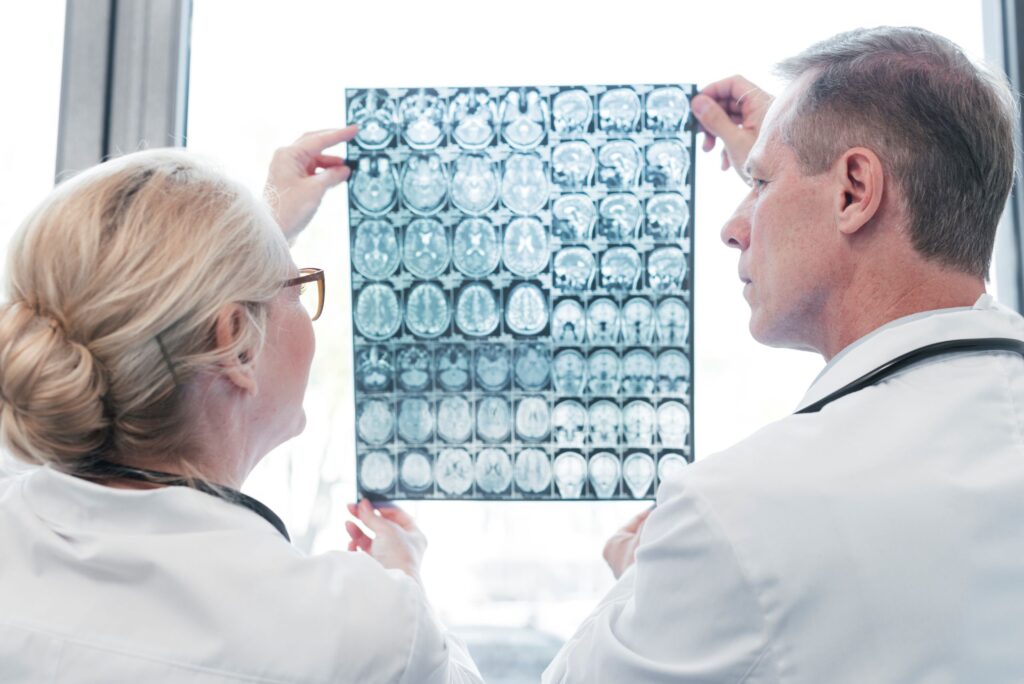
Magnetic Resonance Imaging (MRI): MRI is an imaging technique that uses magnets and radio waves to create detailed images of the brain and spinal cord. It is the most commonly used imaging test to diagnose meningiomas.
Computerized Tomography (CT scan): CT is a technique that uses X-rays to create cross-sectional images of the brain. It can be useful for detecting meningiomas, especially if MRI is not available.
Biopsy: in some cases, a biopsy may be necessary to confirm the diagnosis of a meningioma. A biopsy involves removing a small sample of tumor tissue for analysis in a laboratory.
HM Hospitales has advanced diagnostic equipment, including magnetic resonance imaging and computed tomography, for the detection and accurate diagnosis of meningiomas. a computarizada, para la detección y el diagnóstico preciso de meningiomas.
Treatments for meningioma
Meningioma treatment is multifaceted and tailored to the individual needs of each patient. Treatment of a meningioma depends on several factors, including the size, location, grade of the tumor, and the patient’s overall health. Treatment options may include:
Observation: if the meningioma is small, slow-growing, and not causing symptoms, the doctor may recommend simply monitoring it with periodic imaging scans.
Surgery: surgery is the main treatment for most meningiomas that cause symptoms or are growing rapidly. The goal of surgery is to remove as much of the tumor as possible without damaging the surrounding brain tissue.
Radiotherapy: radiotherapy uses high-energy X-rays to destroy tumor cells. It may be used after surgery to destroy any remaining tumor cells or as the primary treatment if surgery is not possible.
Stereotactic radiosurgery: this type of radiotherapy delivers a high dose of radiation precisely targeted at the tumor, minimizing damage to the surrounding tissue. It can be used to treat small meningiomas or to control the growth of tumors that cannot be surgically removed.
Targeted therapy: some meningiomas have specific genetic characteristics that can be targeted with targeted therapies. These medications can help reduce the size of the tumor or stop its growth.
Chemotherapy: chemotherapy is rarely used to treat meningiomas, but it may be an option in cases of aggressive tumors that do not respond to other treatments.
Meningioma treatment often requires a multidisciplinary approach involving neurosurgeons, radiation oncologists, and other specialists.
Remember that this article is for informational purposes only and does not replace professional medical advice. If you suspect you have a meningioma, consult a specialist to obtain an accurate diagnosis and an appropriate treatment plan tailored to your needs.

Our doctors
Contact and make an appointment with the professionals in this area