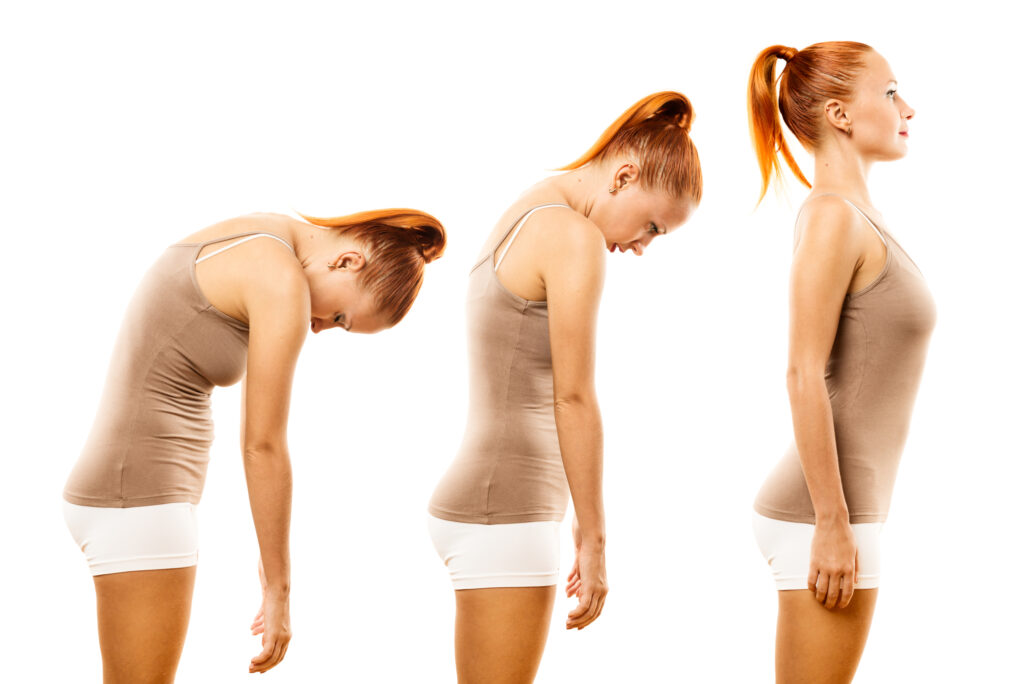
Kyphosis is an abnormal curvature of the spine. The spine, viewed from the side, has natural curves. Kyphosis refers to excessive curvature of the thoracic spine (upper back). A curvature of between 20 and 40 degrees is considered normal. When the curvature exceeds 45 degrees, kyphosis is diagnosed. This excessive curvature can cause back pain, stiffness, and, in severe cases, breathing problems. It affects people of all ages, although it is more common in teenagers and older adults.
Symptoms of kyphosis
The symptoms of kyphosis can vary depending on the severity of the curvature and the underlying cause. Some patients may experience no symptoms, while others may experience severe back pain and breathing difficulties.
Early symptoms:
in the initial stages, kyphosis can manifest as a hunched posture, mild back pain, fatigue, and stiffness. These symptoms may be intermittent and worsen with physical activity.
Late symptoms:
as kyphosis progresses, the symptoms can become more severe and include intense back pain, back stiffness, difficulty breathing, leg weakness, and loss of sensation. In severe cases, kyphosis can compress the spinal cord, causing neurological problems.
Classification of kyphosis
There are different types of kyphosis, each with its own characteristics and causes. Classification helps determine the best treatment approach. These include:
Postural: postural kyphosis is the most common form and is due to poor posture. It generally does not cause pain and can be corrected with strengthening and stretching exercises.
Congenital: congenital kyphosis is present at birth due to abnormal development of the vertebrae. It can be mild or severe and often requires surgical treatment.
Scheuermann’s: Scheuermann’s kyphosis occurs during adolescence, usually during the rapid growth stage. It is characterized by the wedging of several vertebrae, resulting in a rigid curvature.
Degenerative: degenerative kyphosis is caused by the wear and tear of the intervertebral discs with age. It can cause back pain and stiffness.
Neuromuscular: neuromuscular kyphosis is associated with neuromuscular diseases such as cerebral palsy or muscular dystrophy, which affect the nerves and muscles that control posture.
Traumatic: traumatic kyphosis is the result of a fracture or injury to the spine. It requires immediate medical attention.
Causes of kyphosis
The causes of kyphosis are diverse and depend on the type of kyphosis.
Postural: habitually adopting bad postures, such as slouching when sitting or standing. Weak back muscles can also contribute.
Congenital: problems in the formation of the spine during fetal development, such as the lack of complete formation of one or more vertebrae or their incorrect fusion. These birth defects can be hereditary or occur spontaneously.
Scheuermann’s: it is believed to be caused by a combination of genetic and environmental factors. The uneven growth of the vertebrae, where the anterior part grows more slowly than the posterior part, causes the characteristic wedging of this disease.
Degenerative: aging, arthritis, osteoporosis, and degeneration of the intervertebral discs contribute to degenerative kyphosis. Loss of disc height and the formation of bone spurs can alter spinal alignment.
Neuromuscular: diseases such as cerebral palsy, muscular dystrophy, poliomyelitis, and spina bifida can weaken the muscles that support the spine, causing kyphosis.
Traumatic: vertebral compression fractures, ligament injuries, and other spinal trauma can cause kyphosis.
There are several factors that can increase the likelihood of developing kyphosis. Knowing these risk factors can help take preventive measures. These include:
Injuries: spinal injuries increase the risk of traumatic kyphosis.
Age: the risk of degenerative kyphosis increases with age due to the natural wear and tear of the spine.
Sex: Scheuermann’s kyphosis is more common in men than in women.
Family history: a family history of kyphosis, especially congenital or Scheuermann’s kyphosis, increases the risk.
Osteoporosis: osteoporosis weakens the bones, making them more prone to compression fractures that can cause kyphosis.
Sedentary lifestyle: lack of exercise and poor posture can contribute to postural kyphosis.
Neuromuscular diseases: diseases that affect the nerves and muscles increase the risk of neuromuscular kyphosis.
Complications of kyphosis
If not treated properly, kyphosis can lead to a range of complications that affect health and quality of life. Chronic back pain is one of the most common complications, which can range from mild discomfort to debilitating pain that interferes with daily activities. Kyphosis can also cause progressive spinal deformity, leading to a hunched appearance and decreased height.
In severe cases, excessive curvature can compress the lungs and make breathing difficult, causing dyspnea and reducing lung capacity. In addition, kyphosis can put pressure on the spinal cord and nerve roots, causing neurological problems such as weakness, numbness, tingling, and pain in the extremities. In extreme cases, spinal cord compression can result in paralysis. Finally, kyphosis can affect body image and self-esteem, which can lead to psychological problems such as anxiety and depression.
Diagnosis of kyphosis
An accurate diagnosis is essential for effective treatment.
Physical examination: the doctor will assess the curvature of the back, posture, range of motion, and the presence of pain. The doctor may also perform neurological tests to assess spinal cord function.
Radiography: spine X-rays allow visualization of the curvature and measurement of the kyphosis angle. They may also show abnormalities in the vertebrae, such as wedging or fractures.
Magnetic Resonance Imaging (MRI): MRI provides detailed images of soft tissues, including the intervertebral discs, the spinal cord, and the nerves. It is useful for assessing compression of the spinal cord or nerve roots.
Computerized Tomography (CT scan): CT provides cross-sectional images of the spine and is useful for visualizing fractures or bone abnormalities.
Bone scintigraphy: bone scintigraphy can help identify areas of inflammation or infection in the spine.
Kyphosis treatments
The goal of kyphosis treatment is to stop the progression of the curvature, relieve pain, improve lung function (in cases where it is affected), prevent neurological complications, and improve the patient’s quality of life. The specific treatment approach will depend on the cause, the severity of the curvature, and the presence of symptoms.
Mild kyphosis without symptoms: in mild cases without pain or functional limitations, observation and regular monitoring with X-rays are recommended to control the progression of the curvature. Physical therapy may be recommended to maintain muscle strength and flexibility.
Postural kyphosis: this type of kyphosis generally does not require invasive medical treatment. The main focus is physiotherapy, which includes exercises to improve posture, strengthen back muscles (such as the spinal erectors and rhomboids), and stretch chest muscles (pectorals). Breathing exercises may also be recommended to improve lung capacity. It is important to educate the patient about the importance of maintaining good posture in daily activities, such as sitting, standing, and lifting objects.
Moderate to severe kyphosis with symptoms: for moderate to severe kyphosis with symptoms, treatment may include medications for pain and inflammation, such as over-the-counter pain relievers (acetaminophen, ibuprofen), stronger pain relievers (opioids, if necessary), NSAIDs, and muscle relaxants. Physiotherapy plays a crucial role, with individualized exercises to improve flexibility, strength, posture, and range of motion, in addition to manual therapy techniques. In children and adolescents, braces can be used to control the progression of the curvature during growth. Surgery is reserved for severe cases that do not respond to conservative treatments, when there is compression of the spinal cord or nerve roots, or when the deformity is significant. Surgical options include spinal fusion (joining vertebrae with bone grafts and metal devices), osteotomy (cutting the bone to correct the curvature), and insertion of metal rods or plates for support and correction.
Remember that this article is for informational purposes only and does not replace professional medical advice. If you suspect you have kyphosis, consult a specialist to obtain an accurate diagnosis and an appropriate treatment plan tailored to your needs.
Our doctors
Contact and make an appointment with the professionals in this area