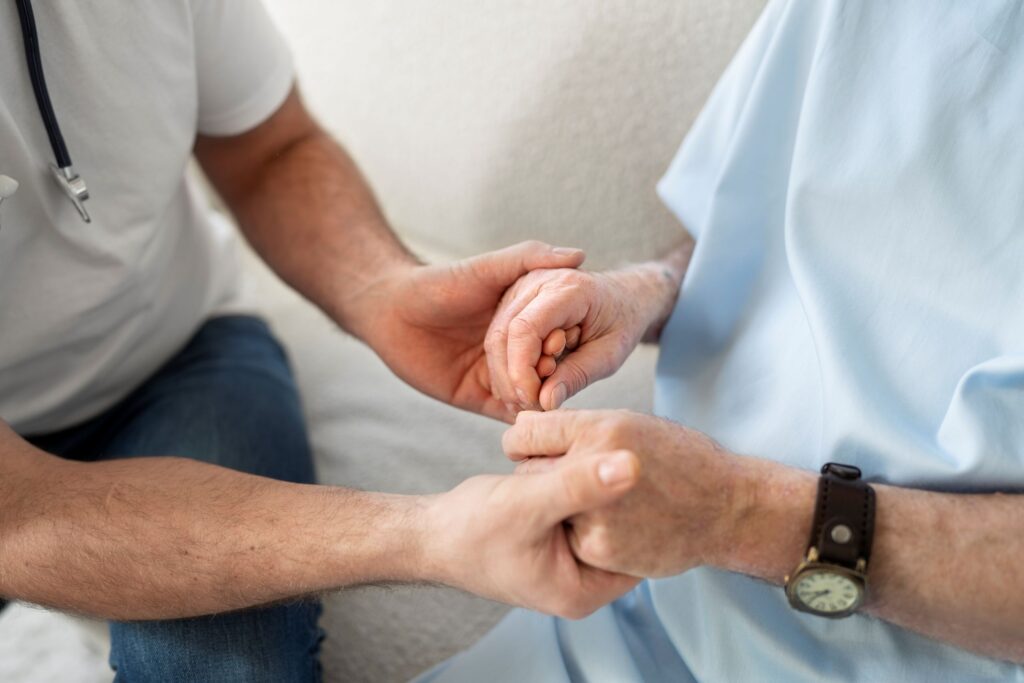
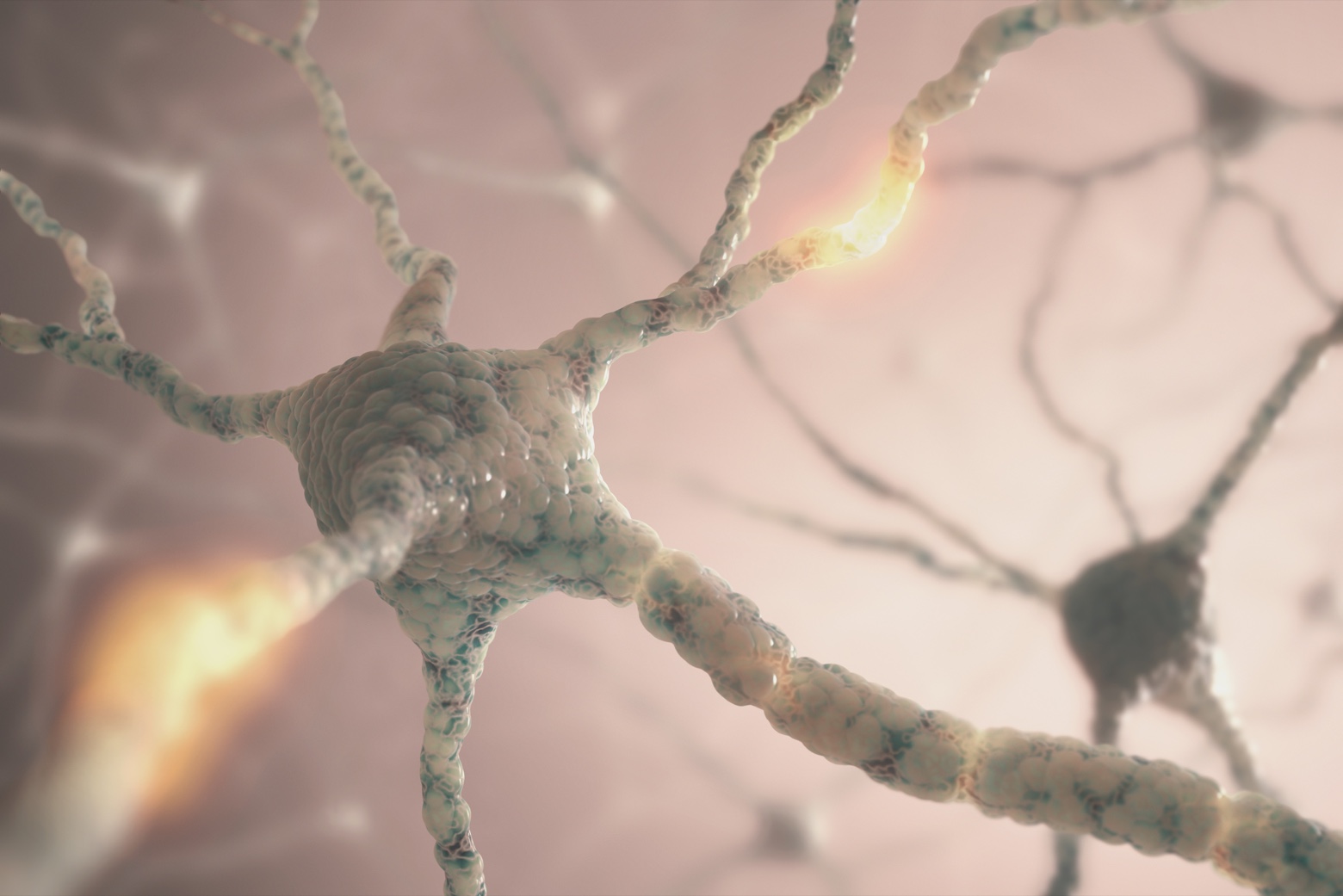
Essential tremor is a neurological disorder characterized by rhythmic and involuntary movements, mainly in the hands, but which can also affect the head, voice, arms, and, less frequently, the legs. These tremors, unlike those seen in Parkinson’s disease, are accentuated during voluntary movement and decrease or disappear at rest. In other words, the tremor intensifies when performing actions such as reaching for an object, writing, or bringing a glass to the mouth. Essential tremor is generally not associated with other obvious neurological symptoms, which differentiates it from other diseases that also cause tremors.
Characteristics of essential tremor
Tremors in the hands: this is the most common symptom. Tremors are usually bilateral and symmetrical, although in some cases they can be asymmetrical, affecting one hand more than the other. They become more pronounced when performing fine movements, such as writing, threading a needle, using eating utensils, or buttoning a shirt.
Tremors in the head: they manifest as rhythmic head movements, which can be of the “yes-yes” type (up and down) or “no-no” type (side to side).
Tremors in the voice: the voice may sound shaky or broken, which in the most severe cases can make communication difficult.
Tremors in legs: less common than tremors in the hands, but they can make activities like walking or maintaining balance difficult.
Causes and risk factors of essential tremor
Although research continues, the exact cause of essential tremor remains unknown. It is believed that a combination of genetic and environmental factors contributes to the development of the disease:
Family history: the most important risk factor. If a first-degree relative (parent, sibling, child) has essential tremor, the individual risk of developing the disease increases significantly.
Age: the prevalence of essential tremor increases with age, being more common in people over 40 years old.
Potential environmental factors: some studies suggest that exposure to certain toxins or medications may be related to the development of essential tremor, although more research is needed to confirm these associations.
In severe cases that do not improve sufficiently with medication, essential tremor can significantly affect quality of life. Complications may include:
Difficulty performing daily activities: tremors can interfere with activities such as eating, drinking oneself, dressing, writing, and working.
Emotional and social problems: the shame and frustration caused by tremors can lead to social isolation, anxiety, and depression.
Disability: in severe cases, the tremors can be so intense that they prevent the performance of basic activities, resulting in disability.
Diagnosis of essential tremor
The diagnosis of essential tremor is a process that requires a thorough evaluation by a specialized neurologist. There is no test that confirms the diagnosis; instead, it is based on a combination of the patient’s medical history, a neurological physical examination and, in some cases, additional tests that may help. The main objective is to identify the clinical characteristics of the tremor and rule out other conditions that could cause similar symptoms. This process, known as differential diagnosis, is essential to ensure appropriate treatment.
Medical History: the doctor will begin by gathering detailed information about the patient’s symptoms, including the location of the tremors, their intensity, when they started, what factors worsen or improve them, and whether there is a family history of tremor. The doctor will also ask about the patient’s general medical history and any medications they are taking, as some drugs can cause tremors as a side effect.
Physical Neurological Examination: during the physical examination, the neurologist will assess the patient’s neurological function, paying special attention to the tremors. The examiner will observe the amplitude and frequency of tremors in different postures (rest, sustained posture, and action) and will assess coordination, muscle strength, reflexes, and sensitivity. The examiner can also perform specific tests to assess the tremor, such as asking the patient to write, draw a spiral, or bring a glass of water to their mouth.
Additional Tests: in some cases, additional tests can be performed to help rule out other conditions that may cause tremors. Blood tests are useful for identifying metabolic disorders, such as hyperthyroidism, or nutritional deficiencies that may cause tremors. Neuroimaging studies, such as magnetic resonance imaging (MRI) of the brain, allow clinicians to rule out neurological diseases such as tumors, multiple sclerosis, or strokes; although MRI does not show specific alterations in essential tremor, it is valuable for excluding other pathologies. Electromyography (EMG), which measures the electrical activity of muscles, helps to differentiate essential tremor from other types, such as parkinsonian or dystonic tremor. Finally, thyroid function tests can rule out hyperthyroidism, a hormonal condition that can also cause tremors.
Differential Diagnosis: the differential diagnosis of essential tremor requires distinguishing it from other conditions that also cause tremors. In Parkinson’s disease, tremors are more pronounced at rest and decrease with movement, accompanied by muscle rigidity, slowness of movement, and balance problems. Dystonic tremor is associated with dystonia, a condition characterized by involuntary muscle contractions and abnormal postures. Cerebellar tremor is more irregular and worsens when approaching a target, being related to damage in the cerebellum, which is responsible for coordination and balance. Exacerbated physiological tremor, which is not a disease in itself and is generally mild, can be intensified by stress, anxiety, fatigue, or caffeine or alcohol consumption, generally improving with rest. Some medications, such as bronchodilators, antidepressants, and antipsychotics, can induce tremors as a side effect. Finally, in multiple sclerosis, although tremors are not the main symptom, they can occur along with vision problems, muscle weakness, numbness, tingling, and cognitive difficulties.
It is crucial to seek medical attention if you experience persistent tremors or tremors that interfere with daily activities. An accurate and timely diagnosis by a specialized neurologist is essential to start the appropriate treatment and improve quality of life.
Treatment of essential tremor
The treatment of essential tremor is individualized according to the severity of the symptoms and the impact on the patient’s quality of life.
Lifestyle changes: reducing your caffeine and alcohol intake, as these can exacerbate tremors. Learning relaxation techniques to control stress, which can also worsen symptoms. Using adaptive devices, such as heavy cutlery or special pens, to make everyday tasks easier.
Occupational therapy: working with an occupational therapist to learn strategies to compensate for tremors and improve independence in daily activities.
Drugs: regarding pharmacological treatment, various medications are used to control tremors. Beta-blockers, such as propranolol, are often the first line of treatment and help reduce the frequency and intensity of tremors. Anticonvulsants, such as primidone, gabapentin, or topiramate, are also used to control tremors, especially when beta-blockers are ineffective or contraindicated. In some cases, other benzodiazepine medications can be used to control tremors, as they can be helpful in reducing anxiety and stress-related tremors, but their long-term use should be carefully evaluated by a doctor due to the risk of dependence. In patients with tremor that does not improve adequately with a single drug, it is common to combine several of them.
High-Intensity Focused Ultrasound (HIFU): HIFU is a relatively new technique that allows for ablations or therapeutic lesions to be performed in deep areas of the brain. These lesions have been performed for decades, but before the advent of HIFU they required invasive surgery with cranial opening and insertion of an electrode into the brain. The great advantage of HIFU is that it allows them to be performed without opening the skull, that is, without surgery as such, which greatly reduces the possibility of serious complications. Although creating a lesion to obtain a clinical benefit is counterintuitive, the mechanism of therapeutic ablations is the elimination of neurons that are malfunctioning and causing the tremor. This technique, which began to be used for tremor in 2013, is now supported by scientific evidence and is regularly applied worldwide. The technique is safe but is not without adverse effects that may be permanent.
Deep brain stimulation/surgery: in severe cases that do not respond to medication, surgery may also be an option. First, we have deep brain stimulation (DBS). This technique, which has been used to treat tremor for almost 40 years, involves implanting electrodes in the brain that are connected to a pulse generator in the chest to interrupt the signals that cause the tremor. It is highly effective, although invasive, and the adverse effects, although very rare, can be serious (infection or bleeding).
At HM Hospitales, all these therapeutic options are offered to treat tremor. This includes HIFU, for which HM CINAC is a pioneer and world reference, as shown by its scientific publications.
Remember that this article is for informational purposes only and does not replace professional medical advice. If you suspect you have essential tremor, consult a specialist to obtain an accurate diagnosis and an appropriate treatment plan tailored to your needs.
Our doctors
Contact and make an appointment with the professionals in this area