MR cholangiopancreatography
What is an MR cholangiopancreatography test?
Magnetic resonance cholangiopancreatography (MRCP) is an imaging study that provides detailed images of the liver, gallbladder, bile ducts, and pancreas to be obtained through the use of magnets and radio waves, without the need for radiation.
This non-invasive procedure is very useful for detecting blockages, gallstones, tumors, and other abnormalities in these organs, providing key information for the diagnosis and treatment of various liver and biliary diseases.
What is this diagnostic procedure for?
MR cholangiopancreatography is used to:
- Detect gallstones in the bile ducts.
- Diagnose obstructions in the bile ducts caused by tumors, scarring, or inflammation.
- Evaluate diseases of the pancreas, such as pancreatitis, tumors, or cysts.
- Investigate the cause of abdominal pain or jaundice (yellowing of the skin and eyes).
- Plan surgery of the bile ducts or pancreas.
- Assess congenital anomalies of the bile ducts.
Benefits of advanced technology in MR cholangiopancreatography
MR cholangiopancreatography is a very safe test that uses advanced technology to obtain detailed images of the bile ducts and pancreas:
- Powerful magnets: it uses powerful magnets to generate a strong magnetic field.
- Radiofrequency waves: it uses radiofrequency waves to create the images.
- Specialized imaging sequences: imaging sequences specifically designed to visualize the bile ducts and pancreas are used.
Fat suppression techniques: techniques are used to suppress the signal from fat and improve the visualization of the structures of interest.
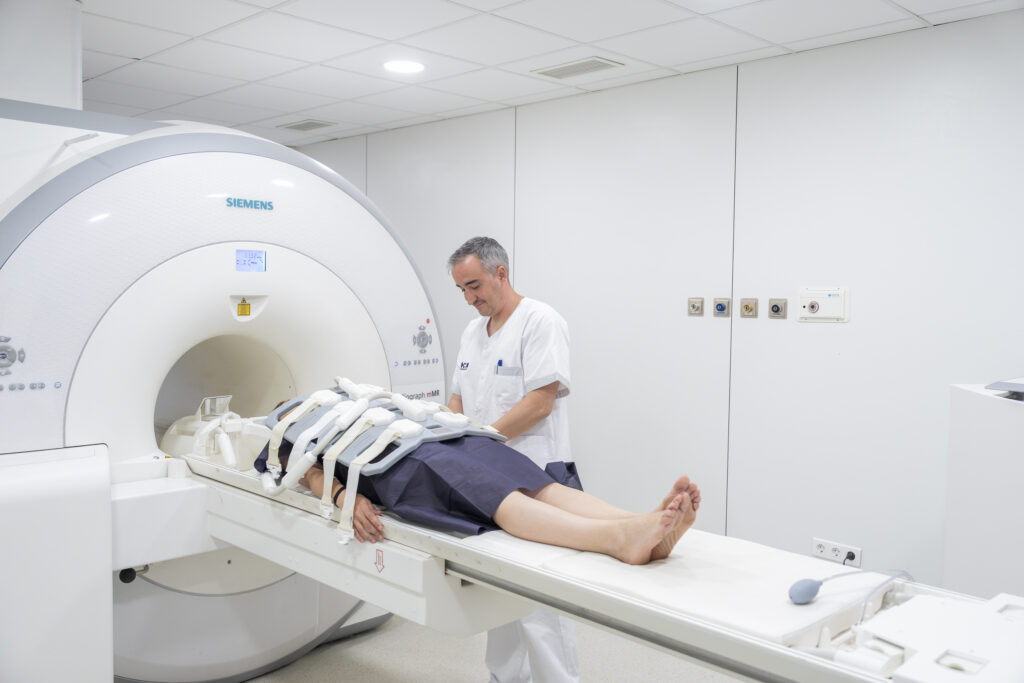
The MR cholangiopancreatography procedure involves:
-
Preparation:
Before an MR cholangiopancreatography procedure, you may be instructed to fast for at least four hours to ensure clearer images. If you are pregnant or suspect you might be, it is important to inform your doctor about this, as well as any history of drug allergies. In some cases, you might be given medication to reduce bowel movements and improve the quality of the study.
-
During the procedure:
During the procedure, you will lie on your back on a table that will slide into the MRI scanner. To obtain clear images, it is essential that you remain still. The device makes loud noises while operating, so they may offer you earplugs or headphones for added comfort. The study usually lasts 30 to 60 minutes.
Recommendations for the procedure
Follow your doctor’s instructions regarding preparation, including fasting. Inform them if you are pregnant, have drug allergies, or suffer from anxiety or claustrophobia, so they can take the necessary precautions.
Are there any risks?
MR cholangiopancreatography is a safe study, although, as with any medical procedure, it can carry some risks.
- Claustrophobia: some people may feel anxious or claustrophobic inside the MRI machine.
- Allergic reactions: although rare, allergic reactions to medications used to reduce bowel movements can occur.
To ensure your procedure runs smoothly, we ask that you arrive before the scheduled time. This will allow us to complete the necessary administrative and clinical preparation.
Before the procedure, we will give you the Informed Consent form, a document with important information that you must read and sign.
If your appointment is for an MRI, it is crucial that you inform us about the presence of pacemakers, metallic objects, prostheses (including dental prostheses), tattoos, or drug infusion devices such as insulin pumps.