
Cervicitis is a cervix inflammation caused by infections, irritations, or other factors. Although it may not always present symptoms, detecting and treating it early is essential to prevent complications.
This article explains what cervicitis is, how to identify it, its causes, and why regular gynaecological check-ups are necessary for maintaining your health. Keep reading to learn about this condition and how to address it.
What is cervicitis?
Taking care of your reproductive health is key to preventing and treating conditions like cervicitis, an inflammation of the cervix, the lower part of the uterus that connects to the vagina. This inflammation can be caused by various factors, such as infections, irritations, or even reactions to chemical or physical products.
Although it may cause concern, it’s essential to know that cervicitis is a common condition and, in most cases, treatable. The cervix plays a crucial role in female reproductive health, acting as a protective barrier against infections and playing an important role during pregnancy and childbirth. A healthy cervix is essential for fertility, prevention of upper reproductive tract infections, and a healthy pregnancy.
How to identify cervicitis?
Cervicitis can manifest in different ways and does not always present symptoms. This is why attending regular gynaecological check-ups at least once a year is essential to detect any abnormalities. Early diagnosis and appropriate treatment are key to preventing complications and maintaining good reproductive health. Cervicitis can affect women of all ages and backgrounds, and it’s important to remember that there is nothing shameful about it. Speaking openly with your gynaecologist about any concerns related to your reproductive health is essential to receiving proper care. Don’t hesitate to ask your doctor questions about cervicitis or any other aspect of your gynaecological health.
What causes inflammation of the cervix?

Inflammation of the cervix, known as cervicitis, can have various causes. Among the most common are:
- Sexually transmitted infections (STIs), such as chlamydia, gonorrhoea, and the human papillomavirus (HPV).
- Fungal infections (candidiasis) or bacterial infections (bacterial vaginosis).
- Allergic reactions: chemicals in spermicides, vaginal douches, or latex, which can irritate.
- Physical irritation: the use of intrauterine devices (IUDs) or sexual intercourse can cause inflammation of the cervix.
Risk factors
Certain factors can make you more prone to developing cervicitis. Here are the main ones:
- Having multiple sexual partners: Having multiple sexual partners increases the risk of exposure to STIs, which are a common cause of cervicitis. The greater the number of sexual partners, the higher the likelihood of coming into contact with an STI, such as chlamydia or gonorrhoea, which can cause inflammation of the cervix. It’s essential to practise safe sex by using condoms during every sexual encounter to reduce the risk of contracting STIs.
- Having a sexual partner with an STI: If your sexual partner has an STI, the risk of you contracting it and developing cervicitis is significantly higher. Many STIs can be asymptomatic, meaning your partner may have an infection without knowing it. Open communication with your partner about sexual history and STI testing is crucial for protecting your health.
- Vaginal douching: This can disrupt the natural balance of vaginal flora, eliminating beneficial bacteria that protect against infections. This can increase susceptibility to infections, including cervicitis. For this reason, gynaecologists generally advise against the use of vaginal douches, as they can do more harm than good.
- Hormonal contraceptives: While these are an effective contraceptive method, some studies suggest they may slightly increase the risk of cervicitis. Hormonal changes caused by contraceptives can alter the vaginal environment, making it more susceptible to certain infections. If you use hormonal contraceptives and experience symptoms of cervicitis, it’s essential to consult your gynaecologist.
Common symptoms
It’s important to note that some women with cervicitis may not experience symptoms. However, common symptoms of cervicitis include:
- Abnormal vaginal discharge: This may be thick, yellow, or greenish, with an unpleasant odour.
- Vaginal bleeding outside of the menstrual period: This can occur between menstrual cycles or after sexual intercourse.
- Pain during sexual intercourse (dyspareunia): Discomfort that affects your quality of life.
- Pain or discomfort when urinating (dysuria): A burning sensation.
If you experience any of these symptoms, it’s essential to consult a gynaecologist for an accurate diagnosis. Delaying diagnosis and treatment can lead to complications.
How is cervicitis diagnosed and treated?
Diagnosis begins with a gynaecological consultation, during which the doctor will perform a pelvic exam to observe the cervix in detail. This procedure may include:
- Pap smear or cervical cytology: A test that analyses cells from the cervix to detect abnormalities, including precancerous or cancerous cells.
- Tests for sexually transmitted infections (STIs):
- Chlamydia
- Gonorrhoea
- Trichomoniasis
- Other STIs
- These tests may include urine tests, vaginal cultures, or nucleic acid amplification tests (NAATs), which are highly accurate.
In some cases, a colposcopy may be recommended, a procedure that uses a microscope to examine the cervix in greater detail. Tiny tissue samples (biopsies) may be taken during a colposcopy for further analysis.
Treatment of cervicitis
The treatment of cervicitis depends on the underlying cause. Treatment options include:
- Antibiotics for bacterial infections.
- Antifungals for fungal infections.
- Antiviral medications for viral infections.
- Avoiding irritants, such as vaginal douches or spermicides.
- Cryotherapy or cauterisation for cases of chronic or recurrent cervicitis.
It’s essential to complete the prescribed treatment, even if symptoms disappear before finishing it, to ensure the infection is entirely eradicated and prevent recurrences. If cervicitis is associated with an STI, it’s equally essential for your sexual partner to receive treatment to avoid reinfection.
What is chronic cervicitis?
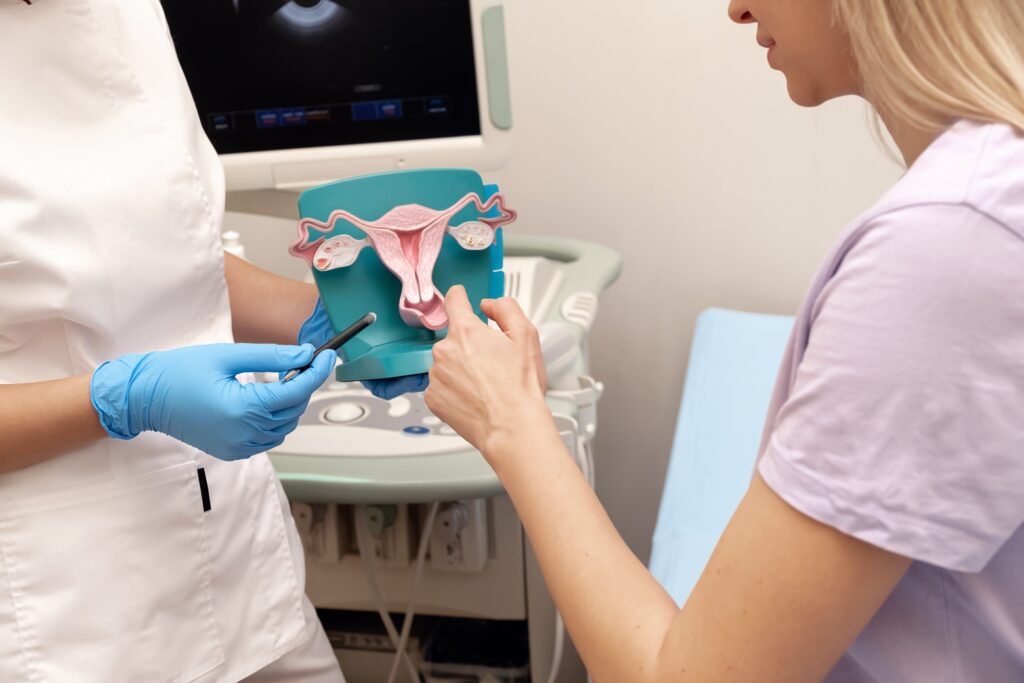
Chronic cervicitis is a persistent inflammation of the cervix that can last for months or even years. Often, chronic cervicitis does not present noticeable symptoms, making it difficult to detect. However, some women may experience:
- Persistent vaginal discharge.
- Irregular bleeding.
- Pelvic pain.
The causes of chronic cervicitis are diverse and include:
- Persistent infections, such as some sexually transmitted infections (STIs).
- Chronic irritation, for example, is caused by the use of intrauterine devices (IUDs).
- Non-infectious inflammation associated with allergies or chemical irritants.
- Untreated acute cervicitis.
- In some cases, a specific cause cannot be determined.
Why is it important to treat chronic cervicitis?
Untreated chronic cervicitis can lead to serious complications, such as:
- Increased risk of infertility.
- Pelvic inflammatory disease (PID).
- Problems during pregnancy, such as premature birth or low birth weight.
- Increased susceptibility to other STIs, including HIV.
Suppose you experience persistent symptoms such as abnormal vaginal discharge, irregular bleeding, or pelvic pain. In that case, you must consult a gynaecologist for a thorough evaluation, even if you have been treated for cervicitis before.
Early diagnosis and appropriate treatment of chronic cervicitis are essential for protecting your long-term reproductive health. In some cases, cryotherapy or cauterisation may be recommended to treat chronic cervicitis.
Your intimate health is in good hands: HM Hospitales.
At HM Hospitales, we understand the importance of good gynaecological health. Our team of highly qualified gynaecologists can provide you with the personalised care you need.
If you are concerned about cervicitis, exocervicitis, or any other gynaecological condition, do not hesitate to contact us. We offer personalised services, including:
- State-of-the-art colposcopy equipment.
- Specialised clinical analysis laboratories.
- A multidisciplinary approach, collaborating with gynaecologists, obstetricians, and other specialists.
You can request an appointment through our website or by phone. At HM Hospitales, we are committed to your well-being and want you to feel supported at every stage of your reproductive health.
Remember: This article is for informational purposes only and does not replace medical consultation. If you have any concerns, consult a healthcare professional.