
Giving birth is a unique experience for women, and while vaginal delivery is the most common, sometimes circumstances require a caesarean section (C-section). If you’re facing a C-section, whether planned or emergency, it’s natural to feel uncertain and nervous.
In this article, we’ll explain what a C-section involves, what to expect during the procedure, and the necessary care for both mother and baby after the surgery.
What is a C-Section?
A C-section is a surgical procedure in which the baby is delivered through an incision in the mother’s abdomen and uterus. It’s important to note that a C-section is a relatively safe and standard procedure performed by highly trained medical professionals in a controlled hospital environment. The decision to perform a C-section is based on a medical evaluation of the mother and baby, taking into account various factors that may affect the safety of a vaginal delivery. Below, we explain the two types of C-sections:
- Planned: When it’s known in advance, based on the mother’s medical history or the baby’s condition, that a vaginal delivery is not advisable.
- Emergency: When complications arise during labour that requires immediate surgical intervention.
When is a C-Section Performed?
A C-section is usually performed based on several factors, such as the medical evaluation of the mother and baby or potential complications during labour. Below are some of the most common reasons for performing a C-section:
- Breech or transverse position: When the baby is not in the head-down (cephalic) position for a vaginal delivery.
- Foetal distress: If the baby shows signs of distress, such as abnormal heart rate.
- Previous C-sections: If the mother has had one or more previous C-sections, a repeat C-section may be recommended, although in some cases, a vaginal birth after caesarean (VBAC) may be an option.
- Placental issues include placenta previa (where the placenta covers the cervix partially or entirely) or placental abruption (where the placenta separates from the uterus before delivery).
- Maternal health issues Such as severe high blood pressure, uncontrolled gestational diabetes, heart disease, and active infections like genital herpes or HIV.
- Multiple births: In the case of twins, triplets, or more, a C-section may be the safest option.
- Umbilical cord prolapse: When the umbilical cord exits the uterus before the baby, compromising oxygen supply.
- Foetal macrosomia: When the baby is giant, making a vaginal delivery difficult or dangerous.
- Failure to progress: When labour does not advance despite uterine contractions.
What Happens During a C-Section?
If you’re scheduled for a C-section, it’s natural to want to know what to expect during the procedure. Below, we explain the step-by-step process of a C-section:
- Preparation: An intravenous (IV) line will be placed to administer fluids, medications, and anaesthesia. The hair around the incision area will be removed, and the skin will be cleaned with an antiseptic. A urinary catheter will be inserted to keep the bladder empty during surgery and prevent injury. Your heart rate, blood pressure, and oxygen levels will be monitored.
- Anaesthesia: In most cases, regional anaesthesia, such as an epidural or spinal block, is used. This numbs the lower part of your body while you remain awake, allowing you to be conscious during your baby’s birth. In some emergencies, general anaesthesia may be used.
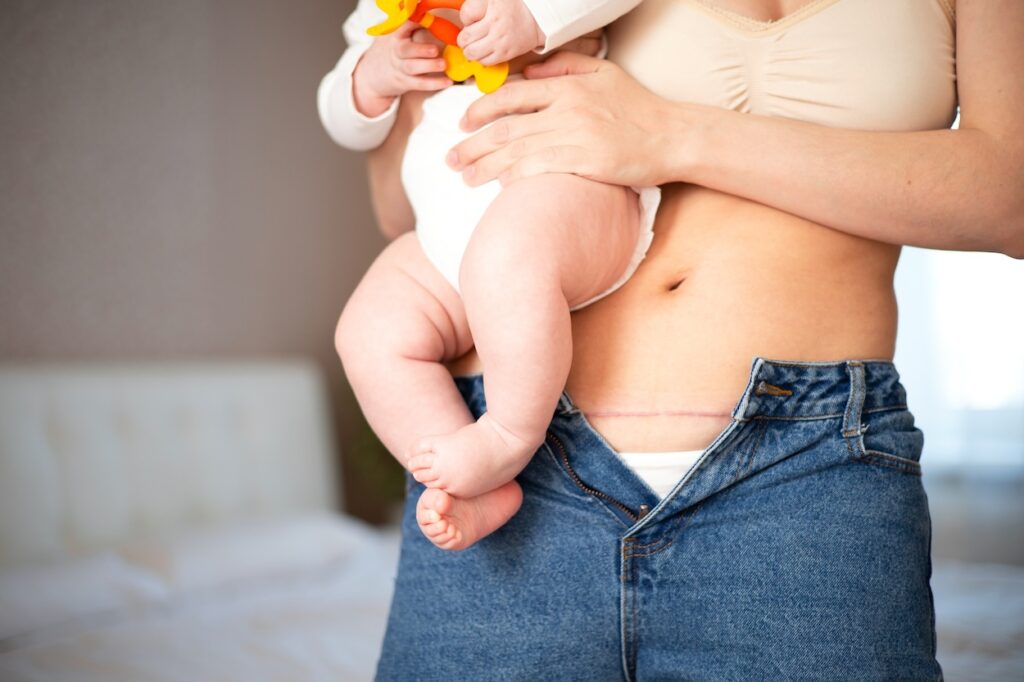
- Incision: The gynaecologist will make an incision in the abdomen, usually a horizontal cut just above the pubic area, which can be easily hidden by underwear. A second incision will then be made in the uterus to deliver the baby.
- Delivery of the baby: The gynaecologist will carefully deliver the baby through the incisions. The medical team will attend to the baby, assess their health, and, if conditions allow, place them on your chest for skin-to-skin contact.
- Delivery of the placenta: After the baby is born, the gynaecologist will remove the placenta.
- Closing the incisions: The surgeon will close the incisions in the uterus and abdomen with absorbable sutures or surgical staples. A sterile dressing will be applied to the wound.
What Postoperative Care Does the Mother Need?
After a C-section, you’ll stay in the hospital for several days, usually around 3 days, so the medical team can monitor your recovery and provide the necessary support. During this time, you’ll receive painkillers to manage discomfort antibiotics to prevent infection, and you’ll be encouraged to get up and walk as soon as possible to promote circulation and prevent complications. Below are some essential care tips to keep in mind:
- Pain management: Don’t hesitate to ask for pain relief if you’re in discomfort. Proper pain control is essential for optimal recovery.
- Early mobilisation: Walking and moving around frequently helps prevent complications like deep vein thrombosis and improves blood circulation.
- Wound care: Follow your doctor’s instructions for dressing changes and wound hygiene, keeping the area clean and dry. Watch for signs of infection, such as redness, swelling, warmth, severe pain, or discharge.
- Healthy diet: A balanced, nutrient-rich diet is crucial for recovery. Eat foods high in protein, vitamins, and minerals to promote healing.
- Hydration: Drink plenty of fluids to stay hydrated.
- Rest: Get plenty of rest to allow your body to recover. Ask family or friends for help with household tasks and baby care during the first few weeks.
- Emotional support: The postpartum period can be emotionally challenging. Don’t hesitate to seek emotional support if needed.
What Care Does the Baby Need After a C-Section?
Babies born via C-section require the same care as those born vaginally. Breastfeeding is recommended, as it provides numerous benefits for both mother and baby. If possible, skin-to-skin contact immediately after birth promotes bonding and helps regulate the baby’s temperature. The doctor will monitor the baby for potential complications, such as jaundice.

Full recovery from a C-section can take several weeks or even months. It’s essential to be patient and listen to your body. Avoid lifting heavy objects and strenuous activities during the first few weeks. As you feel better, you can gradually increase your activity level. Consult your doctor about when you can resume your normal activities, including exercise and sexual intercourse.
HM Hospitales has a multidisciplinary team of gynaecologists, obstetricians, anaesthetists, paediatricians, nurses, and midwives to support you every step of the way.
Remember: This article is for informational purposes only and does not replace medical advice. If you have any concerns, consult a healthcare professional.