
Many mothers experience breast pain during breastfeeding, particularly in the nipples. If this pain is severe or persistent, it can affect both breastfeeding and your overall well-being.
In this article, we explain the causes of this pain, how you can relieve it, and when it is essential to consult a healthcare professional for assistance.
What are the most common causes of pain while breastfeeding?
Breastfeeding is a natural experience, but nipple or areola pain during breastfeeding is a common issue that can be uncomfortable and concerning. Identifying the cause of the pain is essential to finding an appropriate solution. Below are some of the most common causes:
- Poor latch: An incorrect latch is the most common cause of pain during breastfeeding. If the baby’s mouth does not cover enough of the areola, the suction is concentrated on the nipple, causing discomfort, cracks, and bleeding. For comfortable breastfeeding, the baby should take a large portion of the areola into their mouth with their lips turned outward.
- Incorrect positioning: It is essential to find a comfortable position for you and your baby that allows for a good latch and avoids excessive pressure on the nipple.
- Tongue-tie (ankyloglossia): Also known as ankyloglossia, this condition can restrict the baby’s tongue movement, making it difficult to latch correctly and causing nipple pain. If you suspect your baby has a tongue-tie, consult a lactation specialist or paediatrician.
- Infections: Infections, such as thrush (candidiasis), manifest as a white rash in the baby’s mouth and can cause pain and itching in the mother’s nipples.
- Dermatitis or eczema: Dry, irritated, or cracked skin in the area can cause pain and discomfort during breastfeeding. Breast eczema can be a chronic condition requiring specific treatment.
- Blocked milk ducts: These can cause localised pain, swelling, and a palpable lump in the breast. If left untreated, they can lead to mastitis.
- Mastitis: This is an infection of the breast tissue that causes pain, redness, swelling, and warmth in the breast. It can also cause fever and general discomfort.
- Engorgement: This occurs when the breasts store excess milk. It can cause pain, hardness, and swelling in the breasts, making it difficult for the baby to latch.
- Incorrect use of breast pumps: Incorrect use of a breast pump, such as using the wrong size flange or suction that is too strong, can cause pain and irritation in the area.
What are the symptoms of breast pain during breastfeeding?
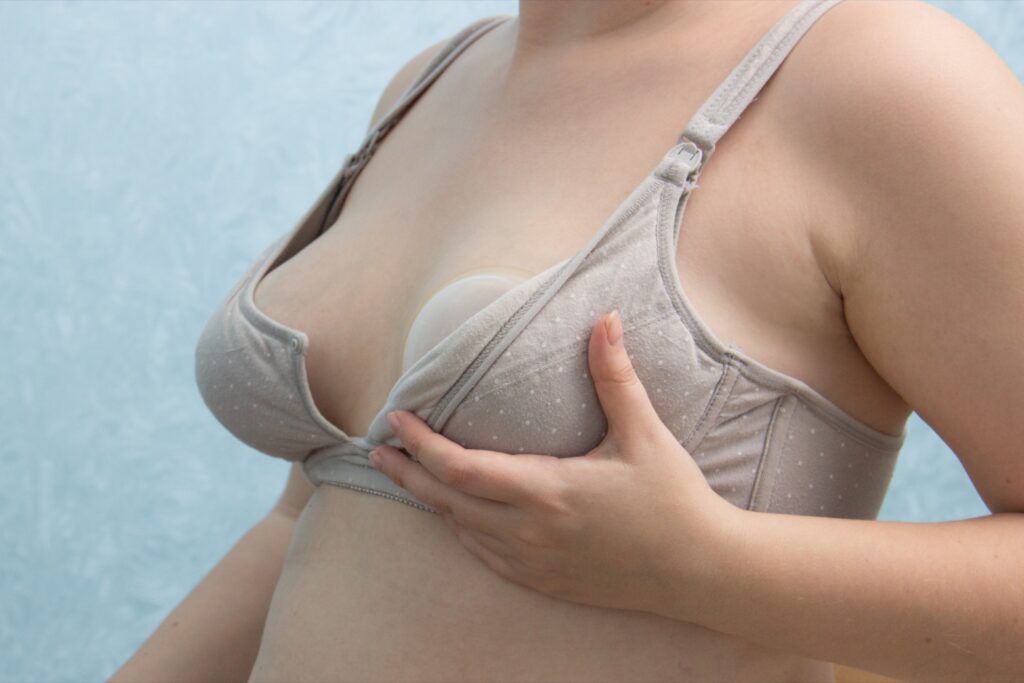
Nipple pain during breastfeeding can manifest in different ways, and understanding the characteristics of each type of pain can help you identify the underlying cause and find the right solution. Below are some of these symptoms:
- Superficial, stinging pain: This type of pain is localised at the tip of the nipple and is usually more intense at the start of a feed, improving as the baby latches correctly. It is often related to a poor latch or incorrect positioning during breastfeeding.
- Deep, burning pain: This pain is felt throughout the breast, even between feeds. It can be a sign of an infection, such as thrush or mastitis.
- Sharp, shooting pain: A sharp, shooting pain that radiates into the breast may be a sign of nipple vasospasm (Raynaud’s phenomenon). It often occurs after a feed and may be related to exposure to cold.
- Constant, dull pain: A constant, dull pain in the nipple or breast may indicate a blocked milk duct or mastitis.
- Pain accompanied by other symptoms: Pay attention to other symptoms, such as fever, redness, swelling, cracks, or bleeding in the nipple. These symptoms may indicate an infection and may require medical attention.
How can we identify the cause of nipple pain during breastfeeding?

Nipple pain during breastfeeding is a common concern and can affect both the mother and the breastfeeding process. It is essential to know that by paying attention to sure signs and evaluating possible causes, you can better identify what is causing this discomfort and find relief. Below are some key factors to consider:
- Observe the baby’s latch: A good latch is essential to avoid discomfort. Is the baby taking a good portion of the areola or just the nipple? Also, check if their lips are turned outward, which can influence comfort during breastfeeding.
- Evaluate your posture: The mother’s comfort is essential. Ask yourself if you are in a comfortable position and if there is any pressure on the nipple that could be causing pain.
- Examine your nipples: Check for cracks, bleeding, blisters, or changes in skin colour, as these signs may indicate a problem that requires attention.
- Pay attention to the duration and intensity of the pain: Is the pain mild and temporary or severe and persistent? Observing whether the pain worsens or improves over time can give clues about the cause.
- Consider your medical history: If you have a history of infections or skin problems, this could be relevant and help you better understand the cause of nipple pain during breastfeeding.
What can I do to relieve nipple pain?
If you experience pain during breastfeeding, there are some strategies to relieve the pain and help your nipples heal properly. Below are some tips to follow:
- Ensure a good latch: A correct latch is essential for pain-free breastfeeding. If you are unsure how to achieve a good latch, seek help from a healthcare professional specialising in breastfeeding. You can also consult your midwife or paediatrician.
- Improve positioning: Experiment with different positions, such as the cradle hold, cross-cradle hold, or side-lying position.
- Express a little milk before breastfeeding: If your breasts feel complete or complex, express a little breast milk just before feeding. This can soften the areola and make it easier for your baby to latch correctly.
- Switch breasts frequently: Alternating breasts during each feed helps prevent nipple irritation.
- Let your nipples air dry: After breastfeeding, let the area dry for a few minutes to ensure it is scorched.
- Apply breast milk to your nipples: Breast milk has antibacterial and anti-inflammatory properties.
- Use cold or warm compresses: Cold compresses reduce inflammation, while warm compresses relieve pain.
- Use nipple shields with caution: Incorrect use can interfere with the baby’s latch, reducing nipple stimulation and affecting milk production.
- Consider using lanolin: Purified lanolin is a natural emollient that can help moisturise and protect your nipples.
- Avoid perfumes and lotions: Avoid soaps, lotions, and products with fragrances or chemicals. Use neutral, fragrance-free, and dye-free soaps, and if you need to moisturise, apply pure lanolin. Remember, your baby’s skin is very sensitive.
When should I seek help?
If nipple pain is severe or does not go away, it is essential to consult a healthcare professional. You should also seek medical attention if you have a fever, which could indicate an infection. Redness and swelling in the breast may be signs of mastitis, while cracks or bleeding in the nipples increase the risk of infection. A burning sensation in the breasts, either during or after feeding, may indicate a yeast infection (thrush).
A lactation expert can help you identify the cause of nipple pain and find personalised solutions. You can overcome this difficulty and fully enjoy breastfeeding with the proper support and strategies. At HM Hospitals, we are committed to your well-being and your baby’s. Do not hesitate to contact us to schedule a consultation and get the information and support you need.
Remember: This article is for informational purposes only and does not replace medical consultation. If you have any doubts, consult a healthcare professional.