SUSTAINABILITY
Environment
Responsible environmental management for a sustainable future.

Taking care of the planet and people
-
HM Hospitales is committed to mitigating its environmental impact through a management system based on the ISO 14001 standard, prioritizing environmental protection, compliance with legislation and continuous improvement of its performance.
-
A comprehensive approach to environmental care
Our Environmental Policy at HM Hospitales recognizes the quality of the environment as one of the key defining factors for the population’s health. As an institution dedicated to health care and promotion, we understand that we must take responsibility for the negative effects that we generate in our environment and make the most of opportunities to improve our environmental performance.
Since 2006, at HM Hospitales we have implemented an environmental management system based on the ISO 14001 standard, which extends to all of its work centers. This approach enables us to work in a coherent and effective manner, protecting our environment while providing high-quality medical care.
A better environmental performance is achieved through strategic plans for environmental sustainability.
Key areas of action
Optimization of material consumption and waste management, working towards reducing the environmental impact of our processes and promoting sustainable practices.
Increased efficiency in water consumption, seeking to use water more efficiently and responsibly.
Reduction of the carbon footprint by implementing measures to decrease our contribution to climate change.
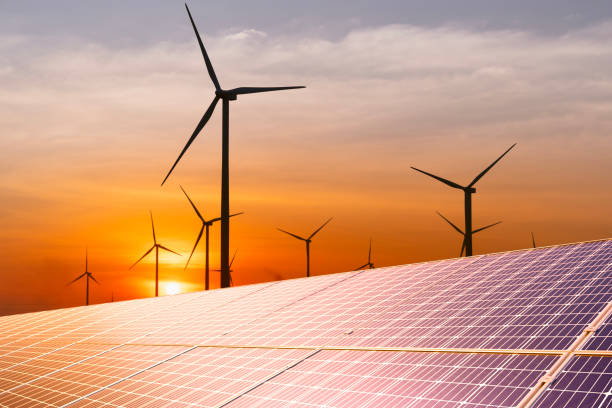
Reduction of carbon footprint
-
Any economic agent contributes to climate change due to the emissions associated with its energy consumption. In the case of healthcare institutions, there are other agents, such as fluorinated gases and anesthetic gases, that increase this contribution.
At HM Hospitales, we are committed to the pursuit of energy efficiency by introducing improvements in our centers, such as the upgrading of heating and cooling generators, the improvement of thermal insulation, the acquisition of 100% renewable energy, the installation of photovoltaic solar panels and the implementation of energy management systems based on ISO 50001 in the main energy-consuming hospitals. The combination of these measures, together with the reduction in the use of certain anesthetic gases, has enabled us to reduce our carbon footprint in both scopes by more than 40% since 2019.
Future plans involve continuing along the same lines, establishing a decarbonization path aligned with the European regulatory framework.
-
List of completed projects
Projects covered by the incentive plan within the framework of the Spanish Recovery, Transformation and Resilience Plan, financed by the European Union – NextGeneration EU.
Avenida Carlos V, 70 (28938 Móstoles – Madrid). Self-consumption Photovoltaic Installation with Renewable Energy, with a capacity of 560.26 kWp.
At the HM Nou Delfos Hospital, we have installed photovoltaic panels on the building’s roof, with a total capacity of 93.80 kWp, consisting of 169 panels of 555 W each. Thanks to this installation, we have estimated a self-supply of energy of 143,463 kWh per year, contributing to greater energy efficiency and sustainability of the center.

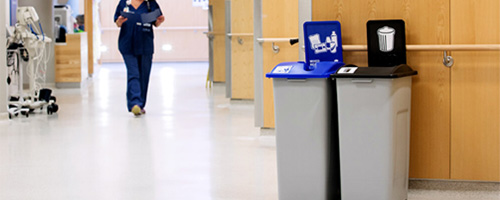
Waste optimization and management
-
One of the most significant environmental aspects in the healthcare sector is waste generation. For the sake of health, hygiene and patient safety, most of the consumable materials we use are disposable.
Thus, our efforts within the scope of the circular economy focus on reducing the intensity of use of certain materials, digitizing processes and using alternative materials to plastic. We also strive to increase material recovery rates, relying on a fully preventive strategy that strictly follows applicable regulations.
Within the framework of the environmental management system, more than 20 environmental risks have been identified, for which we have developed preventive and monitoring measures to avoid their occurrence. We also carry out analytical controls on emission sources and wastewater discharge lines, maintaining smooth communication with the competent authorities.
By conducting internal and external audits on the environmental management system, we achieve an additional layer of assurance in pollution prevention.
Efficiency in water consumption
-
We are aware of the value of this renewable but scarce resource, which is vital to our operation. If the forecasts linked to climate change materialize, this resource will be even scarcer in the future. That is why our efforts are focused on implementing water efficiency technologies that minimize our footprint and establish us as an actor that actively collaborates in the conservation of this resource. Faucet aerators, flow restrictors, small-volume cisterns with dual-flush systems, efficient garden irrigation systems… Are some of the optimization measures that we have most firmly established and that we are gradually extending to all our centers