Triple cardiac CT study
What is a triple cardiac CT study?
A Triple Cardiac CT Study is a combination of three cardiac Computed Tomography (CT) techniques used to obtain a comprehensive assessment of heart health. This comprehensive approach may include:
- Coronary calcium CT scan: To quantify the amount of calcium in the coronary arteries, which indicates the presence and extent of atherosclerosis.
- Coronary CT angiography: To visualize the coronary arteries and detect blockages or narrowing.
- Myocardial perfusion CT: To assess blood flow to the heart muscle at rest or under stress, which can reveal areas of ischemia (lack of oxygen).
What is this diagnostic procedure for?
The main uses of triple cardiac CT study are:
- Comprehensive cardiovascular risk assessment: It provides information on the burden of atherosclerosis, coronary artery anatomy, and myocardial perfusion, allowing for a more comprehensive assessment of cardiovascular risk.
- Coronary artery disease detection: It allows the presence of obstructive and non-obstructive coronary artery disease to be detected.
- Evaluation of myocardial ischemia: It helps identify areas of the heart muscle that are not getting enough blood flow.
- Treatment planning: It facilitates informed decision-making regarding patient treatment and management, including the need for interventions such as angioplasty or coronary bypass surgery.
Benefits of advanced technology in triple cardiac CT study
This diagnostic scan offers a number of key benefits thanks to the technology it uses:
- Comprehensive evaluation: It provides a comprehensive assessment of heart health in a single session.
- Non-invasive: it is a non-invasive technique, which means it does not require surgery or incisions.
- Detailed images: It allows detailed images of the heart and its blood vessels to be obtained.
Accurate diagnosis: It facilitates an accurate diagnosis of coronary artery disease and myocardial ischemia.
What does the procedure involve?
The procedure may vary depending on the specific protocol used at each center. In general, the procedure is carried out as follows:
-
Preparation:
You will be asked to fast for the 4-6 hours prior to arriving for the scan. You may be asked to avoid caffeine and other stimulants before the study.
-
During the procedure:
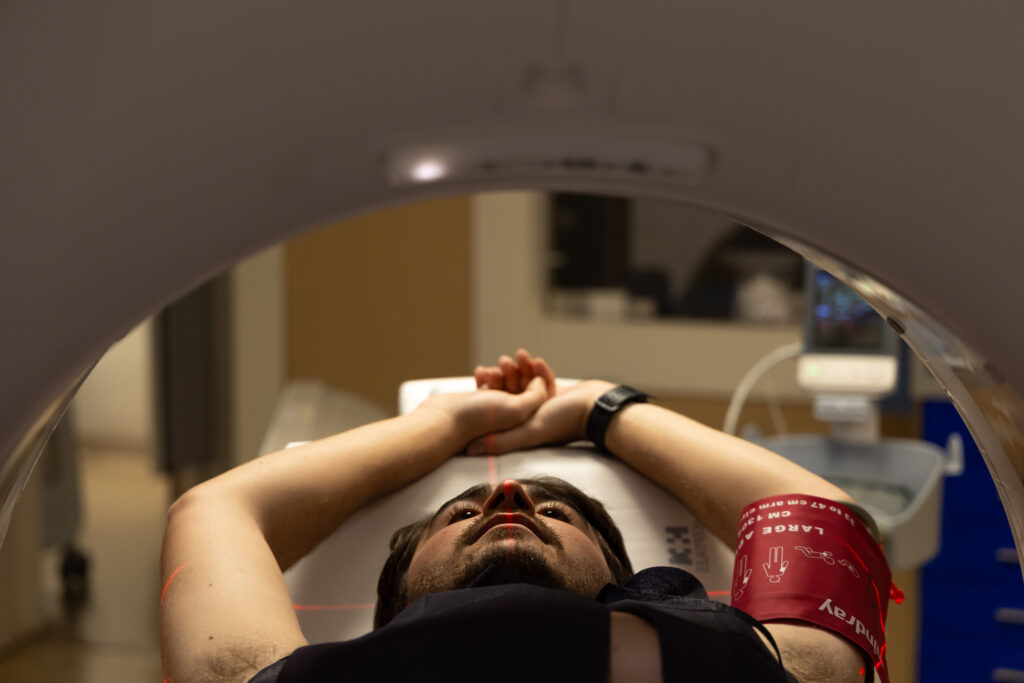
You will lie down on a table that slides into the CT scanner. They will place electrodes on your chest to monitor your heart rate and a cuff on your arm to measure your blood pressure. An intravenous line will also be placed in the arm. You may be given medication to lower your heart rate (beta-blockers) and/or dilate your coronary arteries (nitroglycerin). Then, the procedure will be explained to you and you will be asked to remain still and hold your breath briefly as the images are taken. Several CT image acquisitions will be performed, including coronary calcium CT (without contrast), coronary CT angiography (with contrast), and myocardial perfusion CT (with contrast, at rest or under stress). The total duration of the procedure can vary between 30 and 60 minutes.
-
After the procedure:
Once the images have been acquired, the IV line will be removed. You will be advised to drink plenty of fluids to help eliminate the contrast medium from your body.
Recommendations for the procedure
Remember that it is important to adhere to the following recommendations to ensure the quality of the test and your comfort:
- Inform your doctor: if you have any allergies, especially to iodine or iodinated contrast. You must also inform your doctor if you are pregnant or have kidney problems.
- Medications: Be sure to inform them about any medications you are taking, especially beta-blockers or medications for diabetes or kidney problems.
- Fasting: Follow all fasting instructions provided by your doctor or radiology staff.
- Clothing: Wear comfortable clothing and avoiding jewelry or metal accessories that may interfere with the images.
Are there any risks?
A triple cardiac CT study is generally considered safe, but like any medical procedure involving radiation and contrast agents, there are some minor risks to consider:
- Exposure to radiation: CT uses radiation, and the total dose can be higher than that of a single cardiac CT scan. Generally, once it has been prescribed, the risks are much smaller than the benefits.
- Reaction to the contrast agent: Some people may experience allergic reactions to the contrast medium. If this should happen, the medical staff is prepared to handle these situations.
- Kidney problems: The contrast medium can affect kidney function, especially in patients with pre-existing kidney disease. Special precautions will be taken if you have a history of kidney problems.
- Discomfort: Some people may experience discomfort during the injection of the contrast medium or while holding their breath.
To ensure your procedure runs smoothly, we ask that you arrive before the scheduled time. This will allow us to complete the necessary administrative and clinical preparation.
Before the procedure, we will give you the Informed Consent form, a document with important information that you must read and sign.
If your appointment is for an MRI, it is crucial that you inform us about the presence of pacemakers, metallic objects, prostheses (including dental prostheses), tattoos, or drug infusion devices such as insulin pumps.
Do you need to undergo this procedure?
Make an appointment