Study of tremor and other movement disorders
What is a study of tremor and other movement disorders?
The study of tremor and other movement disorders is a clinical procedure that evaluates motor disturbances, such as tremors, dystonias, choreas, tics, and muscle rigidity. This analysis makes it possible to identify the underlying cause of the symptoms and to design personalized therapeutic strategies to improve the patient’s quality of life.
What is this procedure for?
These studies are primarily used to:
- Diagnose and treat neurological diseases: They are used to identify disorders such as Parkinson’s disease, essential tremor, dystonias, choreas, restless legs syndrome, among others.
- Evaluate secondary disorders: They help determine whether the symptoms are caused by medications, brain injuries, or metabolic conditions.
- Plan treatment: They are used to design specific treatments, including pharmacological, surgical, or rehabilitation treatments.
- Monitor patients: They can be used to monitor the progression of diseases and assess the response to treatment.
Benefits of advanced technology in central motor conduction with TMS
The procedure combines clinical interviews with specific neurophysiological tests, medical imaging, and functional assessment. These tests make it possible to analyze brain activity, nerve conduction, and the patient’s motor patterns.
What does the procedure involve?
The neuropsychological assessment procedure involves:
-
Preparation:
Before the procedure, the doctor will conduct a detailed interview to learn about your medical history, family history, and current symptoms. If you have undergone previous tests, such as an MRI scan, electromyography, or tomography, they will analyze them to complement the evaluation. It is also important that you wear comfortable clothing without any metal elements to avoid interference during the test.
-
During the procedure:
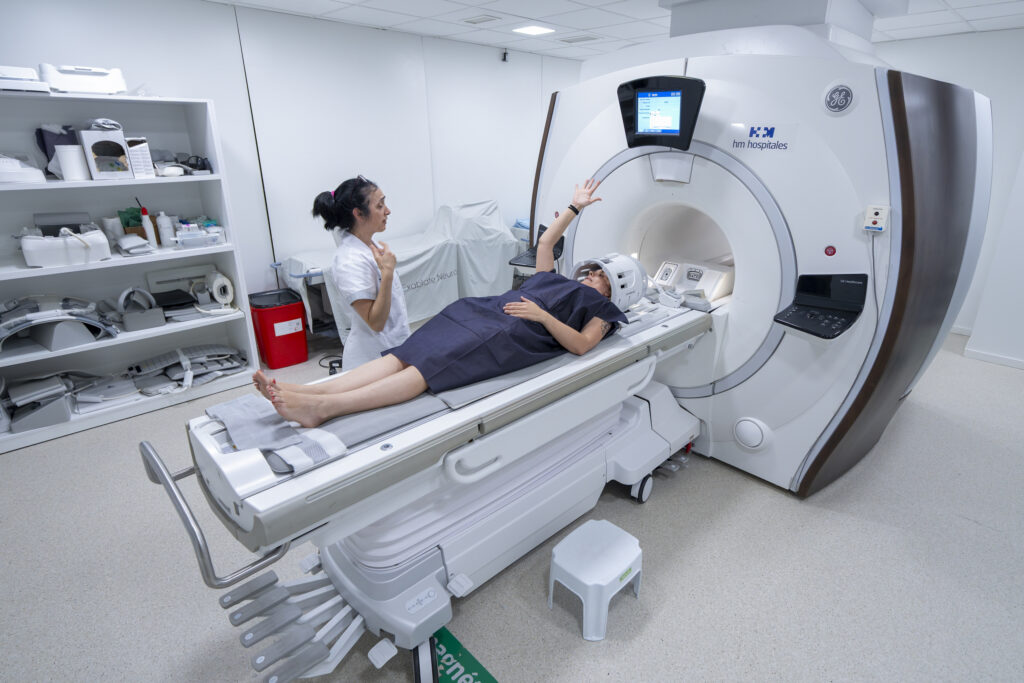
As the test is being conducted, the specialist will evaluate your movements and perform physical tests to analyze your coordination, muscle strength, and reflexes. Depending on your case, additional studies may be performed, such as electromyography (EMG) to measure the electrical activity of the muscles, magnetic resonance imaging (MRI) to detect structural abnormalities in the brain, or functional neuroimaging studies, such as PET or SPECT, to evaluate brain activity.
If a hereditary cause is suspected, genetic tests may also be requested. In some cases, specialized devices are used to record and analyze movement patterns. The duration of the procedure varies depending on the tests required, but it generally lasts between 1 and 3 hours.
-
After the procedure:
You will be able to resume your normal activities immediately after the procedure, unless your doctor advises otherwise. The results will be analyzed by a multidisciplinary team and sent to your doctor, who will explain the findings and next steps.
Recommendations for the procedure
Rest beforehand: It is recommended that you arrive well rested to ensure optimal performance during the tests.
Report medications: Inform your doctor if you are taking any medication that may affect your movements or neurological condition.
Companion: in some cases, it may be helpful to be accompanied by a family member who can provide additional information about your behavior.
Are there any risks?
The study of tremor and other movement disorders is a safe and non-invasive procedure. However, some specific aspects of the procedure may cause mild discomfort:
Claustrophobia: If an MRI is performed, some people may feel anxious about being inside the scanner.
Muscle discomfort: If you have an electromyography, you may experience temporary discomfort at the electrode insertion site.
Fatigue: Some tests can be demanding, which may lead to fatigue as a result of their duration.
To ensure your procedure runs smoothly, we ask that you arrive before the scheduled time. This will allow us to complete the necessary administrative and clinical preparation.
Before the procedure, we will give you the Informed Consent form, a document with important information that you must read and sign.
If your appointment is for an MRI, it is crucial that you inform us about the presence of pacemakers, metallic objects, prostheses (including dental prostheses), tattoos, or drug infusion devices such as insulin pumps.
These diagnostic tests are very safe, but as with any medical procedure, there is still the unlikely possibility of an incident.
Do you need to undergo this procedure?
Make an appointment