Multidetector CT
What is multidetector CT?
Multidetector CT (multidetector computed axial tomography), also known as multislice CT, is an imaging technique that uses X-rays to obtain detailed cross-sectional images of the body. Unlike conventional CT scans, multidetector CT uses multiple rows of detectors, allowing for faster and higher-resolution image acquisition. This translates into shorter scans, lower doses of radiation, and the possibility of obtaining high-quality 3D images.
What is this diagnostic procedure for?
Multidetector CT is used for a wide variety of purposes, including:
- Diagnosis of diseases: It allows for the diagnosis of diseases in almost every part of the body, including the brain, chest, abdomen, pelvis, and limbs.
- Treatment planning: It helps plan medical and surgical treatments, providing detailed information about the anatomy and extent of the disease.
- Procedure guidance: It can be used to guide procedures such as biopsies and drainages.
- Detection of lesions: It allows lesions, such as tumors, fractures, hemorrhages, and infections, to be detected.
- Trauma assessment: It is a fundamental tool for assessing trauma patients, allowing for the rapid identification of internal injuries.
Benefits of advanced technology in multidetector CT
A multidetector CT scan offers a number of key benefits thanks to the technology it uses:
- Higher speed: It allows images to be acquired faster than conventional CT scans, reducing the scan time and the need for the patient to remain still.
- Higher resolution: It provides higher-resolution images, allowing for small lesions to be detected and anatomical structures to be studied in more detail.
- Lower dose of radiation: It allows for a reduction in the dose of radiation compared to conventional CT scans.
3D images: It allows for the acquisition of high-quality 3D images, which facilitates the assessment and interpretation of the images.
What does the procedure involve?
The multidetector CT scan procedure is generally carried out as follows:
-
Preparation:
The preparation varies depending on the area of the body to be examined and whether a contrast medium will be used. In general, you will be asked to fast for at least 4 to 6 hours before the procedure if a contrast medium is going to be used. It’s important to tell your doctor about any allergies you have and about all the medications you’re taking, including over-the-counter drugs and supplements.
-
During the procedure:
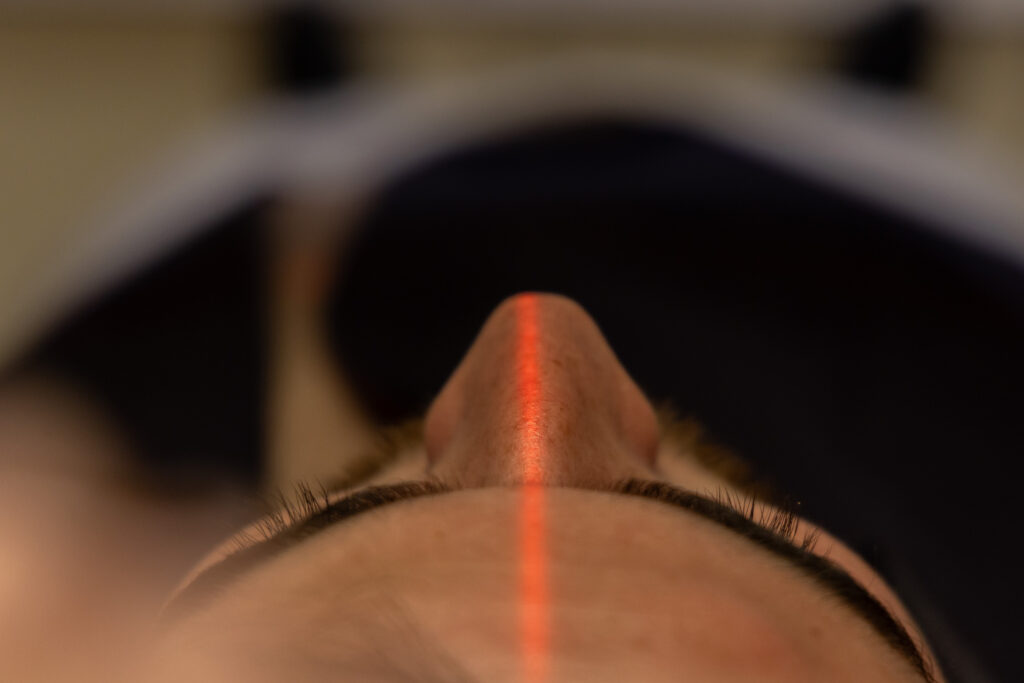
You will lie down on a table that slides into the CT scanner. An IV will be placed in your arm if a contrast medium is going to be used. You will be asked to remain still and hold your breath briefly as the images are taken.
-
After the procedure:
You can resume your normal activities immediately after the procedure. You will be advised to drink plenty of fluids to help eliminate the contrast medium, if used, from your body.
Recommendations for the procedure
Remember that it is important to adhere to the following recommendations to ensure the quality of the test and your comfort:
- Follow the preparation instructions: Follow all preparation instructions provided by your doctor or hospital staff carefully.
- Report allergies and medications: It’s important to tell your doctor about any allergies you have and about all the medications you’re taking, including over-the-counter drugs and supplements.
- Report pregnancy: You need to inform your doctor if you are pregnant or think you might be.
Are there any risks?
A multidetector CT is generally considered safe, but like any medical procedure involving radiation and, in some cases, contrast agents, there are some minor risks to consider:
- Exposure to radiation: radiation exposure is low and considered safe. Your doctor will assess whether the benefits outweigh the risks.
- Allergic reactions: in rare cases, allergic reactions to the contrast medium may occur.
- Kidney problems: The contrast medium can affect kidney function, especially in patients with pre-existing kidney disease.
To ensure your procedure runs smoothly, we ask that you arrive before the scheduled time. This will allow us to complete the necessary administrative and clinical preparation.
Before the procedure, we will give you the Informed Consent form, a document with important information that you must read and sign.
If your appointment is for an MRI, it is crucial that you inform us about the presence of pacemakers, metallic objects, prostheses (including dental prostheses), tattoos, or drug infusion devices such as insulin pumps.
These diagnostic tests are very safe, but as with any medical procedure, there is still the unlikely possibility of an incident.
Do you need to undergo this procedure?
Make an appointment