Melanoma is one of the most aggressive types of skin cancer, but it is also one of the most treatable if detected early.
In recent years, the number of cases has risen alarmingly, possibly due to habits of unprotected sun exposure. In this article, we explain melanoma, how to identify it, what you can do to prevent it, and explore the available treatment options.
What is Melanoma?
Melanoma is a type of cancer that originates on the skin’s surface when pigment-producing cells, called melanocytes, grow uncontrollably. Although it can appear anywhere on the body, melanoma often develops in areas exposed to the sun, such as the back, legs, arms, and face.
Diagnosing Melanoma: How to Identify It and Act in Time
Melanoma is one of the most serious types of skin cancer, but when detected early, the chances of treatment and recovery are much higher. While some people are at greater risk of developing this type of skin cancer, it is essential to remember that anyone can develop it.
Methods for Detecting Melanoma
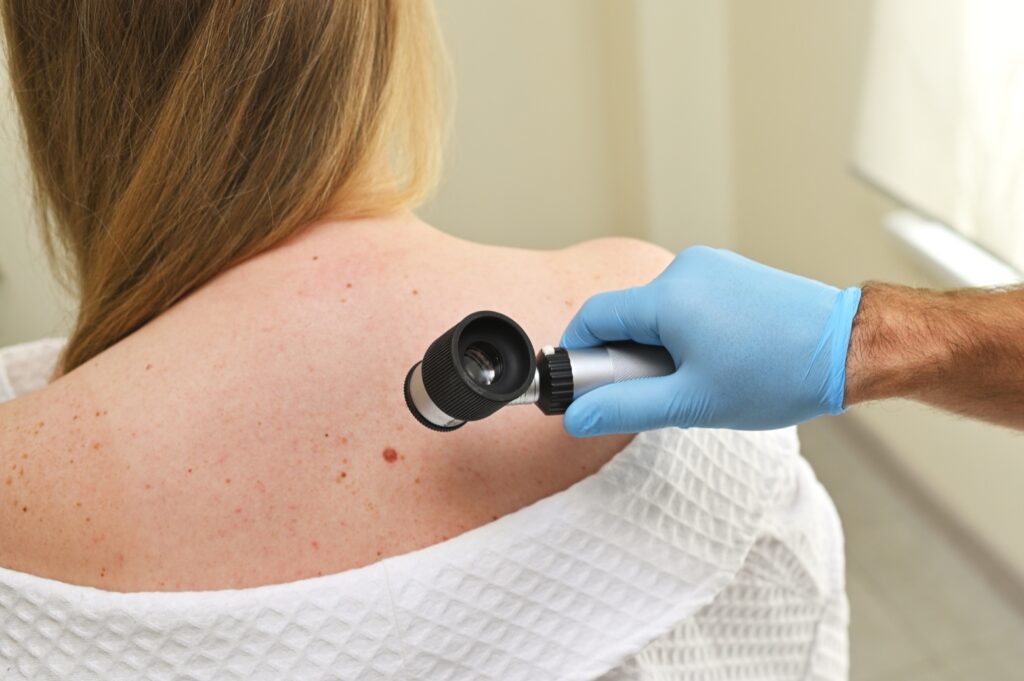
Skin Self-Examination: Knowing your skin well is key to spotting any suspicious changes. You should regularly check your moles, freckles, and marks, looking for any changes in size, colour, or shape. If in doubt, follow the ABCDE rule:
- Asymmetry: If the mole has an uneven shape.
- Borders: If they are irregular or blurred.
- Colour: If it shows multiple colours or changes.
- Diameter: If it is more significant than 6 mm.
- Evolution: If you notice changes over time.
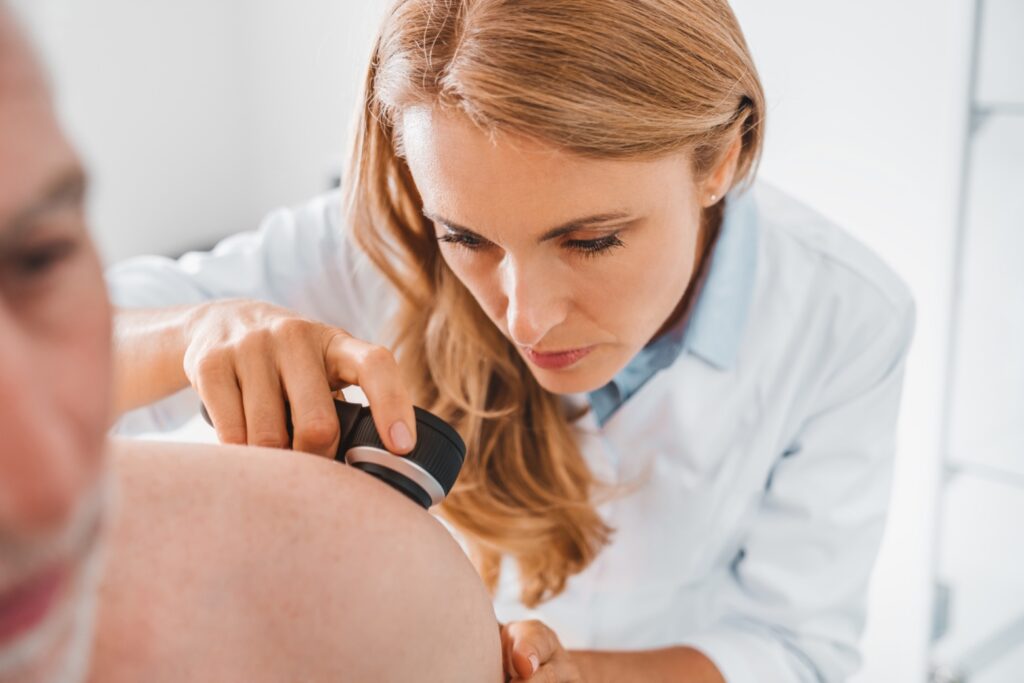
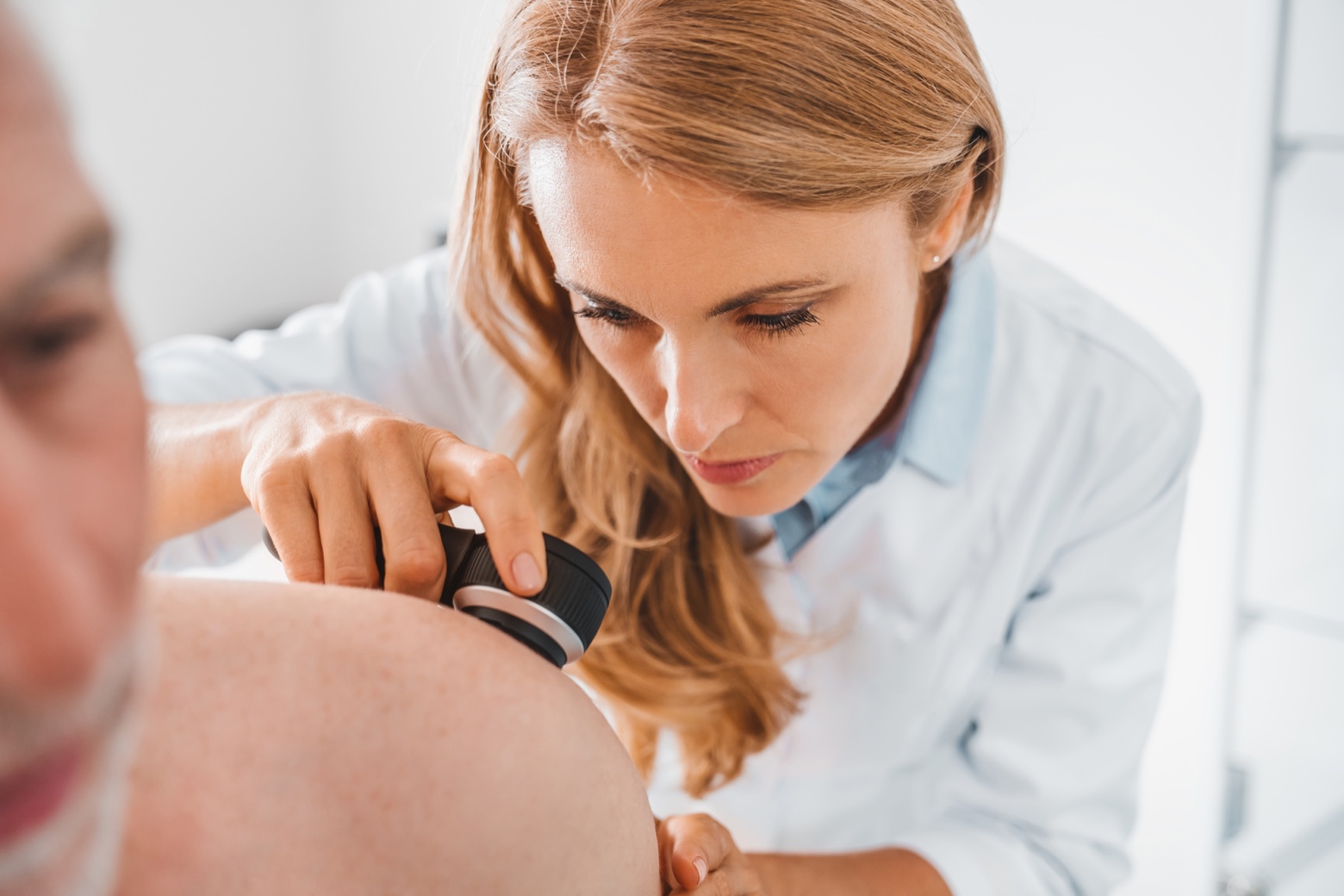
Examination by a Healthcare Professional: It is advisable to have a skin examination during medical check-ups, as this allows for a more precise observation of the skin to detect abnormalities.
If melanoma is suspected after a self-examination or medical review, the next step is to confirm it through a skin biopsy. This involves removing a small sample of the suspicious area for laboratory analysis under a microscope. This analysis is crucial to confirm or rule out the presence of melanoma.
How Does Melanoma Develop in the Skin?
The stage of cancer describes the extent of the disease, which helps determine its severity and the most appropriate treatment. In the case of skin melanoma, development occurs in several stages:
Initial Phase:
- Melanocytes begin to grow abnormally, which may manifest as a new mole or a change in an existing one.
- At this stage, melanoma is highly treatable.
Superficial Growth Phase:
- Cancer cells spread horizontally, remaining confined to the top layer of the skin (epidermis).
- In this phase, melanoma remains treatable.
Invasive Phase:
- Cancer cells begin to penetrate deeper layers of the skin, reaching lower layers and, in some cases, blood and lymph vessels.
- Treatment becomes more complex at this stage and may require more invasive interventions. The patient must consult a specialist to evaluate therapeutic options, including surgery to remove cancerous cells or immunotherapy.
Types of Melanoma
Melanoma is a type of skin cancer that can vary in shape, location, and aggressiveness. There are different types of melanoma, each with specific characteristics:
Superficial Spreading Melanoma:
- The most common type.
- Grows horizontally before deepening into underlying tissues.
- It often appears on sun-exposed areas like the back, legs, and face.
Nodular Melanoma:
- Characterised by rapid growth in depth, increasing its aggressiveness.
- It appears as a dark blue-black or dark-coloured raised nodule.
- This type of melanoma is particularly aggressive and requires early detection.
Acral Lentiginous Melanoma:
- It usually appears in less common areas, such as the palms, soles of the feet, and under the nails.
- Unlike other types, it is not related to sun exposure.
- It is more frequent in people with darker skin, though it can occur in any skin type.
Lentigo Maligna Melanoma:
- Appears in areas of chronic sun exposure, such as the face or neck.
- It is common in older individuals and has slow growth in the early stages.
- It can become more invasive if not treated in time.
At-Risk Groups for Melanoma
Certain groups of people require special attention regarding the development of melanoma:
1. People with Multiple Moles:
- Higher risk of developing melanoma.
- Need more frequent check-ups.
- They should photograph their moles regularly.
2. Family History:
- Increased risk if there is a family history of skin cancer.
- It may require genetic testing.
- More frequent check-ups are recommended.
3. Outdoor Workers:
- Farmers, gardeners, athletes.
- Higher cumulative sun exposure.
- Need reinforced sun protection.
4. Immunocompromised Individuals:
- Higher risk of development and progression.
- Require closer monitoring.
- They may need unique protocols.
Tips for Advanced Melanoma Prevention: How to Protect Your Skin
Melanoma is a type of skin cancer that can affect people of all ages and skin types. While some risk factors, such as age, race, and family history, cannot be controlled, there are preventive measures you can take to reduce your risk. Below, we offer advanced strategies to complement basic recommendations for more effective skin care:
1. Ultraviolet (UV) Protection Technology:
- UV-protective clothing.
- Personal UV detectors.
- Real-time UV index apps.
- Next-generation sunscreens.
2. Supplementation (under medical supervision):
- Controlled vitamin D intake.
- Specific antioxidants.
- Photoprotective supplements.
3. Environmental Modifications:
- UV-filtering glass.
- UV-protective umbrellas.
- Window protective films.
- Planned shaded areas.

Advances in Melanoma Diagnosis and Treatment
Melanoma is an aggressive type of skin cancer, but in recent years, medical advances have improved both the diagnosis and treatment of this disease. Below, we explain the main types of treatment available, some already in use and others being evaluated in clinical trials:
- Surgery: Usually the first step in treating localised melanoma. It is used to remove the tumour and is an effective option at any stage of the disease.
- Radiotherapy: Uses high-energy X-rays or other types of radiation to destroy cancer cells.
- Immunotherapy: Uses drugs to enhance the body’s natural defences to help fight cancer.
- Targeted Therapy: Involves using specific drugs that more precisely attack cancer cells, reducing damage to healthy cells.
- Vaccine Therapy: An option still under investigation, aiming to stimulate the immune system to detect and destroy the tumour.
Today, technology is revolutionising the management of melanoma, offering new tools for diagnosis and treatment. Among the most promising innovations are:
1. Advanced Diagnosis:
- Digital dermoscopy.
- Artificial intelligence for image analysis.
- Total body mapping.
2. New Therapies:
- Personalised immunotherapy.
- Molecularly targeted therapies.
- Combination treatments.
- Innovative clinical trials.
3. Technological Monitoring:
- Mole-tracking apps.
- Telemedicine for consultations.
- Early warning systems.
- Digital monitoring.
The Importance of Early Detection
Melanoma is less common compared to other types of skin cancer, but it is more dangerous because it grows faster and is much more likely to spread to different parts of the body if not discovered and treated in time. The most important way to reduce the risk of melanoma is to protect yourself from ultraviolet (UV) exposure.
Knowing melanoma’s prevention methods, characteristics, and warning signs can save lives. At HM Hospitales, we have a team of dermatologists specialising in detecting and treating melanoma. We use the most advanced diagnostic techniques and offer personalised treatments for each patient.
If you notice suspicious changes in your skin or have risk factors for melanoma, do not hesitate to contact our specialists. Early detection can make a significant difference in prognosis and treatment.
At HM Hospitales, we focus on treatment, prevention, and education. Our comprehensive approach includes personalised prevention programmes, cutting-edge technology, and a multidisciplinary team of experts.
Your skin deserves expert care. HM Hospitales is committed to your health and well-being, offering the highest quality in melanoma prevention, diagnosis, and treatment.
Remember: This article is for informational purposes only and does not replace medical consultation. If you have any concerns, consult a healthcare professional.