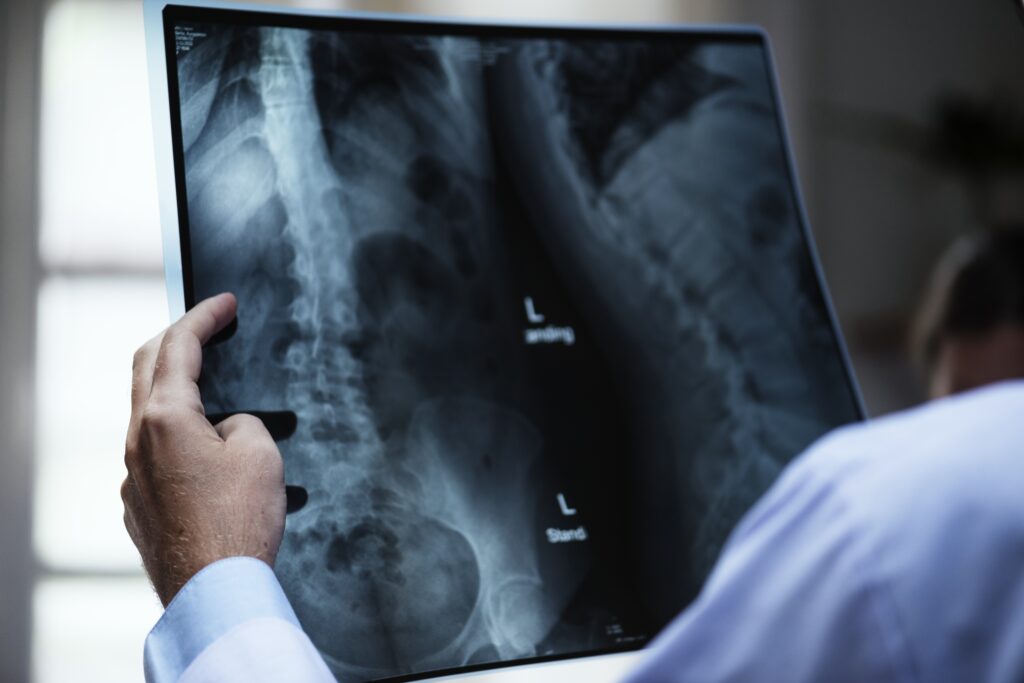
Sarcoma is a type of cancer that develops from the body’s connective tissues, such as bones, muscles, fat, blood vessels, and nerves. Unlike carcinomas, which originate in the epithelial cells that line organs, sarcomas are of mesodermal origin (such as the lining of the lung or breast).
Sarcomas can be of two main types: bone sarcomas, which form in bones, and soft tissue sarcomas, which form in other connective tissues. The impact of sarcomas on health varies depending on the type, location, and stage of the cancer.
Symptoms of sarcoma
The symptoms of sarcoma can vary widely depending on the location and size of the tumor. Some people may not experience any symptoms in the early stages, while others may notice:
A palpable lump or swelling,
which may or may not be painful.
Pain:
in the affected area.
Limited range of motion:
if the sarcoma is near a joint.
Fatigue.
Unexplained weight loss.
It is important to remember that these symptoms can also be caused by other common conditions. However, if you experience any of these symptoms, it is essential to consult a doctor for a suitable assessment.
Sarcoma classification
Classification of sarcomas is essential to determine the most appropriate treatment approach. Sarcomas are classified according to the type of tissue in which they originate, the degree of differentiation of the cancer cells, and specific genetic characteristics. This classification helps doctors to better understand tumor behavior and predict its response to treatment.
Soft tissue sarcomas
Liposarcoma: it originates in fatty tissue.
Leiomyosarcoma: it forms in smooth muscle cells.
Synovial sarcoma: cancer that commonly affects adolescents and young adults and is most often found near joints, such as the knees or ankles.
Undifferentiated pleomorphic sarcoma: aggressive cancer that usually appears on the arms or legs of older people.
Angiosarcoma: cancer that forms in the lining of blood vessels and lymphatic vessels.
Fibrosarcoma: cancer that originates in connective cells called fibroblasts and usually appears in the arms, legs, or trunk.
Rhabdomyosarcoma: rare cancer that forms in soft tissue, specifically in skeletal muscle.
Malignant fibrous histiocytoma: it forms in soft tissues, usually in the extremities.
Gastrointestinal stromal tumor (GIST): cancer that originates in the walls of the digestive tract.
Dermatofibrosarcoma protuberans: it forms in the skin.
Bone sarcomas
Osteosarcoma: it is a type of bone cancer that originates in the cells that form bone. It mainly affects teenagers and young adults.
Chondrosarcoma: it forms in cartilage, the tissue that covers the joints. It primarily affects middle-aged and older adults.
Ewing sarcoma: an aggressive tumor that can occur in both bone and soft tissue. It mainly affects children and young adults.
Chordoma: a rare, slow-growing tumor that usually appears in the bones at the base of the skull and spine.
Fibrosarcoma of bone: a rare cancer that usually affects the arms, legs, or jaw.
Each of these types of sarcoma has unique characteristics in terms of behavior, treatment, and prognosis. Therefore, an accurate diagnosis is essential to ensure that patients receive the most appropriate care.
Causes and risk factors of sarcoma
The exact causes of sarcoma are not fully understood, but most sarcomas appear to occur sporadically, without any clear cause. Sarcoma arises when cells develop mutations in their DNA that cause them to grow uncontrollably. In many cases, there is no clear, identifiable cause. However, various factors have been identified that may contribute to the development of sarcomas:
Genetic alterations: some genetic alterations, such as mutations in the TP53, RB1, and NF1 genes, have been linked to an increased risk of sarcoma. These alterations can be hereditary or acquired during a person’s lifetime.
Exposure to chemicals: exposure to certain chemicals, such as vinyl chloride, arsenic, and dioxane, has been associated with an increased risk of sarcoma.
Radiation: exposure to high doses of radiation, whether from radiotherapy to treat other cancers or from accidental exposure, can increase the risk of developing a sarcoma in the future.
Virus: certain viruses have been linked to the development of Kaposi sarcoma, a type of sarcoma that affects the skin, mucous membranes, and internal organs.
Sarcomas can cause various complications, depending on the location and size of the tumor, including:
Compression of organs and tissues: growing sarcomas can compress nearby nerves, blood vessels, and organs, causing pain, numbness, swelling, and functional problems.
Metastasis: sarcomas can spread to other parts of the body, such as the lungs, liver, and bones.
Recurrence: sarcomas can recur after treatment, either in the same place where they originated or in other parts of the body.
Functional problems: depending on the location and size of the tumor, the sarcoma can affect the function of surrounding organs and tissues.
Amputation: in some cases, amputation of a limb may be necessary to remove the tumor completely.
Sarcoma diagnosis
An accurate and early diagnosis is essential for the effective treatment of sarcoma. The diagnostic evaluation of sarcoma typically includes a combination of the following tests and procedures:
Physical examination: the doctor will palpate the affected area to assess the size, location, and consistency of any lumps or swelling.
Imaging studies: X-rays can be used to evaluate bones. Magnetic resonance imaging (MRI) provides detailed images of soft tissues and can help determine the location and size of the tumor. Computed tomography (CT) scans can help determine if the cancer has spread to other parts of the body. Positron emission tomography (PET) can help detect cancer cells throughout the body.
Biopsy: biopsy is the most important procedure to confirm the diagnosis of sarcoma. It involves extracting a small tissue sample from the tumor for analysis in the laboratory. The sample can be obtained using a needle or through a surgical incision.
HM Hospitales has a hyper-early cancer diagnosis unit for early detection and more effective treatment.
Treatments for sarcoma
Sarcoma treatment is tailored to the individual needs of each patient. Treatment for sarcoma depends on the type, location, size, and grade of the cancer, as well as the patient’s overall health. Treatment options may include:
Surgery: the goal of the surgery is to remove the entire tumor, if possible. The type of surgery carried out depends on the location and size of the tumor. At HM Hospitales, we have surgeons who are experts in a variety of surgical techniques for the treatment of sarcoma.
Radiotherapy: high-energy radiation is used to destroy cancer cells. Radiotherapy can be administered externally, using a machine that directs radiation to the tumor.
Chemotherapy: medications are used to destroy cancer cells. Chemotherapy can be administered orally or intravenously.
Targeted therapy: it uses medications that specifically target cancer cells without damaging healthy cells. Examples of targeted therapies used to treat sarcoma include tyrosine kinase inhibitors and mTOR inhibitors.
Immunotherapy: it uses the patient’s own immune system to fight cancer. Some examples of immunotherapies used to treat sarcoma include immune checkpoint inhibitors and adoptive cell therapy.
A multidisciplinary team of healthcare professionals, including oncologists, surgeons, radiation therapists, and other specialists, works together to provide the best possible care for the patient.
Remember that this article is for informational purposes only and does not replace professional medical advice. If you suspect you have a sarcoma, consult a specialist to obtain an accurate diagnosis and an appropriate treatment plan tailored to your needs. o y un plan de tratamiento adecuado a tus necesidades.
Our doctors
Contact and make an appointment with the professionals in this area