Diverticulitis occurs when one or more diverticula in the colon become inflamed or infected. Over time, due to internal pressure, small bulges or sacs may form in the wall of the digestive system, similar to small balloons protruding from it. These pouches are called diverticula. These are common, especially after the age of 40.
Diverticulosis is characterized by the presence of these diverticula, which are common as we age. Most people with diverticulosis have no symptoms, but if the diverticula become inflamed or infected, diverticulitis develops, which can cause abdominal pain, fever, and other digestive problems. Diverticulitis can significantly affect a person’s quality of life, limiting their daily activities and causing discomfort.
Symptoms of diverticulitis
Diverticulitis can present with a variety of symptoms, ranging from mild to severe. It is important to remember that each patient’s experience is unique and the intensity and combination of symptoms may vary. Some of the most common symptoms include:
Abdominal pain:
generally located in the lower left part of the abdomen, although it can occur in other areas. The pain can be constant or intermittent, and its intensity can vary.
Fever:
a common sign of infection, which can range from a low-grade fever to a high fever.
Nausea and vomiting:
these can be significant symptoms in some cases, causing discomfort and dehydration.
Changes in bowel habits:
you may experience constipation, diarrhea, or an alternation between the two.
Abdominal tenderness:
the abdomen may be sensitive to touch, especially in the affected area.
Abdominal bloating:
a feeling of bloating or fullness appears in the abdomen.
Classification of diverticulitis
Diverticulitis is classified into two main categories according to the presence or absence of complications:
Uncomplicated diverticulitis: it is characterized by localized inflammation of the diverticula without the presence of abscesses, perforations, or other complications.
Complicated diverticulitis: complications such as abscesses, perforations, fistulas, or intestinal obstruction may occur, requiring more intensive management.
Causes of diverticulitis
The exact cause of diverticulitis is not fully known. However, it is believed that obstruction of the opening of a diverticulum can lead to the accumulation of bacteria and subsequent inflammation of the diverticulum wall.
Certain factors can increase the risk of developing diverticulitis, such as.
Age: the risk increases significantly with age, being more common in people over 40 years old.
Low-fiber diet: a diet low in fiber is associated with a higher risk of diverticulitis, as it contributes to the formation of hard, small stools that can obstruct the diverticula.
Obesity: overweight and obesity are significant risk factors.
Lack of exercise: low physical activity has been linked to a higher risk.
Smoking: smoking increases the chances of developing diverticulitis.
Family history: having family members with diverticulitis increases the risk, suggesting a possible genetic predisposition.
Using certain medications: some medications, such as nonsteroidal anti-inflammatory drugs (NSAIDs) and corticosteroids, can increase the risk of diverticulitis.
Complications of diverticulitis
Diverticulitis, if not treated properly, can lead to a number of complications, some of which can be serious:
Abscesses: accumulation of pus in the inflamed area.
Peritonitis: inflammation of the lining of the abdomen, a potentially life-threatening disease.
Fistulas: abnormal connections between the colon and other organs, such as the bladder or vagina.
Intestinal obstruction: blockage of the large intestine, which can cause severe abdominal pain, nausea, and vomiting.
Bleeding: although less common, diverticulitis can cause rectal bleeding.
It is essential to seek medical attention if diverticulitis is suspected to avoid these complications.
Diagnosis of diverticulitis
1. Medical history and physical examination.
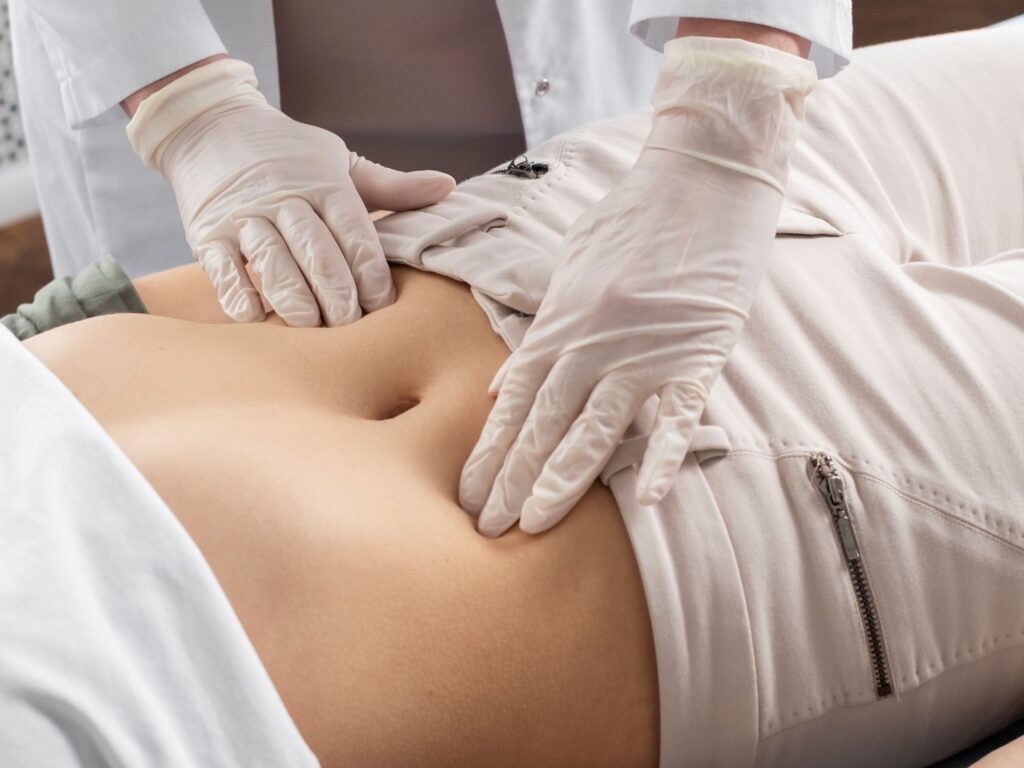
The first step in diagnosing diverticulitis is a thorough evaluation of the medical history and a physical examination. The doctor will ask about symptoms, including the location, duration, and intensity of abdominal pain, as well as fever, chills, nausea, vomiting, or changes in bowel habits. The physical examination includes palpation of the abdomen to assess tenderness, bloating, and the presence of masses.
2. Blood tests.
Blood tests are an important tool for detecting signs of infection and inflammation, which are characteristic of diverticulitis. A high white blood cell count and high levels of C-reactive protein (CRP) may indicate the presence of an active infection. These tests also help to rule out other conditions with similar symptoms.
3. Imaging tests.
Imaging tests to diagnose diverticulitis include several options depending on the patient’s needs. Abdominal computed tomography (CT) with contrast is the most accurate test, as it provides detailed images of the colon and surrounding structures, allowing visualization of inflammation, abscesses, perforations, and other complications. An abdominal ultrasound, although less precise than CT, is a less invasive and useful alternative in specific situations, such as in pregnant women or people allergic to iodinated contrast, helping to identify signs of inflammation and abscesses. In addition, a barium enema, although used less frequently than CT, can be used to examine the colon by introducing barium into the rectum and colon, generating X-rays that show the presence of diverticula.
4. Colonoscopy.
A colonoscopy is usually performed after the acute inflammation has subsided. This procedure allows the doctor to directly see the inside of the colon and identify diverticula, as well as rule out other conditions, such as colon cancer. During a colonoscopy, a thin, flexible tube with a camera is inserted into the rectum and advanced through the colon.
At HM Hospitales, our Digestive Diseases Department specializes in the diagnosis and treatment of diseases of the digestive system, including diverticulitis. We have a team of experienced gastroenterologists, colorectal surgeons, and interventional radiologists who work together to provide comprehensive and personalized care.
Treatment of diverticulitis
Treatment for diverticulitis is tailored to the severity of the disease and to each patient’s individual needs. Treatment options include:
1. Conservative (non-surgical) treatment.
Conservative treatment is usually sufficient for mild, uncomplicated diverticulitis and is based on several measures. Intestinal rest is recommended through a liquid or low-fiber diet for a few days to allow the colon to rest and reduce irritation; afterward, a normal diet can be gradually reintroduced. Antibiotics are essential to combat infection and inflammation in diverticula, being prescribed by the doctor according to the case and with a specific duration of treatment. To relieve abdominal pain, over-the-counter pain relievers such as paracetamol or ibuprofen can be used, although in some cases the doctor may prescribe stronger painkillers. In the long term, lifestyle changes are recommended to prevent recurrences, including increasing dietary fiber intake, drinking plenty of fluids, exercising regularly, and maintaining a healthy weight.
2. Interventional treatment (minimally invasive).
In cases of diverticulitis complicated by abscesses, percutaneous drainage can be performed. This procedure involves inserting a needle through the skin, guided by CT or ultrasound imaging, to drain the abscess.
3. Surgical treatment.
Surgery is reserved for cases of complicated diverticulitis that do not respond to conservative or interventional treatment, as well as in emergency situations, such as perforation or peritonitis. Surgical procedures include the resection of the affected segment of the colon, where the inflamed or infected part is removed, and can be performed by laparoscopic (minimally invasive) or open surgery, depending on the severity and the surgeon’s experience. In severe cases with peritonitis or sepsis, Hartmann’s surgery may be an option, which consists of the resection of the affected segment and the creation of a temporary colostomy to allow the colon to rest and heal; this colostomy can be reversed later in another surgical procedure. In addition, in some cases of peritonitis, a laparoscopic lavage and drainage procedure may be performed to clean the abdominal cavity and control the infection.
At HM Hospitales, we offer a wide range of treatment options for diverticulitis, from conservative treatments to minimally invasive and complex surgeries. A multidisciplinary approach, involving gastroenterologists, surgeons, interventional radiologists, and other specialists, is often necessary for the optimal management of diverticulitis, especially in complicated or recurrent cases.
Remember that this article is for informational purposes only and does not replace professional medical advice. If you suspect you have diverticulitis, consult a specialist to obtain an accurate diagnosis and an appropriate treatment plan tailored to your needs.
Our doctors
Contact and make an appointment with the professionals in this area