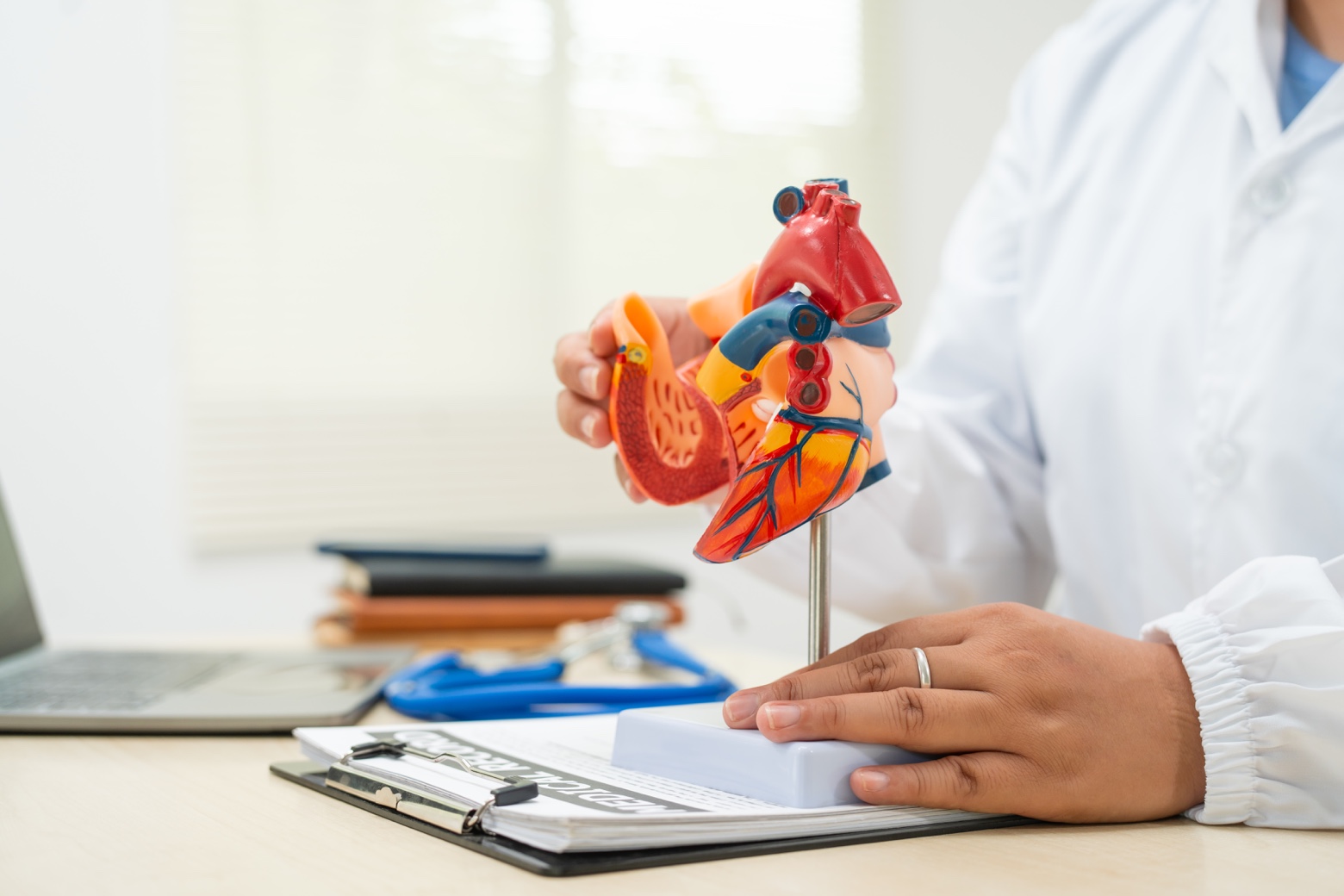
Angina occurs when the heart muscle does not receive enough blood supply, usually due to narrowing of the coronary arteries. This narrowing is usually caused by the accumulation of plaque, composed of cholesterol, fats, and other substances, on the arterial walls (arteriosclerosis). This plaque reduces blood flow to the heart, causing pain and discomfort.
Angina can significantly limit a patient’s physical activity and quality of life, as well as increase the risk of serious cardiac events.
Symptoms of angina
La angina de pecho se manifiesta como una molestia en el pecho, que puede ser leve o intensa, y que a menudo seLa angina de pecho se manifiesta como una molestia en el pecho, que puede ser leve o intensa, y que a menudo se describe como: describe como:
Presión:
Angina manifests as chest discomfort, which can be mild or severe, and is often described as:
Pressure:
a feeling of pressure or constriction in the chest, as if a weight were resting on it.
Tightness:
a feeling of constriction or narrowing in the chest.
Heaviness:
a feeling of heaviness or fullness in the chest.
Burning:
a burning sensation in the chest.
Dull pain:
a pain that is not sharp or stabbing, but rather a generalized discomfort.
The pain or discomfort may radiate to other areas of the body, such as:
Arms: usually the left arm, but it can also affect the right arm or both.
Shoulders: a feeling of pain or heaviness in one or both shoulders.
Neck: pain or stiffness in the neck.
Jaw: pain or pressure in the jaw, exclusively in the lower part.
Back: pain in the upper back, between the shoulder blades.
In addition to chest pain, other symptoms that may accompany angina include:
Shortness of breath (dyspnea): feeling of shortness of breath, especially during exertion. It can be mild or intense, even reaching the sensation of choking.
Fatigue: unusual tiredness or lack of energy, even after adequate rest. It can manifest as generalized weakness or lack of motivation.
Nausea or indigestion: feeling of stomach discomfort, nausea or vomiting, especially after meals or during an episode of angina.
Dizziness or lightheadedness: feeling of instability, loss of balance or fainting.
Sweating: excessive sweating, even at rest or in cool environments. It may be cold and clammy.
It is important to note that the severity and presentation of symptoms can vary from person to person. Some people may experience only mild discomfort, while others may have severe pain.
Classification of angina
Angina is classified into different types based on its characteristics and timing of presentation:
Stable angina (more than 3 months): it is the most common type. Chest pain is predictable and is triggered by physical exertion or emotional stress. It usually lasts a few minutes and is relieved by rest.
Unstable angina (less than 3 months): it is a more severe and unpredictable type of angina. Chest pain can occur at rest or with minimal exertion, be more intense and last longer. It can be a sign of an impending heart attack.
Variant angina (or Prinzmetal’s angina): this type of angina is caused by a spasm in the coronary arteries. Chest pain can occur at rest, often at night or early in the morning.
Causes of angina
The most common cause of angina is the narrowing of the coronary arteries due to the buildup of plaque on the arterial walls (arteriosclerosis). This buildup of plaque, called an atheroma, reduces blood flow to the heart, causing ischemia and pain.
There are several factors that can increase the likelihood of developing this condition. Some of these are modifiable, meaning they can be controlled through lifestyle changes, while others are not modifiable (such as age and male sex). These include:
Smoking: tobacco damages arterial walls and leads to plaque formation.
High blood pressure: high blood pressure puts more strain on the heart and damages the arteries.
High cholesterol: excess cholesterol in the blood contributes to plaque formation.
Diabetes: diabetes damages blood vessels and increases the risk of atherosclerosis.
Obesity: excess weight increases the workload of the heart and contributes to other risk factors, such as high blood pressure and high cholesterol.
Family history of heart disease: genetic predisposition may increase the risk of developing angina.
Old age: the risk of angina increases with age.
Lack of exercise: physical inactivity contributes to obesity and other risk factors.
Complications of angina
If not treated properly, angina can have serious health consequences:
Myocardial infarction (heart attack): partial or total occlusion of blood flow in the coronary artery can progress to a myocardial infarction.
Heart failure: angina can weaken the heart muscle over time, which can lead to heart failure.
Arrhythmias: angina can alter the heart rhythm, causing life-threatening arrhythmias.
It is essential to seek immediate medical attention if angina is suspected, especially if the pain is new, worsens, or is not relieved by rest.
Diagnosis of angina
An accurate diagnosis of angina is essential to determine the best course of action and prevent serious complications. Since the symptoms of angina can be similar to those of other conditions, such as heartburn, gastroesophageal reflux, or musculoskeletal problems, it is essential to perform a thorough evaluation to rule out other possible causes and confirm the cardiac origin of the symptoms. The diagnosis of angina involves a comprehensive evaluation that combines medical history with various diagnostic tests:
Medical history and physical examination: the doctor will review the patient’s symptoms, medical history, and risk factors.
Electrocardiogram (ECG): it records the electrical activity of the heart and can show changes suggestive of ischemia during an episode of angina.
Stress test: it evaluates the heart’s response to physical exertion. The patient walks on a treadmill or pedals on a stationary bike while their ECG, blood pressure, and heart rate are monitored. It can reveal exercise-induced ischemia.
Echocardiogram: it uses sound waves to create images of the heart, allowing its structure, function, and blood flow to be evaluated. It can detect areas of the heart with abnormal movement due to ischemia.
Myocardial scintigraphy: a nuclear medicine study that uses a small amount of radioactive material to assess blood flow to the heart. It may show areas with reduced blood flow, suggestive of ischemia.
Coronary angiography: an invasive procedure that provides detailed images of the coronary arteries. A catheter is inserted into an artery, usually in the wrist, and advanced to the proximal portion of the ascending aorta. Iodinated contrast is injected, and X-ray images are taken to visualize the coronary arteries. It makes it possible to identify narrowings or obstructions.
At HM Hospitales we have a Cardiac Hemodynamics department that is responsible for the anatomical and functional study of the heart through the introduction of catheters through the arteries and veins.
Treatments for angina
The treatment for angina focuses on relieving symptoms, improving blood flow to the heart, and reducing the risk of complications. Treatment options include:
Lifestyle changes: quitting smoking, following a healthy diet low in saturated fat and cholesterol, exercising regularly, maintaining a healthy weight, and controlling stress are essential.
Cardiac physiotherapy: a supervised exercise program can help improve cardiovascular health.
Pharmacological treatment: there are several pharmacological options for managing angina symptoms, including nitrates, beta-blockers, calcium antagonists, antiplatelet agents, or statins.
Coronary angioplasty (with stent placement): a minimally invasive procedure that uses a catheter with a balloon at the tip to open the blocked coronary artery in order to subsequently place a stent, a small metal mesh coil, to keep the artery open.
Coronary bypass surgery: an open-heart surgery in which a blood vessel from another part of the body is used to create a new pathway around the blocked coronary artery. It is performed in cases of severe or multiple obstructions.
The treatment of angina often involves a multidisciplinary approach, with the participation of cardiologists, cardiovascular surgeons, specialist nurses, physiotherapists, and other healthcare professionals.
Remember that this article is for informational purposes only and does not replace professional medical advice. If you suspect that you have angina, consult a specialist to obtain an accurate diagnosis and an appropriate treatment plan tailored to your needs.
Our doctors
Contact and make an appointment with the professionals in this area