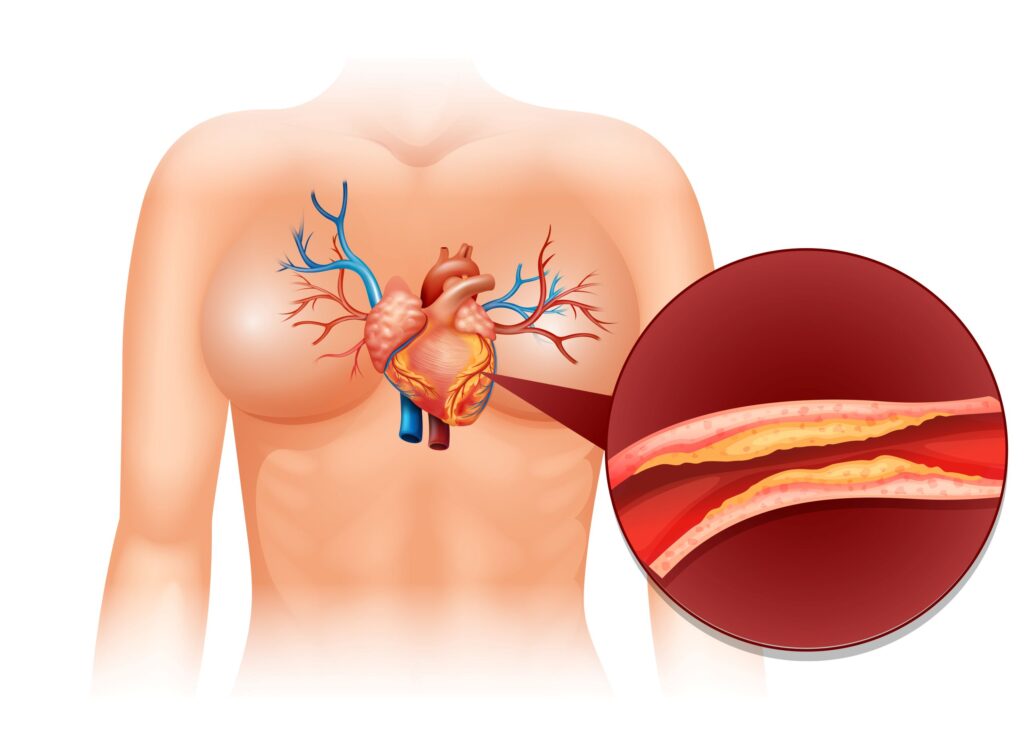
Arteriosclerosis is very common. Complications from plaque buildup (including heart attacks and strokes) are the leading cause of death worldwide. In the United States, approximately half of all people between the ages of 45 and 84 have atherosclerosis. 70% of the healthy population suffers from atherosclerosis or hardening of the arteries.
What is arteriosclerosis?
Arteriosclerosis refers to the hardening and thickening of the arterial walls. Healthy arteries are flexible and elastic, allowing blood to flow freely. With arteriosclerosis, the arterial walls become rigid and hardened, restricting blood flow. Reduced blood flow deprives organs and tissues of the oxygen and nutrients they need to function properly.
Arteriosclerosis contributes significantly to cardiovascular diseases. It is a gradual process that can begin in childhood and progress silently for decades, often without obvious symptoms until a serious event such as a myocardial infarction or stroke (ictus) occurs.
Symptoms of arteriosclerosis
The symptoms of arteriosclerosis vary depending on which arteries are affected. In its early stages, arteriosclerosis often presents no noticeable symptoms. As the condition progresses, symptoms may include:
If you have arteriosclerosis in the arteries of your arms and legs, you may experience leg pain when walking (claudication):
this pain usually occurs in the calves, thighs, or buttocks and disappears with rest.
If you have arteriosclerosis in the arteries leading to the brain, you may have difficulty breathing:
it can occur with exertion or even at rest.
Sudden numbness or weakness in arms or legs:
this may be a sign of a stroke.
Difficulty speaking or slurred speech:
is also a possible symptom of stroke.
Drooping facial muscles:
another possible indicator of stroke.
Caída de los músculos faciales:
otro posible indicador de un ictus.
It is important to note that the severity and presentation of symptoms can vary significantly from person to person.
Types of arteriosclerosis
Arteriosclerosis is a general term that encompasses different types of arterial diseases. The three most common forms are:
Atherosclerosis: it is the most common type of arteriosclerosis and is characterized by the accumulation of plaque on the arterial walls.
Arteriolosclerosis: it affects the arterioles, which are the smallest arteries, and is often associated with high blood pressure.
Mönckeberg’s sclerosis: it is characterized by the formation of calcium deposits in the middle layer of the arterial walls, mainly in medium-sized arteries. Although it can harden the arteries, it generally does not cause significant narrowing.
Causes of arteriosclerosis
While the exact mechanisms that initiate arteriosclerosis are not entirely clear, the process involves damage to the endothelium (the inner lining of the arteries). This damage can come from several factors, triggering inflammation and plaque formation.
There are numerous risk factors that increase the likelihood of developing arteriosclerosis. Some of these factors are modifiable, meaning they can be controlled through lifestyle changes, while others are non-modifiable.
Modifiable risk factors:
High cholesterol: high levels of LDL (“bad”) cholesterol contribute to plaque formation.
High triglycerides, a type of fat (lipid) in the blood.
High blood pressure: it damages arterial walls and leads to plaque formation.
Diabetes: it damages blood vessels and increases the risk of arteriosclerosis.
Smoking: it damages the endothelium and increases plaque formation.
Obesity: it is associated with other risk factors, such as high cholesterol and high blood pressure.
Physical inactivity: lack of exercise increases the risk of arteriosclerosis.
Unhealthy diet: a diet high in saturated fats and cholesterol contributes to plaque formation.
Inflammation caused by unknown causes or diseases such as arthritis, lupus, psoriasis, or inflammatory bowel disease.
High CRP: a marker of inflammation.
Sleep apnea.
Non-modifiable risk factors:
Age: the risk of arteriosclerosis increases with age.
Sex: men have a higher risk of developing arteriosclerosis at a younger age than women.
Family history: people with a family history of arteriosclerosis have a higher risk of developing the disease.
Complications of arteriosclerosis
Uncontrolled arteriosclerosis can have serious health consequences, including:
Coronary heart disease: narrowing of the coronary arteries can cause angina, myocardial infarction, and heart failure.
Stroke (ictus): a blockage in an artery that supplies blood to the brain can cause a stroke, which can lead to permanent brain damage.
Peripheral arterial disease: arteriosclerosis in the legs can cause pain when walking, leg ulcers, and, in severe cases, amputation.
Chronic kidney disease: arteriosclerosis can damage the arteries that supply blood to the kidneys, which can lead to chronic kidney disease.
Aneurysms. Atherosclerosis can also cause aneurysms, a serious complication that can occur anywhere in the body.
It is essential to seek medical advice if arteriosclerosis is suspected. Early diagnosis and treatment can help slow the progression of the disease and prevent serious complications.
Diagnosis of arteriosclerosis
Diagnosing arteriosclerosis involves evaluating the patient’s medical history, performing a physical examination, and conducting various diagnostic tests. The doctor will ask about symptoms, risk factors, and family history of cardiovascular disease. During the physical exam, the doctor may look for signs of arteriosclerosis, such as decreased pulse in the extremities, heart murmurs, or high blood pressure.
Diagnostic tests for arteriosclerosis include:
Blood tests: blood tests can be performed to measure cholesterol, glucose, and other parameters that may indicate a higher risk of arteriosclerosis.
Electrocardiogram (ECG): it records the electrical activity of the heart and can detect signs of coronary heart disease.
Stress test: if your symptoms usually occur when you exercise. In it, you walk on a treadmill or pedal on a stationary bike while your heart is monitored.
Color Doppler echocardiogram: this test uses ultrasound to show blood flow through the heart and assess the motility of the heart walls.
Doppler ultrasound: it uses sound waves to measure blood flow in the arteries. it is useful for detecting narrowing or blockages in the arteries.
Angiography: it is a test that involves injecting a contrast agent into the arteries to visualize them using X-rays. It provides detailed images of the arteries and can accurately identify the location and severity of blockages.
Computerized Tomography (CT scan): it uses X-rays to create images of the arteries. It can detect calcifications in the arteries, which are a sign of arteriosclerosis. Calcium score: the higher the score, the higher your risk of coronary heart disease.
Other imaging techniques such as cardiac MRI.
Ankle-brachial index (ABI): it compares the blood pressure in the ankle with the blood pressure in the arm. A low ABI may indicate peripheral arterial disease.
The choice of diagnostic tests will depend on the patient’s symptoms, risk factors, and the suspected affected artery.
Early detection of arteriosclerosis is crucial to prevent complications. At HM Hospitales, we offer a comprehensive 3D cardioprevention program to assess your cardiovascular risk and detect the disease in its early stages. Three-dimensional ultrasound more accurately reveals the existing atherosclerotic burden in the arteries and allows for better optimization of cardiovascular prevention strategies.
Treatment of arteriosclerosis
Treatment for arteriosclerosis focuses on slowing the progression of the disease, relieving symptoms, and preventing serious complications. The treatment approach varies depending on the severity of the disease and the affected artery. In general, treatment includes:
Lifestyle changes: they are fundamental to controlling modifiable risk factors and reducing the risk of arteriosclerosis. These changes include: healthy diet, regular exercise, quitting smoking, and maintaining a healthy weight.
Medications: drug treatment focuses on controlling risk factors associated with cardiovascular diseases, such as high blood pressure, high cholesterol, and diabetes. Among the most commonly used drugs are statins, which help to reduce cholesterol levels; angiotensin-converting enzyme (ACE) inhibitors and angiotensin II receptor blockers (ARBs), used to regulate blood pressure; and antiplatelet drugs, which are essential to prevent the formation of blood clots and reduce the risk of serious cardiovascular events.
Surgical procedures: they are used in cases of severe blockages to restore blood flow to the heart. Among the most common options is angioplasty, which consists of inserting a small catheter with a balloon into the blocked artery; when the balloon is inflated, the artery is opened and, in many cases, a stent is placed to keep it open. Another alternative is bypass surgery, in which a new pathway is created for blood to circulate around the blocked artery using a blood vessel taken from another part of the body. In addition, in some cases, an endarterectomy can be performed, a procedure in which the plaque accumulated in the affected artery is directly removed. Fibrinolytic therapy: if a blood clot in an artery blocks blood flow, the healthcare provider may use a medication to dissolve the clot until it disintegrates.
Prevention
The same healthy lifestyle changes recommended for treating arteriosclerosis also help prevent it. These lifestyle changes can help keep arteries healthy:
Quit smoking.
Eat healthy foods.
Exercise regularly.
Maintain a healthy weight.
Control and maintain healthy blood pressure.
Control and maintain healthy cholesterol and blood glucose levels.
At HM Hospitales there is a comprehensive monographic center in Cardiology where we offer a multidisciplinary approach to the treatment of arteriosclerosis, which includes collaboration with cardiologists, vascular surgeons, nutritionists, and other specialists as needed.
Remember that this article is for informational purposes only and does not replace professional medical advice. If you suspect you may have arteriosclerosis, consult a specialist to obtain an accurate diagnosis and an appropriate treatment plan tailored to your needs.
Our doctors
Contact and make an appointment with the professionals in this area