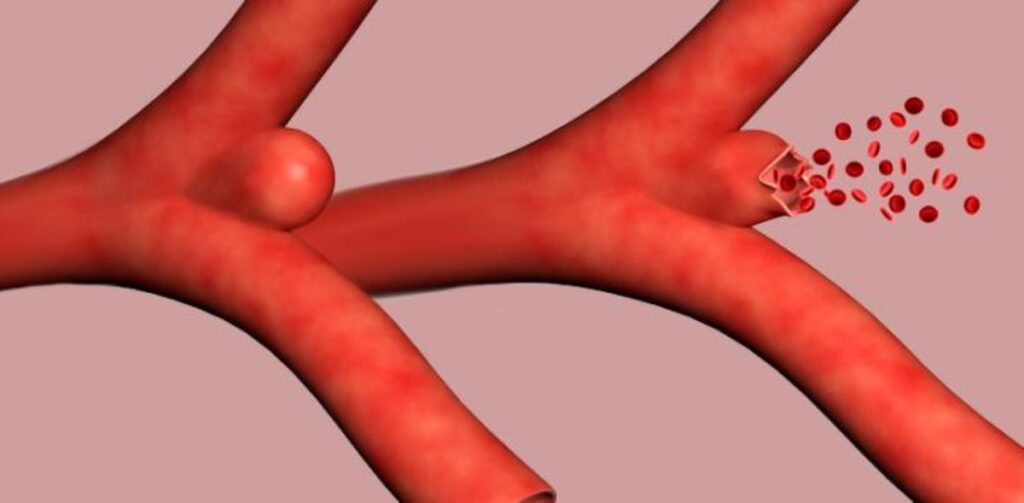
An aneurysm is an abnormal dilation of an artery, a blood vessel that carries oxygen-rich blood from the heart to the rest of the body. This dilation, when its size exceeds the regular diameter of the blood vessel by more than 50%, can weaken the arterial wall and increase the risk of rupture, which can lead to life-threatening internal bleeding. Aneurysms can occur in any artery in the body, but they are most common in the aorta, the main artery that leads out of the heart. They can also occur in the brain, legs, intestines, and spleen.
Symptoms of an aneurysm
Most aneurysms do not cause symptoms, especially in the early stages. They are often discovered incidentally during imaging tests performed for other reasons. However, as the aneurysm grows, it can begin to press on surrounding tissues and organs, which can cause symptoms. The symptoms of an aneurysm vary depending on its location and size.
Some of the most common symptoms include:
Pain: throbbing or constant pain in the area of the aneurysm.
Masa pulsátil: se puede palpar una masa pulsátil en el abdomen o en otra área del cuerpo.
If an aneurysm ruptures, it can cause sudden and severe symptoms, such as:
Intense and sudden pain: especially in the abdomen, back, or chest.
Nausea and vomiting.
Dizziness or fainting.
Low blood pressure.
Rapid heart rate.
Shortness of breath.
Loss of consciousness.
Causes of an aneurysm
An aneurysm could originate due to several factors that cause the alteration of the structural elements (proteins) of the aortic wall, which are precisely arranged to provide support and stability to it. However, the precise cause has not yet been fully determined. Several factors can contribute to its development, including:
Atherosclerosis: the accumulation of plaque on arterial walls can weaken them and make them more prone to the formation of aneurysms.
High blood pressure: high blood pressure puts extra strain on the arterial walls, which can weaken them over time.
Smoking: tobacco damages arterial walls and increases the risk of atherosclerosis.
Family history of aneurysms: having a close relative with an aneurysm increases the risk.
Injury: an injury to an artery can cause an aneurysm.
Infections: some infections can weaken arterial walls.
Understanding the risk factors associated with aneurysms is crucial for prevention and early detection. These factors, which may be modifiable or non-modifiable, increase the likelihood of developing an aneurysm. These include those mentioned above in the causes, as well as:
Age: the risk of aneurysms increases with age.
Sex: men have a higher risk of aneurysms than women.
Ethnicity: people of European descent have a higher risk of abdominal aortic aneurysms.
Family history of aneurysms.
Types of aneurysms
There are different types of aneurysms, classified according to their shape, size, location, and the layer of the blood vessel wall affected. This classification helps doctors determine the best course of treatment. The most common types include:
Abdominal aortic aneurysm: it is the most common type of aneurysm. It occurs in the part of the aorta that passes through the abdomen.
Thoracic aortic aneurysm: it occurs in the part of the aorta that passes through the chest.
Cerebral aneurysm: it occurs in an artery of the brain.
Popliteal aneurysm: it occurs in the artery behind the knee.
Mesenteric aneurysm: it occurs in the artery that supplies blood to the intestine.
Splenic aneurysm: it occurs in the artery that supplies blood to the spleen.
Abdominal aortic aneurysm
Eighty percent of all aneurysms are abdominal aortic aneurysms, which mainly affect individuals over 60 years of age and are more common in men and smokers.
Abdominal aortic aneurysms occur in the part of the aorta that passes through the abdomen. Like other aneurysms, abdominal aortic aneurysms often do not cause symptoms, especially in the early stages. However, as the aneurysm grows, it can cause abdominal or back pain, a throbbing sensation in the abdomen, or a palpable mass in the abdomen. A ruptured abdominal aortic aneurysm is a medical emergency that requires immediate treatment.
Complications of an aneurysm
The most serious complication of an aneurysm is rupture, which can cause massive and potentially fatal internal bleeding. Other complications may include:
Embolisms: blood clots can form inside the aneurysm, which can break off and block blood flow to other parts of the body.
Chronic pain: some aneurysms can cause chronic pain, even if they do not rupture.
The management of cerebral aneurysms requires a multidisciplinary approach involving specialists in interventional radiology, neurology, and neurosurgery for joint treatment. Aneurysms in other parts of the body are managed by the vascular surgeon, who will provide personalized care.
Diagnosis of an aneurysm
The diagnosis of an aneurysm often begins with a physical examination and a review of the patient’s medical history. Diagnostic imaging tests are essential to confirm the presence and determine the characteristics of the aneurysm. Depending on the location of the aneurysm, these tests may include:
Ultrasound: it uses sound waves to create images of the arteries. It is a non-invasive and relatively inexpensive test. It is used to observe the functioning of internal organs and to evaluate blood flow through different vessels.
Computed tomography angiography (CTA): it provides detailed images of blood vessels using X-rays and a contrast agent. This test allows for precise visualization of the shape, size, and location of the aneurysm.
Magnetic resonance angiography (MRA): similar to CT angiography, but it uses magnetic waves instead of X-rays. It is especially useful for visualizing cerebral aneurysms and in patients with allergies to iodinated contrast agents.
Treatment of an aneurysm
The treatment of an aneurysm depends on its location, size, shape, and the presence of symptoms. Treatment options include:
Regular monitoring or surveillance: if the aneurysm is small and does not cause symptoms, regular follow-up with imaging tests (ultrasounds) may be recommended to monitor its growth. These tests will monitor the size and growth rate of the aneurysm every 6 to 12 months.
Lifestyle changes: adopting healthy habits, such as quitting smoking, controlling blood pressure, following a balanced diet, and exercising regularly, is essential to reducing the risk of aneurysm growth and rupture.
Surgical treatment: when an aneurysm reaches a certain size or exhibits rapid growth, some type of surgery is usually necessary to prevent it from rupturing. The following types of interventions can be performed.
Conventional surgical repair: it involves a major procedure in which a surgeon accesses the affected artery, removes the aneurysm, and replaces it with a synthetic tube. Removing the aneurysm eliminates the risk of rupture. This surgery requires general anesthesia, hospitalization, and several months for the patient’s full recovery. However, it requires fewer follow-up checks and the likelihood of further intervention is lower. Moreover, it is the only option in most cases.
Endovascular repair: this surgery is minimally invasive and generally only requires local or regional anesthesia. It consists of inserting an endoprosthesis to reinforce the arterial wall through a small puncture or incision. The endoprosthesis is placed with great precision in the exact location to isolate the aneurysm. Hospitalization time and postoperative recovery are significantly shorter than with conventional surgery.
Remember that this article is for informational purposes only and does not replace professional medical advice. If you suspect you have an aneurysm, consult a specialist to obtain an accurate diagnosis and an appropriate treatment plan tailored to your needs.
Our doctors
Contact and make an appointment with the professionals in this area