Targeted biopsy
What is a targeted biopsy?
A targeted biopsy is a procedure used to obtain a tissue sample from a suspicious area of the body with greater precision than a conventional biopsy. Instead of “blindly” taking a sample, targeted biopsies use some form of guidance technique, such as imaging or direct vision, to locate the suspicious area and direct the needle or biopsy instrument toward it.
What is this diagnostic procedure for?
Targeted biopsies are used for a wide variety of purposes, including:
- Diagnosing cancer: Confirming the presence of cancer and determining its type and grade.
- Diagnosing infections: Identifying the organism causing an infection.
- Diagnosing inflammatory diseases: They are used to diagnose inflammatory diseases, such as Crohn’s disease or ulcerative colitis.
- Evaluating transplants: They are used to evaluate the rejection of transplanted organs.
- Research: They are used in research to study different diseases.
Benefits of the latest technology in targeted biopsies
Targeted biopsies offer a number of key benefits thanks to the incorporated technology:
- Earlier diagnosis: They allow for earlier diagnosis of various diseases, which improves the chances of successful treatment.
- Greater accuracy: They allow tissue samples to be obtained from specific areas with greater precision, which increases the likelihood of a correct diagnosis.
- Less invasive: They can be less invasive than surgical biopsies, which reduces the risk of complications and recovery time.
Safer: They can be safer than conventional biopsies, as they make it possible to avoid important structures, such as blood vessels or nerves.
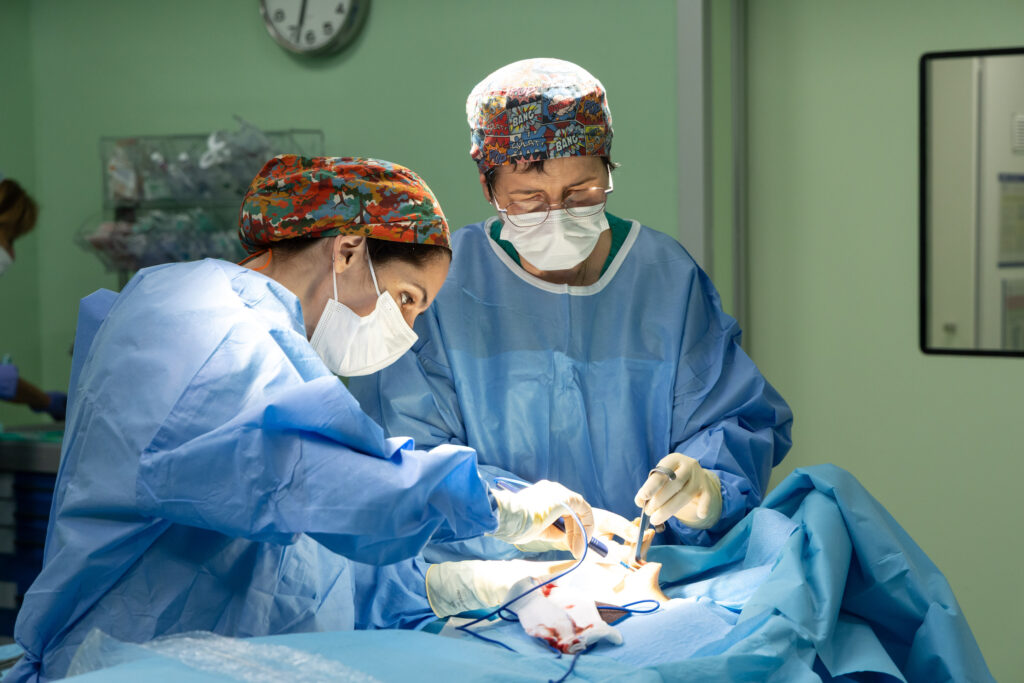
A targeted biopsy procedure will vary depending on the guidance technique used and the location of the suspicious area:
-
Preparation:
Preparation varies depending on the guidance technique used and the location of the suspicious area. In general, it’s important to tell your doctor about any allergies you have and about all the medications you’re taking, including over-the-counter drugs and supplements.
If you have had previous studies, such as MRIs, CT scans, or electroencephalograms, they will be reviewed to obtain a more complete view of your case.
-
During the procedure:
A guidance technique (e.g., ultrasound, CT, MRI, endoscopy) will be used to locate the suspicious area. The skin or mucous membrane will be cleaned with an antiseptic. Local anesthesia will be administered to minimize pain. A needle or biopsy instrument will be inserted through the skin or mucous membrane and guided to the suspicious area. One or more tissue samples will be taken.
-
After the procedure:
The needle or biopsy instrument will be removed. Pressure will be applied to the area to stop any bleeding. You will be given instructions on how to care for the area and what signs of complications to watch out for.
Recommendations for the procedure
Remember that it is important to adhere to the following recommendations to ensure the quality of the test and your comfort:
- Report any discomfort: Tell your doctor about any discomfort or pain you experience during the procedure.
- Follow the preparation instructions: Follow all preparation instructions provided by your doctor or hospital staff carefully.
- Report allergies and medications: It’s important to tell your doctor about any allergies you have and about all the medications you’re taking, including over-the-counter drugs and supplements.
Are there any risks?
Targeted biopsies are generally considered safe, but like any medical procedure, there are some minor risks to consider:
- Injury to adjacent organs or structures: In rare cases, adjacent organs or structures may be affected during the biopsy.
- Bleeding: There may be bleeding at the biopsy site.
- Infection: There is a risk of infection at the intervention site.
- Pain: You may experience localized pain where the procedure was performed.
To ensure your procedure runs smoothly, we ask that you arrive before the scheduled time. This will allow us to complete the necessary administrative and clinical preparation.
Before the procedure, we will give you the Informed Consent form, a document with important information that you must read and sign.
If your appointment is for an MRI, it is crucial that you inform us about the presence of pacemakers, metallic objects, prostheses (including dental prostheses), tattoos, or drug infusion devices such as insulin pumps.
These diagnostic tests are very safe, but as with any medical procedure, there is still the unlikely possibility of an incident.