Robotic oncological surgery
What is robotic oncological surgery?
Robotic oncological surgery is an advanced surgical technique that uses robotic systems to perform precise interventions in cancer patients. This procedure allows the surgeon to operate with greater control, flexibility, and precision thanks to robotic arms and high-definition 3D images. It is especially useful in complex areas of anatomy and in minimally invasive procedures.
What is the purpose of this procedure?
Robotic oncological surgery is primarily used in:
- Treatment of solid tumors: in interventions of organs such as the prostate, kidney, bladder, uterus, colon, rectum, lung, and head/neck.
- Resection of tumors: It is used for precise removal of tumor masses, preserving as much of the surrounding healthy tissue as possible.
- Personalized surgical planning: It helps to design strategies adapted to the patient’s anatomy and condition.
- Reduction of complications: It serves to minimize the risk of bleeding, infections, and damage to vital structures.
- Improving quality of life: It is used to facilitate a quicker and less painful recovery.
Benefits of the latest technology in robotic cancer surgery
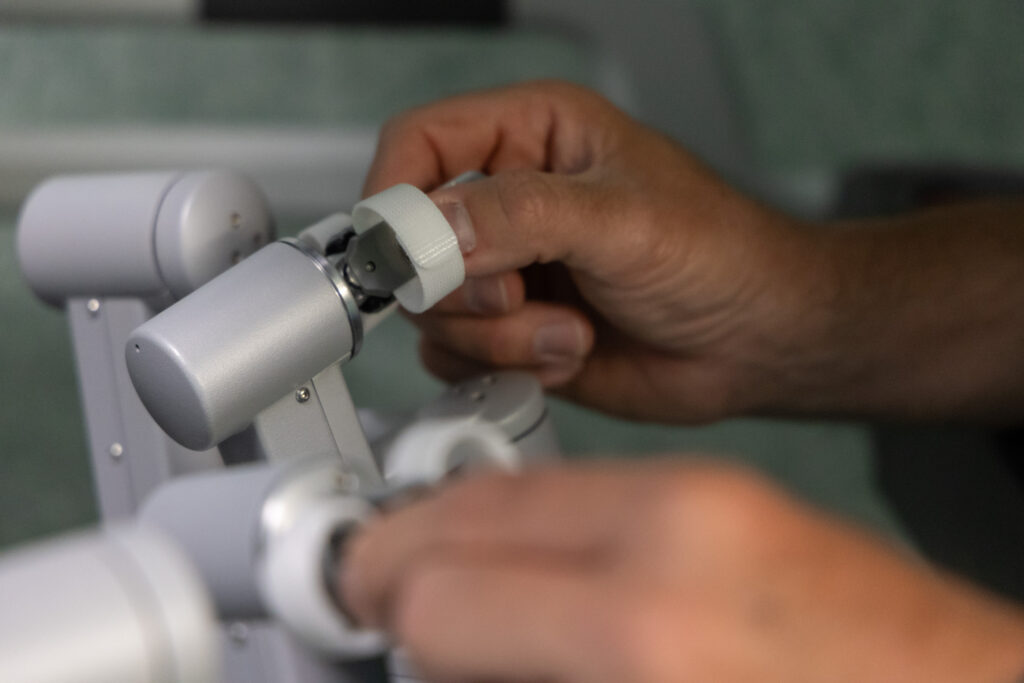
The procedure uses a robotic system, such as the Da Vinci system, which consists of robotic arms controlled by the surgeon from a console. The arms are equipped with miniaturized surgical instruments and a camera that provides magnified 3D images of the operated area. The surgeon is able to operate the robotic arms with precise movements, eliminating tremors and improving the accuracy of the procedure.
The procedure with latest-generation oncology drugs involves:
-
Preparation:
During the initial consultation, both the oncologist and the surgeon will review your medical history and analyze the results of previous tests, such as biopsies or imaging and molecular analysis studies. In addition, further studies, such as a computed tomography (CT) scan or a magnetic resonance imaging (MRI) scan, will be carried out to plan the surgery. It is recommended to fast for several hours before the procedure. It is also important that you inform your medical team about any medications you are taking, especially if they are blood thinners (anticoagulants).
-
During the procedure:
You will be administered general anesthesia to ensure that you are completely asleep during the procedure. The surgeon will make small incisions to insert the robotic arms and the camera. From a console, they will control the robotic arms to precisely remove the tumor. Throughout the procedure, your vital signs will be monitored to ensure your safety. The duration of the surgery depends on the type of procedure and the complexity of the case, but it generally takes between 2 and 4 hours.
-
After the procedure:
You will be taken to a recovery room where you will be monitored for the first few hours after the procedure. You may experience mild discomfort at the incision site or a general feeling of tiredness. You will be advised to avoid strenuous physical activity for the first few weeks after surgery. The results will be evaluated by your oncologist and surgeon, who will explain the findings and the necessary follow-up procedures.
Recommendations for the procedure
It is essential to inform your medical team if you are allergic to any medication or material that will be used during the procedure. You must also follow all instructions carefully before, during and after the procedure to guarantee your well-being and the efficacy of the treatment.
Are there any risks?
Robotic cancer surgery is a safe procedure, but like any medical intervention, there are risks involved:
- Bleeding: There may be bleeding at the incision site or within the operated area.
- Infection: Although rare, infection can occur in the area of the incisions.
- Injury to nearby structures: There is a low risk of damage to adjacent organs or tissues.
- Risks related to anesthesia: You may feel dizzy, nauseous, or suffer an allergic reaction.
To ensure your procedure runs smoothly, we ask that you arrive before the scheduled time. This will allow us to complete the necessary administrative and clinical preparation.
Before the procedure, we will give you the Informed Consent form, a document with important information that you must read and sign.
If your appointment is for an MRI, it is crucial that you inform us about the presence of pacemakers, metallic objects, prostheses (including dental prostheses), tattoos, or drug infusion devices such as insulin pumps.
These diagnostic tests are very safe, but as with any medical procedure, there is still the unlikely possibility of an incident.