PET-MRI Scan
What is a PET-MRI scan?
A PET-MRI scan is a hybrid imaging technique that combines Positron Emission Tomography (PET) and Magnetic Resonance Imaging (MRI). This advanced technology allows for metabolic and functional body imaging (PET) along with high-resolution anatomical imaging (MRI), all in a single study. It is especially useful for the diagnosis, planning, and monitoring of various diseases.
What is the purpose of this procedure?
PET-MRI scans are used for:
- Cancer diagnosis: to detect tumors, assess their extent, and determine if they are malignant.
- Neurology: to identify neurodegenerative diseases such as Alzheimer’s or to evaluate epilepsy or other neurological conditions.
- Cardiology: to evaluate blood flow and cardiac function.
- Treatment planning: it helps doctors plan more precise treatments based on metabolic and anatomical information.
- Monitoring the response to treatment: it allows us to assess how the body responds to therapies such as chemotherapy or radiotherapy.
Benefits of advanced technology in a PET-MRI scan
PET uses positron-emitting radiopharmaceuticals to detect metabolic activity in the body. MRI, on the other hand, uses magnetic fields and radio waves to generate detailed images of internal structures. By combining both techniques, PET-MRI scans provide more complete and accurate information than either modality alone.
What does the procedure involve?
The PET-MRI procedure involves:
-
Preparation:
Before the procedure, you will generally need to fast for 4 to 6 hours, but check with your doctor to confirm. It is recommended to drink water before the procedure. Also, be sure to inform your doctor about any medications you are taking. If you are pregnant or breastfeeding, inform your doctor. Also, wear comfortable clothing without any metal components for the procedure.
-
During the procedure:
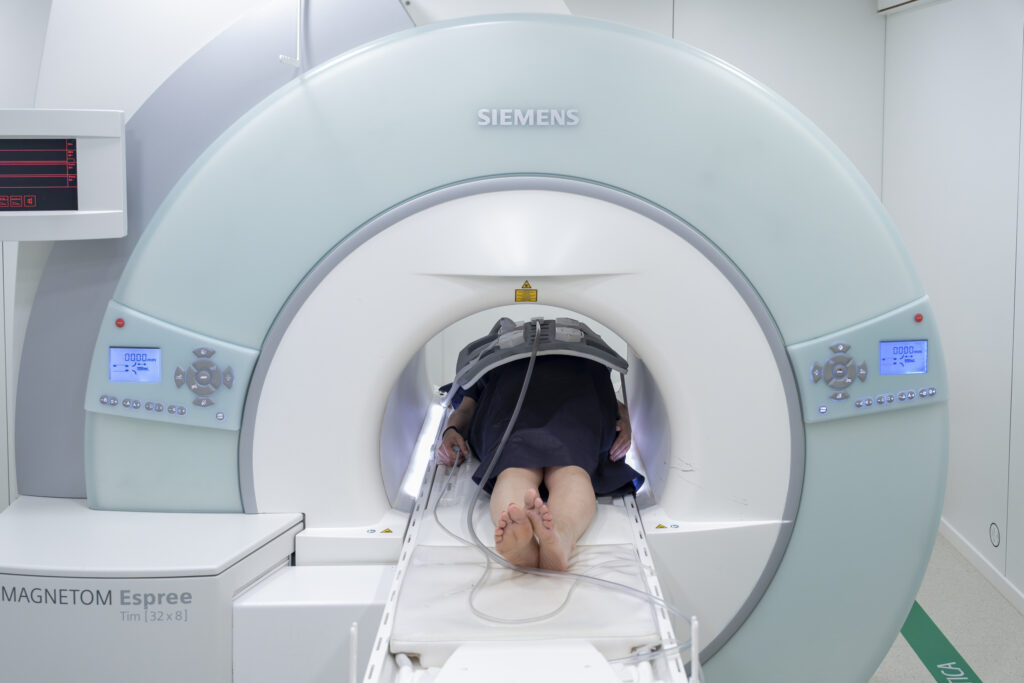
A radiopharmaceutical will be administered to you intravenously. This substance is safe and is quickly eliminated from the body due to its short half-life. Next, you will be asked to lie down on the PET-MRI scanner table. First, metabolic images will be taken using PET, followed by anatomical images using MRI. It is important that you remain still during the procedure to ensure the quality of the images. The procedure will last approximately 60 to 90 minutes.
-
After the procedure:
You can resume your normal activities immediately after the procedure. It is essential to drink plenty of water to help eliminate the radiopharmaceutical from your body. The results of the PET-MRI scan will be analyzed by a specialist radiologist and sent to your doctor, who will explain the findings and recommend the appropriate treatment, if necessary.
Recommendations for the procedure
Remember that it is important to follow these recommendations:
- Avoid moving: during the procedure, it is important to remain as still as possible to ensure the accuracy of the biopsy.
- Follow instructions: follow your doctor’s instructions before, during, and after the procedure.
Are there any risks?
PET-MRI is a safe procedure, but there are some minor risks:
- Exposure to radiation: PET uses a small amount of radiation due to the administered radiopharmaceutical. However, the dose is low and considered safe.
- Claustrophobia: some people may experience anxiety while inside the MRI scanner. Inform the staff if this happens to you; steps can be taken to help you feel more comfortable.
- Allergic reactions (rare): in exceptional cases, allergic reactions to the radiopharmaceutical may occur.
To ensure your procedure runs smoothly, we ask that you arrive before the scheduled time. This will allow us to complete the necessary administrative and clinical preparation.
Before the procedure, we will give you the Informed Consent form, a document with important information that you must read and sign.
If your appointment is for an MRI, it is crucial that you inform us about the presence of pacemakers, metallic objects, prostheses (including dental prostheses), tattoos, or drug infusion devices such as insulin pumps.
Do you need to undergo this procedure?
Make an appointment