Neuronavigators
What are neuronavigators?
Neuronavigators are advanced computer-assisted navigation systems used during surgical procedures on the brain and spinal cord. These devices allow surgeons to accurately locate anatomical structures in real time, improving the safety and effectiveness of neurological interventions.
What is this procedure for?
Neuronavigators are primarily used in:
- Brain surgeries: They help to locate tumors, vascular malformations, lesions, or critical functional areas of the brain.
- Spinal procedures: They are used to guide the placement of pedicle screws or other devices in spinal surgeries.
- Brain biopsies: They are used to ensure the accurate collection of tissue samples.
- Functional treatments: They are used to assist in procedures such as deep brain stimulation (DBS) to treat diseases like Parkinson’s.
Benefits of high-tech neuronavigators
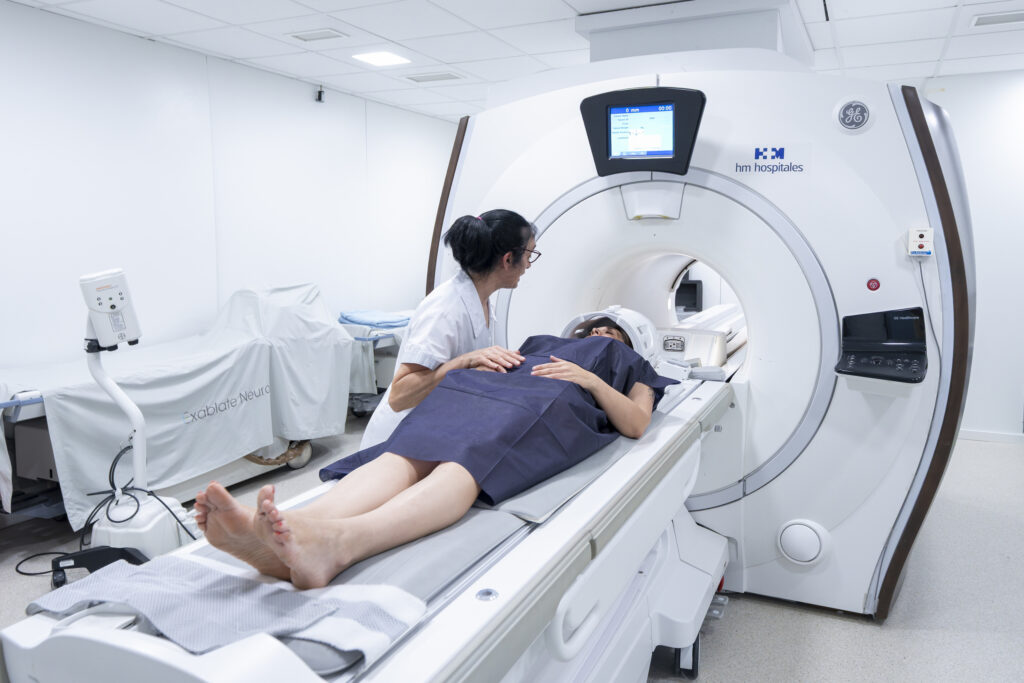
Neuronavigators combine images obtained through magnetic resonance imaging (MRI), computed tomography (CT) or other imaging modalities with advanced sensors and software. This allows the surgeon to visualize the position of the surgical instruments in relation to the patient’s anatomical structures in real time.
What does the procedure involve?
A procedure with neuronavigators involves:
-
Preparation:
Before surgery, imaging studies, such as magnetic resonance imaging (MRI) or computed tomography (CT) scans, are performed to obtain detailed maps of your brain or spine. These images are loaded into the neuronavigation system to accurately plan the procedure.
-
During the procedure:
You will be placed in a suitable position depending on the type of intervention. Sensors and markers will be used to calibrate the neuronavigation system in line with your anatomy. The surgeon will use the neuronavigator data to guide the surgical instruments precisely during the procedure.
-
After the procedure:
If necessary, postoperative imaging will be performed to confirm whether the procedure was a success. You will be transferred to the postsurgical recovery room for monitoring. The results of the procedure will be available for subsequent follow-up.
Recommendations for the procedure
The use of neuronavigators requires close collaboration between the surgical team and the technical staff. This technology helps minimize risks, allowing for precise navigation and prevents damage to critical structures.
Are there any risks?
The use of neuronavigators is safe and highly beneficial, but there are some inherent risks to the surgical procedure:
- General surgical risks: As with any surgery, there are risks associated with the anesthesia and the procedure.
- Technological dependence: Although neuronavigators are accurate, their effectiveness depends on the quality of preoperative images and the correct calibration of the system.
To ensure your procedure runs smoothly, we ask that you arrive before the scheduled time. This will allow us to complete the necessary administrative and clinical preparation.
Before the procedure, we will give you the Informed Consent form, a document with important information that you must read and sign.
If your appointment is for an MRI, it is crucial that you inform us about the presence of pacemakers, metallic objects, prostheses (including dental prostheses), tattoos, or drug infusion devices such as insulin pumps.
Do you need to undergo this procedure?
Make an appointment