MRI perfusion
What is MRI perfusion?
Magnetic Resonance Imaging (MRI) perfusion is an advanced imaging technique that helps assess how blood circulates in the brain. It is a key tool for diagnosing and monitoring various neurological conditions such as tumors, ischemia, strokes, and tumor angiogenesis.
How does advanced technology work in MRI perfusion?
It uses dynamic magnetic resonance imaging with an intravenous contrast agent to measure essential data, such as cerebral blood volume and flow. In this way, specialists can identify areas with reduced (hypoperfusion) or increased (hyperperfusion) circulation, brain symptoms that may indicate the presence of various diseases.
What does the procedure involve?
-
Preparation:
Before the study, your medical history will be reviewed, and you will be instructed to remove any metal objects. In some cases, you may be given a sedative if you feel claustrophobic.
-
Injection of the contrast agent:
An intravenous line will be placed in your arm to administer the contrast agent, usually gadolinium-based. This substance highlights blood flow in the images obtained.
-
Positioning in the MRI scanner:
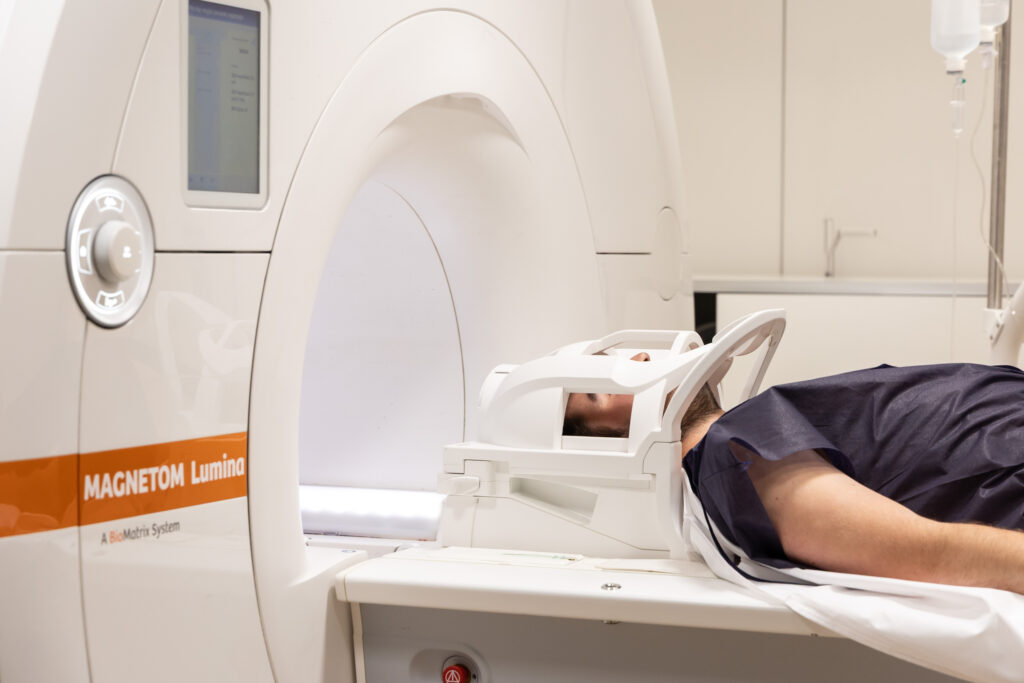
You will lie down on an MRI table, which will then slide into the MRI machine. It is important that you remain still to ensure the quality of the images.
-
Image acquisition:
The medical team will acquire dynamic MRI sequences while the contrast circulates through your brain. These images will allow the measurement of key parameters such as cerebral blood flow and volume.
-
Completion of the procedure:
Once the necessary images have been obtained, the intravenous line will be removed, and you can resume your normal activities, unless your doctor advises otherwise.
Recommendations for the procedure
To ensure the procedure is carried out safely and effectively, please keep the following in mind:
- Inform your doctor if you have allergies to the contrast agent or kidney problems, as this may affect the administration of the intravenous contrast.
- Stay well hydrated before and after the scan. Drinking water helps eliminate the contrast from your body more quickly.
- If you have claustrophobia or metal implants, notify the specialist in advance. Our specialists will ensure that this test is as beneficial and safe as possible for you.
- Remain as still as possible during the test. This will ensure clearer and more accurate images.
Are there any risks?
MRI perfusion is a safe procedure with minimal risks. However, in rare cases, you could experience allergic reactions to the contrast agent. If you have chronic kidney failure, it is important that you inform your doctor, as the contrast agent could affect your kidney function. In addition, if you have a pacemaker or other metallic implants, you must inform us before the study, as the magnetic field could interfere with these devices.
To ensure your procedure runs smoothly, we ask that you arrive before the scheduled time. This will allow us to complete the necessary administrative and clinical preparation.
Before the procedure, we will give you the Informed Consent form, a document with important information that you must read and sign.
If your appointment is for an MRI, it is crucial that you inform us about the presence of pacemakers, metallic objects, prostheses (including dental prostheses), tattoos, or drug infusion devices such as insulin pumps.
These diagnostic tests are very safe, but as with any medical procedure, there is still the unlikely possibility of an incident.
Do you need to undergo this procedure?
Make an appointment