MR Enterography
What is MR Enterography?
Magnetic Resonance Enterography (MR Enterography) is an imaging diagnostic method that allows for visualization of the walls of the small intestine. It is a non-invasive study that does not use X-rays or radioactive elements. MR Enterography is based on magnetic fields to obtain highly sensitive images.
What is this diagnostic procedure for?
MR Enterography is used to:
- Detect and evaluate inflammatory bowel diseases: such as Crohn’s disease.
- Identify tumors and polyps in the small intestine.
- Evaluate the cause of intestinal bleeding.
- Detect intestinal obstructions.
Benefits of advanced technology in MR Enterography
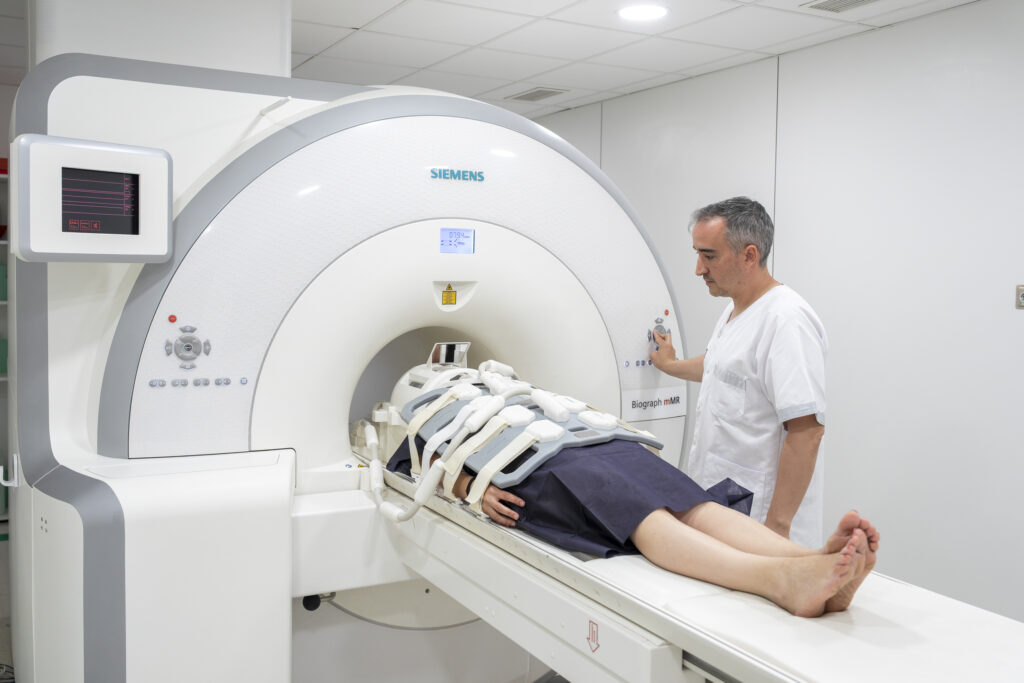
MR Enterography uses magnetic fields and radio waves to create detailed images of the small intestine. In some cases, it is necessary to administer an intravenous contrast agent called gadolinium to improve the visualization of the structures.
What does the procedure involve?
The MR Enterography procedure involves:
-
Preparation:
For the procedure, it is necessary to fast from solid foods for at least 4 hours beforehand. In addition, it is recommended that you avoid heavy meals the day before. One hour before the procedure, you will need to drink one liter of water with a special preparation that we will provide in the diagnostic imaging department.
If your doctor has prescribed the procedure with sedation, you must fast from solid foods for at least 6 hours and avoid liquids for 2 hours before the test. In this case, you will also need to be accompanied by an adult, and you will not be able to drive or consume alcohol for the following 12 hours.
-
During the procedure:
During the procedure, you will be asked to lie down on the MRI table. The technical team will place special coils around your abdomen to obtain detailed images. It is essential that you remain as still as possible while the images are being taken. In some cases, you will be given an intravenous contrast agent to improve the quality of the images. The procedure usually lasts between 40 and 60 minutes.
-
After the procedure
You can resume your normal activities immediately after the procedure, unless you have received sedation. In that case, you must not drive or operate heavy machinery for the following 12 hours.
The results of the MR Enterography will be analyzed by a radiologist and sent to your doctor, who will explain the findings and recommend the appropriate treatment, if necessary.
Recommendations for the procedure
- Important medical information: you must inform us if you have had any allergic reaction to a contrast agent previously, if you are pregnant or think you might be pregnant, and if you suffer from any of the following conditions: diabetes or liver or kidney failure, as they may require additional precautions. If you are breastfeeding, consult your doctor about whether you need to express and store breast milk before the test.
- Metal implants: it is essential that you inform us if you have any metal implants in your body, such as pacemakers, prostheses, surgical clips, hearing aids, implantable cardioverter defibrillators (ICDs), electrodes, implanted electronic devices such as neurostimulators or infusion pumps, or stents.
- Tattoos: please note that some tattoos may contain metallic components that could cause discomfort during the procedure.
- Claustrophobia: if you suffer from claustrophobia, it is important that you inform us before the procedure so that we can take the necessary steps to help you feel more comfortable.
- Preparation for the procedure: wear clothes that are easy to take off and put on. In addition, you must not wear metal objects, such as jewelry, headphones, magnetic cards, piercings, glasses, etc.
Are there any risks?
MR Enterography is a safe procedure, but there are some precautions:
- Allergic reactions to the contrast agent: in rare cases, intravenous contrast can cause allergic reactions.
- Risks associated with sedation: If sedation is used, there are risks associated with it. Your doctor will inform you about these risks.
To ensure your procedure runs smoothly, we ask that you arrive before the scheduled time. This will allow us to complete the necessary administrative and clinical preparation.
Before the procedure, we will give you the Informed Consent form, a document with important information that you must read and sign.
If your appointment is for an MRI, it is crucial that you inform us about the presence of pacemakers, metallic objects, prostheses (including dental prostheses), tattoos, or drug infusion devices such as insulin pumps.