Mitral Valve Replacement
What is mitral valve replacement?
Mitral valve replacement is a surgical procedure that involves replacing the mitral valve of the heart when it is damaged or not functioning properly. This treatment is used to correct problems such as mitral regurgitation (when the valve does not close properly) or mitral stenosis (when the valve is narrowed and hinders blood flow). The goal is to restore normal heart function and improve the patient’s quality of life.
What is this procedure for?
Mitral valve replacement is primarily used in:
- Treatment of valvular diseases: to correct mitral regurgitation, mitral stenosis, or other conditions affecting the mitral valve.
- Relief of symptoms: to reduce discomfort such as shortness of breath, fatigue, leg swelling, and palpitations.
- Complication prevention: to reduce the risk of heart failure, strokes, and serious arrhythmias.
- Improvement in quality of life: to restore normal heart function and allows the patient to perform their daily activities without limitations.
Benefits of advanced technology in mitral valve replacement
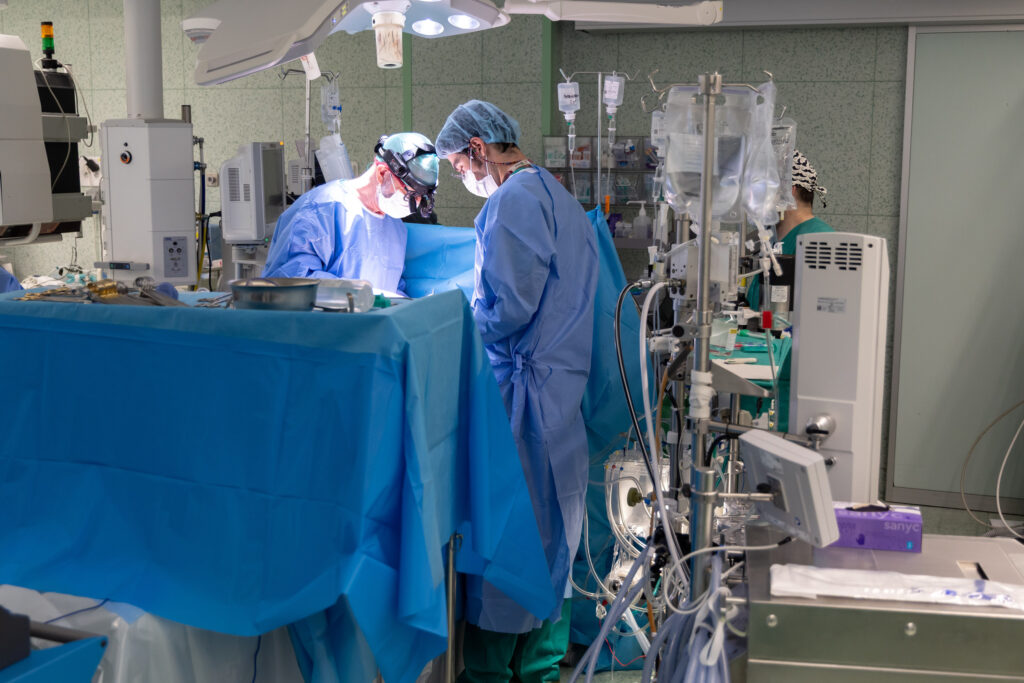
During the procedure, the damaged mitral valve is replaced with an artificial or biological valve. Surgery can be performed using open techniques (sternotomy) or minimally invasive approaches, depending on the patient’s condition and the medical team’s preference.
What does the procedure involve?
The mitral valve replacement procedure involves:
-
Preparation:
To prepare, in the initial consultation, the cardiologist and the surgeon will review your medical history and symptoms. You will undergo tests such as echocardiography, electrocardiogram (ECG), computed tomography (CT), or magnetic resonance imaging (MRI) to plan the surgery. It is recommended to fast for several hours before the procedure. Also, be sure to inform your medical team about any medications you are taking, especially if they are blood thinners (anticoagulants).
-
During the procedure:
You will be administered general anesthesia to ensure that you are completely asleep during the procedure. The surgeon will make an incision in the chest to access the heart, although in some cases of minimally invasive surgery small incisions will be used. Then, the damaged mitral valve will be removed and replaced with an artificial valve, which can be mechanical or biological (made from animal or human tissue). Throughout the procedure, your heart rate and blood pressure will be monitored to ensure your safety. The surgery usually lasts between 2 and 4 hours.
-
After the procedure:
After surgery, you will be transferred to an intensive care unit, where you will be monitored for the first few hours. You may experience mild discomfort at the incision site or a feeling of tiredness. You will be advised to avoid strenuous physical activity for the first few weeks to speed up your recovery. The cardiologist will evaluate the results and explain the findings and necessary follow-up procedures.
Recommendations for the procedure
It is important to inform the medical team if you are allergic to any medication or substance that will be used during the procedure. Also, follow all medical instructions carefully before, during and after the surgery to guarantee your well-being and the efficacy of the treatment.
Are there any risks?
A mitral valve replacement is a safe procedure, but like any medical intervention, there are minor risks involved:
- Arrhythmias: some people may develop irregular heart rhythms after surgery.
- Bleeding: at the incision site or inside the chest.
- Infection: although rare, it can occur in the area of the incision or around the implanted valve.
- Clot formation: there is a risk of blood clots that could cause a stroke.
- Risks related to anesthesia: you may feel dizzy, nauseous, or suffer an allergic reaction.
To ensure your procedure runs smoothly, we ask that you arrive before the scheduled time. This will allow us to complete the necessary administrative and clinical preparation.
Before the procedure, we will give you the Informed Consent form, a document with important information that you must read and sign.
If your appointment is for an MRI, it is crucial that you inform us about the presence of pacemakers, metallic objects, prostheses (including dental prostheses), tattoos, or drug infusion devices such as insulin pumps.
Do you need to undergo this procedure?
Make an appointment