Magnetic Resonance Angiography
What is high-tech Magnetic Resonance Angiography?
Magnetic Resonance Angiography, also known as angioresonance, is an advanced, non-invasive imaging technique that provides detailed views of blood vessels throughout the body. Using magnetic fields and radio waves, and in contrast to traditional angiography, this high-tech test allows 3D images of arteries and veins to be obtained without the need to insert catheters or expose the patient to radiation. A contrast medium called Gadolinium can be used in some cases to further enhance the visibility of blood vessels and thus facilitate diagnosis.
What is this diagnostic procedure for?
Magnetic Resonance Angiography is essential for the diagnosis and monitoring of various vascular conditions, as it can:
- Detect aneurysms (dilations) in arteries such as the aorta or cerebral arteries: Identify weakened areas in the walls of arteries that have dilated, helping to prevent rupture and bleeding.
- Identify stenoses (narrowings) that limit blood flow: It determines the degree of obstruction in the arteries, allowing for the planning of treatment to improve blood supply.
- Diagnose congenital vascular malformations: It locates abnormal connections between arteries and veins present from birth.
- Detect thrombi (clots) that obstruct blood vessels: It makes the presence of clots in arteries and veins visible, which helps to prevent complications such as deep vein thrombosis or pulmonary embolism.
- Evaluate blood flow to organs and tissues: It determines the amount of blood that reaches different parts of the body, which helps to diagnose peripheral vascular diseases.
- Plan surgical interventions or endovascular treatments: It provides detailed information about vascular anatomy, helping surgeons to plan and perform interventions more safely and effectively.
Benefits of the latest technology in Magnetic Resonance Angiography
The advanced technology used in Magnetic Resonance Angiography results in more accurate results and earlier diagnoses. State-of-the-art equipment combines powerful magnets and gradients that generate high-resolution images, with optimized pulse sequences that allow blood flow to be visualized without interference. In addition, specialized coils are used for each anatomical region, along with advanced software for 3D reconstruction and flow analysis. All of this allows healthcare professionals to more accurately identify risk factors related to cardiovascular diseases and diagnose pathologies in their early stages.
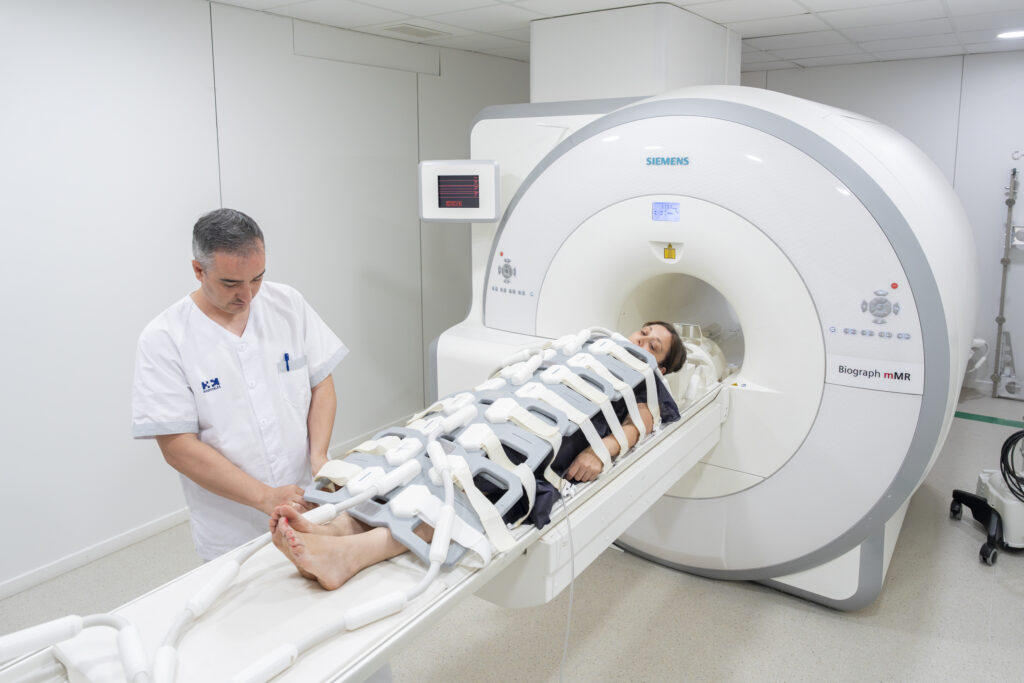
Magnetic Resonance Angiography involves:
-
Preparation:
You will be asked to remove any metal objects from your person, such as jewelry, watches, or belts. You may be asked to wear a hospital gown. In addition, you must inform the technician if you have any allergies to medication or any pre-existing medical conditions, non-removable metal implants (infusion pumps of any kind), or if you are pregnant or suspect you might be pregnant.
-
During the procedure:
You will lie down on a table that slides into the MRI machine. They will likely place coils around the area to be studied. Next, you will be asked to remain still and hold your breath at certain times. The scan takes between 30 and 90 minutes, depending on the area to be examined. It is important to note that the MRI machine emits loud noises; therefore, earplugs are permitted. Finally, a contrast medium may be administered through a vein in your arm to enhance the images.
-
After the procedure:
If no type of sedation was used, you can resume your normal activities immediately. If you were sedated, you should avoid driving or operating heavy machinery for the rest of the day. The results will be reviewed by a radiologist and sent to your doctor.
Recommendations for the procedure
You should arrive at the MRI center with enough time to complete the informed consent forms for the test and prepare for the procedure. Follow the instructions of the technical staff carefully throughout the procedure, and feel free to ask questions about any doubts that may arise.
Are there any risks?
Magnetic Resonance Angiography is generally considered a safe procedure, but there are some potential risks:
- Allergic reactions to the contrast medium (uncommon): In rare cases, the contrast medium (Gadolinium) can cause mild allergic reactions such as hives or itching. Severe reactions are very rare, but can include difficulty breathing or anaphylactic shock, so it is crucial to let staff know if you have a history of allergies.
- Nephrogenic systemic fibrosis (NSF) in patients with severe kidney disease (rare): NSF is a rare but serious complication that can affect people with advanced kidney failure who are administered Gadolinium. It involves the thickening of the skin and organs. However, for this reason, renal function is assessed prior to administering the contrast agent.
- Claustrophobia (feeling of confinement): Some people may feel anxious or uncomfortable inside the MRI machine. If you suffer from claustrophobia, inform your doctor; You may be given a mild sedative to help you relax during the procedure.
- Magnetic fields can interfere with the operation of some implanted devices: It is important to inform the staff if you have any implanted devices (pacemaker, defibrillator, infusion pumps of any kind, etc.) as certain devices may be incompatible with the MRI machine.
To ensure your procedure runs smoothly, we ask that you arrive before the scheduled time. This will allow us to complete the necessary administrative and clinical preparation.
Before the procedure, we will give you the Informed Consent form, a document with important information that you must read and sign.
If your appointment is for an MRI, it is crucial that you inform us about the presence of pacemakers, metallic objects, prostheses (including dental prostheses), tattoos, or drug infusion devices such as insulin pumps.