Intraoperative MRI
What is intraoperative magnetic resonance imaging?
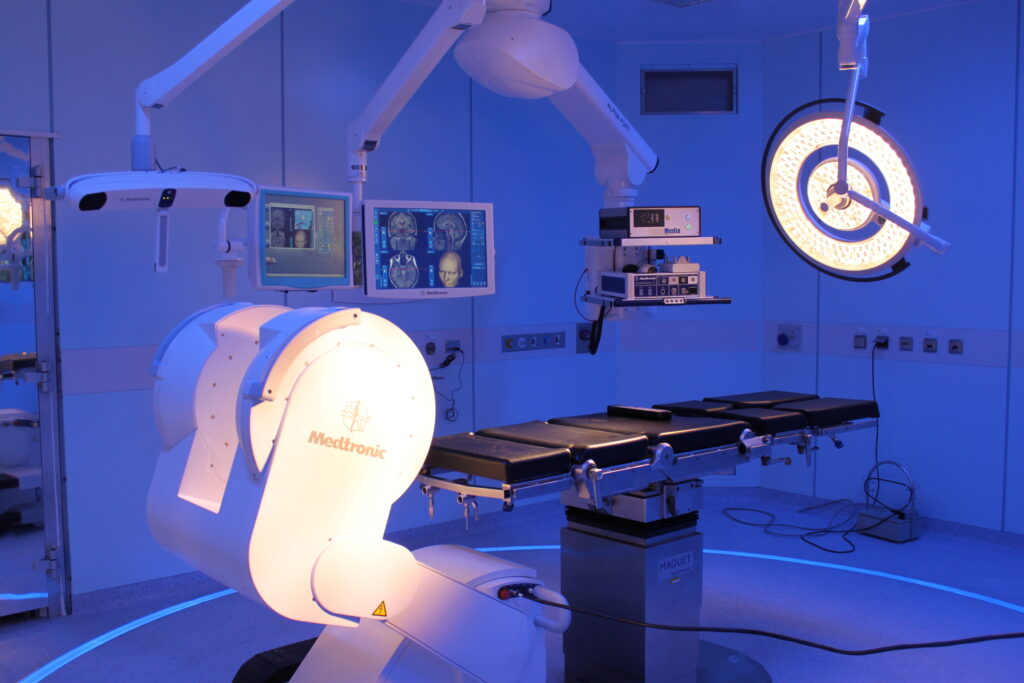
Intraoperative magnetic resonance imaging is an advanced medical imaging technique that uses an MRI scanner inside the operating room to obtain detailed, real-time images during a surgical procedure. This procedure allows surgeons to accurately assess anatomical structures and confirm that the surgery has been correctly performed before it is completed.
What is this procedure for?
Intraoperative magnetic resonance imaging is primarily used in:
- Neurological surgeries: to evaluate the resection of brain tumors, vascular malformations, or spinal cord lesions.
- Oncological surgeries: to verify the complete removal of tumor masses.
- Orthopedic surgeries: to confirm the alignment of implants and prostheses or bone corrections in areas such as the spine.
- Treatment planning: it helps adjust complex surgical procedures based on updated images during the operation.
Benefits of advanced technology in intraoperative magnetic resonance imaging
Intraoperative magnetic resonance imaging uses magnetic fields and radio waves to generate detailed three-dimensional images of the surgical area. These images are obtained directly in the operating room using a portable or integrated MRI scanner, allowing the medical team to make immediate decisions based on intraoperative findings.
What does the procedure involve?
The intraoperative magnetic resonance imaging procedure consists of:
-
Preparation:
You will be prepared for surgery following the instructions of the surgical team. They will also ensure that the surgical area is accessible to the MRI scanner.
-
During the procedure:
Once the surgeon has completed part of the procedure, the MRI scanner will be used to obtain images of the operated area. You will remain under anesthesia during the MRI procedure. The images will be reviewed immediately by the surgical and radiology teams.
-
After the procedure:
Based on the MRI results, the surgeon may adjust or complete the procedure if necessary. Upon completion, surgical closure will be performed, and standard postoperative care will be provided. After surgery, you will be transferred to the recovery room so that your condition can be monitored. The results of the intraoperative MRI will be included in the surgical report and will be available for subsequent follow-up.
Recommendations for the procedure
Intraoperative MRI requires close collaboration between the surgical team, the radiologist, and the technical staff to ensure that the entire procedure is carried out with precision. During the procedure, all necessary measures are taken to ensure your safety, including constant monitoring while you are under anesthesia.
Are there any risks?
Intraoperative MRI is a safe procedure, but there are some minor risks involved:
- Prolongation of surgical time: performing the MRI may slightly prolong the duration of the surgery.
- General surgical risks: as with any surgical procedure, there are risks associated with the anesthesia and the procedure.
- Interference with metal devices: MRI uses magnetic fields, so it is important to inform the medical team if the patient has metal implants, pacemakers, or other devices.
Do you need to undergo this procedure?
Make an appointment