HIFU
What is HIFU?
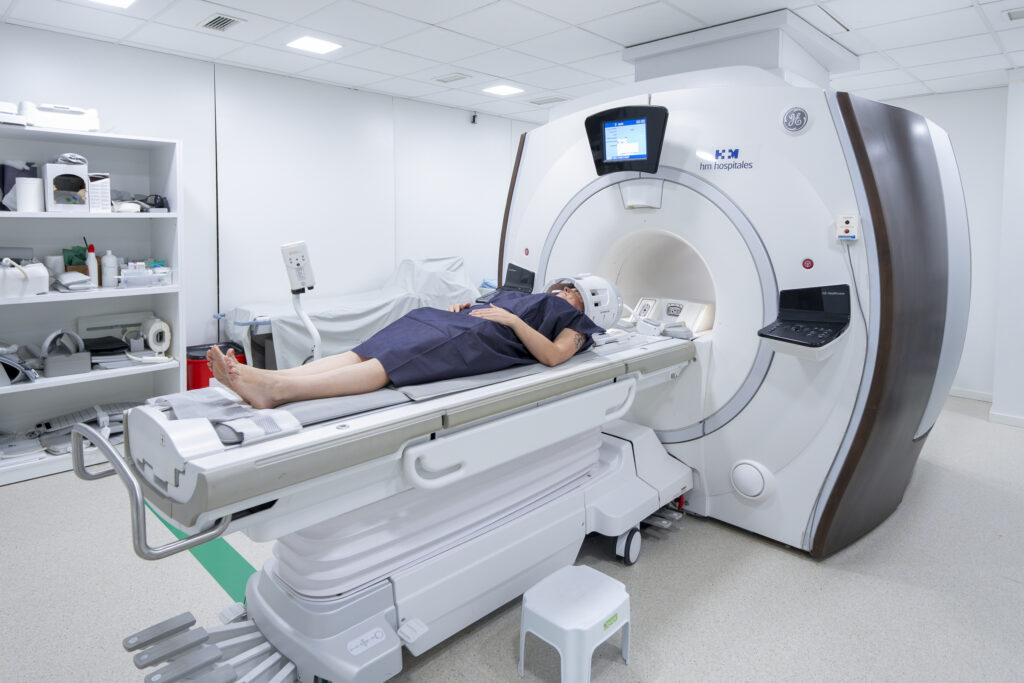
HIFU (High-Intensity Focused Ultrasound) is an advanced technique that uses high-intensity focused ultrasound to treat specific areas of the body without the need for surgery. This technology makes it possible to destroy affected tissues through heat generated by ultrasonic waves, without damaging the surrounding tissues. It is a minimally invasive and safe procedure, guided by real-time imaging like magnetic resonance imaging (MRI).
HIFU is recognized for its precision and versatility, and is used in different medical specialties to treat both benign and malignant conditions. Furthermore, it stands out as an effective therapeutic alternative for patients who cannot undergo conventional surgery.
What is this procedure for?
HIFU is primarily used in:
- Neurology: to treat tremors (primarily essential tremor and Parkinson’s disease) through brain ablation. It is especially useful in patients with Parkinson’s disease and essential tremor who are not responding to pharmacological treatments. In these diseases, HIFU acts directly on the areas of the brain responsible for abnormal movements, achieving a significant improvement in motor symptoms.
For neurological disorders such as essential tremor and Parkinson’s disease, HIFU allows for precise brain ablations, significantly improving quality of life by reducing motor symptoms.
Benefits of advanced technology in HIFU
HIFU uses ultrasonic waves concentrated on a specific point of the target tissue. These waves generate intense heat in that area, causing the controlled destruction of the pathological tissue. Because it is an image-guided procedure (such as MRI), doctors can monitor the treated area in real time and adjust the treatment as needed.
Among the benefits are:
- Precision: Ultrasonic waves are directed exclusively at the affected tissue, preserving the surrounding healthy tissues.
- Minimally invasive procedure: Incisions or prolonged hospitalization are not required.
- Quick recovery times: Patients can usually resume their usual activities within a few days.
- Safe alternative: It is ideal for patients who cannot undergo conventional surgery due to the associated risks.
No significant side effects: The technique avoids serious complications associated with other surgical procedures.
What does the procedure involve?
The HIFU procedure involves:
-
Preparation:
Before starting treatment, your doctor will perform a clinical evaluation of your condition to see if you are a good candidate. Imaging tests, such as magnetic resonance imaging (MRI) and brain CT scans, will also be necessary. Instructions regarding the medication you can take before the procedure are very important, so be sure to inform your doctor about any medication you are taking. Prior to the treatment, your head will need to be completely shaved to avoid distortion of the ultrasound waves.
-
During the procedure:
During the procedure, under local anesthesia, a metal frame will be fitted to your skull, and you will be placed on a table in the MRI machine, where you will remain throughout the procedure.
During the procedure, your doctors will be in constant communication with you, and you will have the opportunity to report any incidents that occur or any discomfort you feel while you are in the MRI machine.
An anesthesiologist will monitor your vital signs and pain in case medication needs to be administered. Using MRI images, the medical team will locate the area to be treated and precisely guide the treatment. The ultrasonic waves will be directed at the target tissue, generating heat to destroy it in a controlled manner. You may notice a sensation of heat or pressure in your head during the few seconds that the sonications last, which will always be brief and tolerable.
-
After the procedure:
After the procedure, you will remain hospitalized for one more day to monitor your progress, and you can gradually resume your usual activities as instructed by your doctor. It is recommended to take special care with your gait and balance, as these may be affected to some degree during the first few days. You may experience mild discomfort, but this usually disappears within a few hours. During follow-up appointments, clinical examinations will be performed to evaluate the results of the treatment.
Recommendations for the procedure
Inform your doctor if you have a pacemaker, metal implants, or other electronic devices in your body. It is important to follow all the instructions you are given before, during, and after the procedure. Also, be sure to communicate any pre-existing medical conditions that may influence the treatment.
Are there any risks?
HIFU is a safe and minimally invasive procedure, but there are some rare risks:
- Mild discomfort: You may experience mild pain or a sensation of localized heat in the treated area.
- Inflammation or edema: You may experience temporary swelling in the treated area.
- Damage to nearby tissues: Although rare, there is a possibility that adjacent tissues will be affected.
- Skin reactions: In some cases, there may be redness or irritation of the skin.
In neurological procedures, the risks are minimal thanks to the precision of HIFU, although there may be transient effects; these may be due to the effect of the sonications and consist of headaches, a feeling of pressure or transient heat, and others may be due to the edema that forms around the treated area and which may manifest as instability, focal weakness, focal numbness or speech impairment, generally of a mild nature and in most cases temporary.
To ensure your procedure runs smoothly, we ask that you arrive before the scheduled time. This will allow us to complete the necessary administrative and clinical preparation.
Before the procedure, we will give you the Informed Consent form, a document with important information that you must read and sign.
If your appointment is for an MRI, it is crucial that you inform us about the presence of pacemakers, metallic objects, prostheses (including dental prostheses), tattoos, or drug infusion devices such as insulin pumps.
Do you need to undergo this procedure?
Make an appointment