FNA of the breast
What is FNA of the breast?
FNA (Fine Needle Aspiration) of the breast is a diagnostic procedure where a very fine needle is used to extract fluid or cells from a lesion in the breast. It is a minimally invasive procedure performed to obtain information about the nature of the lesion.
What is this diagnostic procedure for?
FNA of the breast is used in:
- Emptying cysts in the breast: to relieve pain and discomfort caused by large cysts.
- Differentiating solid lesions from complicated cysts: to help determine whether a lesion is solid (and potentially cancerous) or a fluid-filled cyst.
- Puncturing axillary lymph nodes: to assess whether the lymph nodes in the armpit are affected by cancer.
Benefits of the latest technology in FNA of the breast
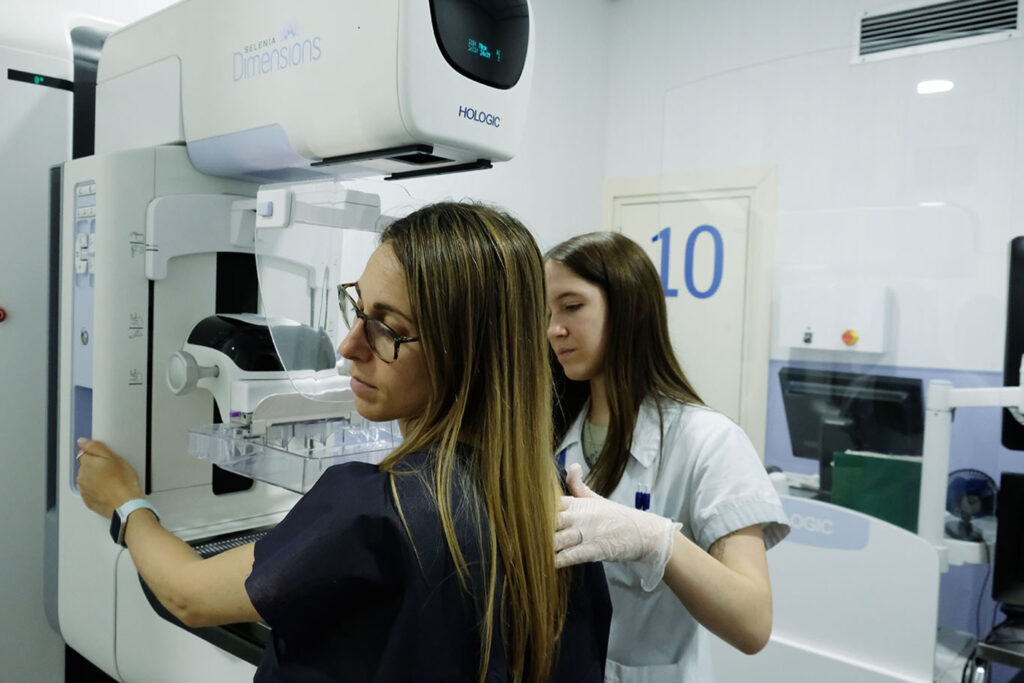
FNA of the breast is guided by ultrasound or a mammogram. The radiologist uses the ultrasound machine to visualize the lesion in real time and guide the needle precisely.
What does the procedure involve?
FNA of the breast consists of:
-
Preparation:
It is important that you inform your doctor if you are allergic to any medication, especially to local anesthesia. Also, be sure to report any medications you are taking, including aspirin, blood thinners, and herbal supplements. For the procedure, we recommend you wear comfortable clothing that is easy to remove.
-
During the procedure:
You will be asked to lie down on the examination table for the ultrasound. Guided by ultrasound, the radiologist will locate the lesion in real time. Before starting, the skin will be cleansed with an antiseptic. If necessary, you may be given local anesthesia to numb the area and reduce any discomfort. Next, a thin needle will be inserted into the lesion to aspirate a small amount of tissue or fluid. Once this is done, the needle will be removed and pressure will be applied to the area to prevent bruising. The approximate duration of the procedure is 15 to 30 minutes.
-
After the procedure:
They will apply pressure to the area to stop the bleeding and apply a bandage. If you feel any pain, you can take over-the-counter pain relievers. It is important to avoid strenuous physical activity for the 24 hours following the procedure. If you notice any signs of infection, such as a fever, redness, or discharge at the entry site, tell your doctor right away. The results of the FNA will be available after a few days and sent to your doctor who will explain the findings and, if necessary, recommend the appropriate treatment.
Recommendations for the procedure
It is essential that you follow your doctor’s instructions before, during, and after the procedure. If you feel pain or any discomfort during the procedure, be sure to notify the medical team so they can assist you immediately.
Are there any risks?
FNA is a safe procedure, but there are some risks:
- Mild pain: You may feel slight pain at the puncture site.
- Bruising: A bruise may form at the puncture site.
- Bleeding: There may be a small amount of bleeding at the puncture site.
- Infection (rare): There is a small risk of infection at the puncture site.
To ensure your procedure runs smoothly, we ask that you arrive before the scheduled time. This will allow us to complete the necessary administrative and clinical preparation.
Before the procedure, we will give you the Informed Consent form, a document with important information that you must read and sign.
If your appointment is for an MRI, it is crucial that you inform us about the presence of pacemakers, metallic objects, prostheses (including dental prostheses), tattoos, or drug infusion devices such as insulin pumps.