Fetal MRI
What is a fetal MRI?
Fetal Magnetic Resonance Imaging (MRI) is an advanced imaging technique that uses magnetic fields and radio waves to obtain detailed images of the fetus inside the mother’s womb. It is a complementary tool to ultrasound and is used to more accurately assess possible fetal abnormalities.
What is this diagnostic procedure for?
A fetal MRI is used for:
- Evaluating fetal abnormalities detected on ultrasound: it allows for more detailed images of fetal organs and structures that may be difficult to view with ultrasound.
- Diagnosing fetal brain problems: it is especially useful for evaluating the fetal brain, as it provides high-resolution images that allow the detection of abnormalities in brain development.
- Evaluating the fetal spine: it allows for the detection of problems in the spine, such as spina bifida.
- Evaluating other fetal organs: it is used to evaluate the heart, lungs, kidneys, and other fetal organs.
- Planning for childbirth and postnatal treatment: information obtained from a fetal MRI can help doctors plan delivery and treatment of the baby after birth.
Benefits of advanced technology in a fetal MRI
A fetal MRI uses a powerful magnet and radio waves to create detailed images of the fetus. The images are taken from different angles and combined to create a three-dimensional image. Unlike X-rays, MRI does not use ionizing radiation, making it safe for the fetus.
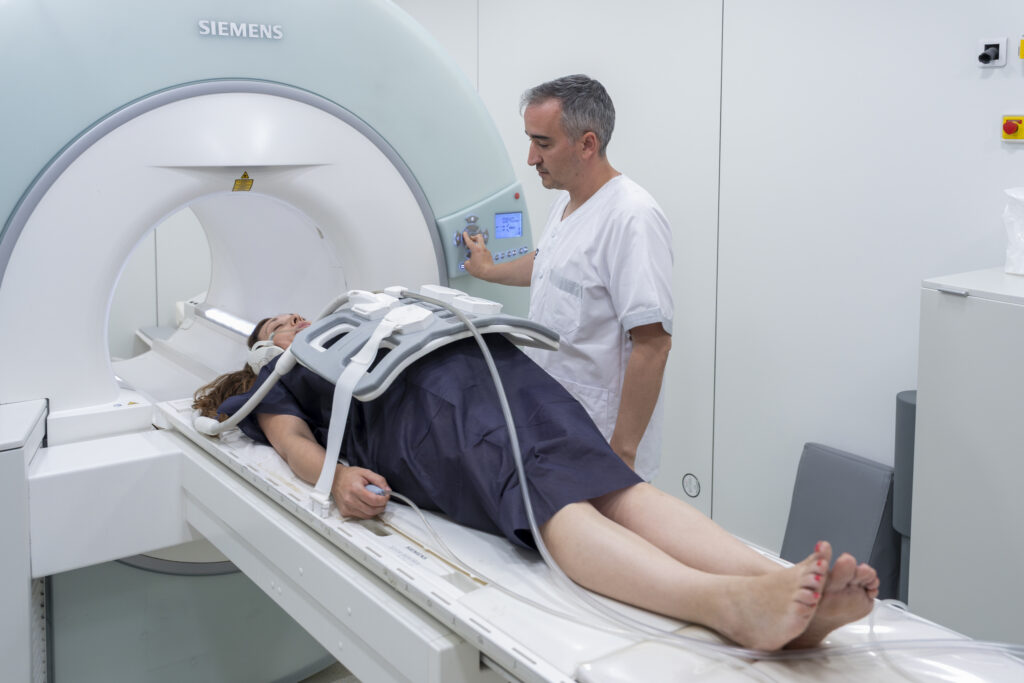
The fetal MRI procedure involves:
-
Preparation:
It is essential that you inform your doctor if you are allergic to any medication, as this information is crucial for your safety during the procedure. You should also mention if you have any metallic implants, such as pacemakers, surgical clips, or prostheses, because the magnetic field of the MRI could affect infusion pumps. Regarding fasting, in most cases it is not necessary, but it is advisable to confirm with your doctor if you should follow any special instructions. Additionally, it is advisable to wear comfortable and easy-to-remove clothing to facilitate the process.
-
During the procedure:
You will be asked to lie down comfortably on your back on the MRI table. They will place special coils around your abdomen to ensure high-quality images. It is essential that you remain as still as possible while the images are being taken. In most cases, it will not be necessary to administer intravenous contrast. The procedure usually lasts between 30 and 60 minutes.
-
After the procedure:
You will be able to resume your normal activities as soon as the procedure is over. The results of the fetal MRI will be analyzed by a radiologist specialized in fetal imaging and sent to your doctor, who will explain the findings and recommend the appropriate treatment if necessary.
Recommendations for the procedure
Remember that it is important to adhere to the following recommendations to ensure the quality of the test and your comfort:
- Ideal time: fetal MRI is usually performed between week 20 and week 36 of gestation.
- Communicate claustrophobia: if you suffer from claustrophobia, it is important that you inform the medical team before the procedure. They can take measures to help you feel more comfortable.
- Follow your doctor’s instructions: make sure to follow the doctor’s instructions before, during and after the procedure.
Are there any risks?
A fetal MRI is a safe and non-invasive procedure that, due to not using ionizing radiation, does not pose a risk to the fetus. There are no significant risks associated with the test. However, special precautions should be taken in patients with metal implants.
To ensure your procedure runs smoothly, we ask that you arrive before the scheduled time. This will allow us to complete the necessary administrative and clinical preparation.
Before the procedure, we will give you the Informed Consent form, a document with important information that you must read and sign.
If your appointment is for an MRI, it is crucial that you inform us about the presence of pacemakers, metallic objects, prostheses (including dental prostheses), tattoos, or drug infusion devices such as insulin pumps.
Do you need to undergo this procedure?
Make an appointment