Diffusion Tensor Imaging (DTI)
What is diffusion tensor imaging (DTI)?
Diffusion tensor imaging (DTI) is an advanced magnetic resonance imaging (MRI) technique that allows detailed information to be obtained about the microstructure of the brain’s white matter. Unlike conventional MRI scans, which show the general anatomy of the brain, DTI focuses on evaluating nerve fibers and their organization.
What is this diagnostic procedure for?
DTI allows visualization and analysis of the integrity of neuronal connection pathways, which makes it possible to:
- Evaluate the nerve fibers’ integrity and the brain’s white matter: It makes it possible to determine whether the brain’s communication pathways are intact and functioning correctly, which is essential for proper information processing.
- Diagnose and monitor neurological diseases: This includes multiple sclerosis and Alzheimer’s disease, as well as traumatic brain injuries or strokes. This technique helps patterns of damage or degeneration in nerve fibers characteristic of these diseases to be detected.
- Plan complex brain surgeries: It makes it possible to identify critical areas that must be preserved, as it provides neurosurgeons with a detailed map of the neuronal connection pathways, enabling them to avoid damaging important areas during the intervention.
- Investigate brain development: In children and adolescents, it makes it possible to study the maturation and organization of neural connections as the brain develops during the early stages of life. In adults, it makes it possible to detect the effects of aging on the brain and the changes that occur in the structure of the white matter over time.
Benefits of advanced technology in DTI
This cutting-edge technological scan offers multiple advantages. First, it uses diffusion sequences that measure fractional anisotropy, a measure that assesses how orderly the movement of water is in the brain. If we imagine nerve fibers as highways, fractional anisotropy tells us whether traffic (water) flows in an orderly fashion along these highways or whether it disperses. By analyzing the direction and coherence of white matter fibers, quantitative information about the brain’s microstructure is obtained, which is essential for the diagnosis and follow-up of various diseases. Furthermore, it is a non-invasive technique, eliminating the need for injections or surgical procedures. Finally, this test has the ability to detect subtle changes in brain structure that may go unnoticed in conventional magnetic resonance imaging.
What does the procedure involve?
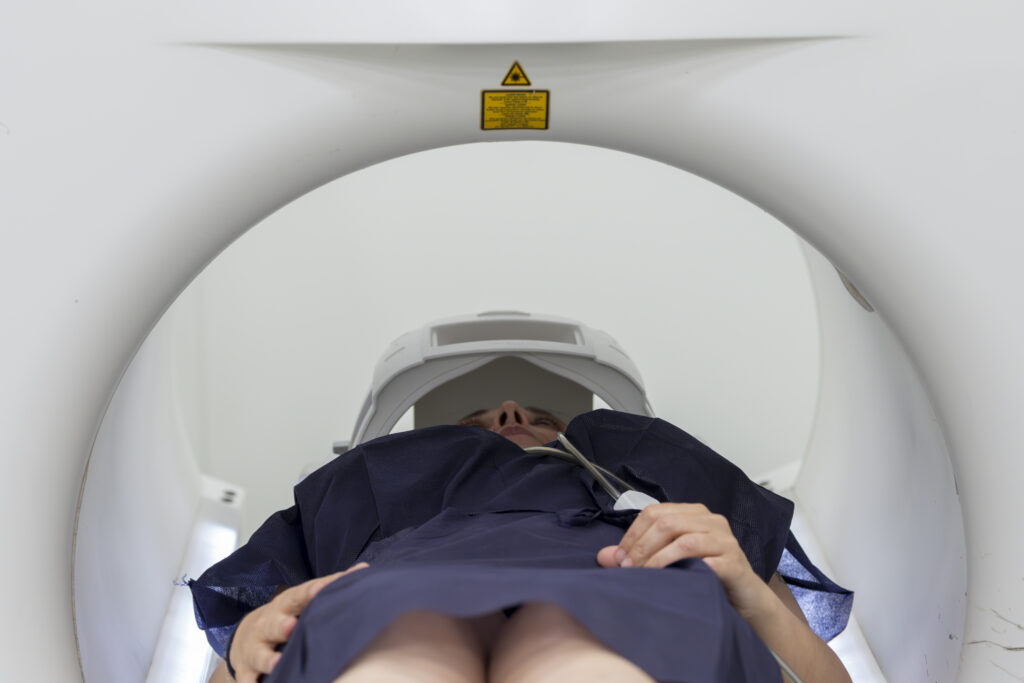
It is similar to a conventional MRI, but with specific sequences to measure the diffusion of water along nerve fibers.
-
Preparation:
Prior to the test, you must remove items such as hearing aids, piercings, hairpins, buckles, zippers, or infusion pumps of any kind. In addition, on the day of the scan, it is important that you wear comfortable clothing without any metal accessories. Remember to ask for details about how long you need to fast for or if any special preparation is required, and inform the technician if you have any type of allergy or illness.
-
During the procedure:
For this type of scan, a special helmet is usually used to secure the head and make the images as clear as possible. In some cases, earplugs are also used. Smooth and continuous communication with specialized technical staff helps to minimize any anxiety.
-
After the procedure:
Once the scan is complete, you won’t need to follow any special care, and you can even resume your normal activities and eat and drink.
Recommendations for the procedure
Remember that it is important to follow these recommendations:
- Avoid moving during the scan: The image quality may be affected by movement, so it is recommended to remain calm and still during the scan.
- Communicate claustrophobia: If you experience a feeling of being enclosed or anxiety in confined spaces, you can take a mild sedative before the test.
- Mention any metal implants: If you have metal implants, such as pacemakers or prostheses, it is important that you inform the staff before the procedure, as some of these objects can interfere with the magnetic field of the MRI machine.
Are there any risks?
DTI is a non-invasive technique, so there are no significant health risks associated with it. Ionizing radiation is not used, nor is the injection of contrast agents required in most cases. However, it is important to note:
- Caution is required in patients with pacemakers or metallic implants: The magnetic field used during MRI scans can affect the operation of infusion pumps. Therefore, please report if you have any implants to assess their compatibility with the MRI scanner.
- Possible anxiety in people with claustrophobia: The enclosed space of the MRI machine can be a source of anxiety in people who suffer with claustrophobia. In this case, you may be given a mild sedative to help you relax during the procedure.
To ensure your procedure runs smoothly, we ask that you arrive before the scheduled time. This will allow us to complete the necessary administrative and clinical preparation.
Before the procedure, we will give you the Informed Consent form, a document with important information that you must read and sign.
If your appointment is for an MRI, it is crucial that you inform us about the presence of pacemakers, metallic objects, prostheses (including dental prostheses), tattoos, or drug infusion devices such as insulin pumps.