DAT Scan (SPECT)
What is a DAT Scan (SPECT)?
A DAT Scan (also known as dopamine transporter SPECT) is a nuclear medicine imaging technique that uses single-photon emission computed tomography (SPECT) to visualize dopamine transporters (DAT) in the brain. Dopamine transporters are proteins found in dopaminergic neurons that are responsible for reuptaking dopamine released into the synapse. By visualizing the DAT, one can evaluate the function of dopaminergic neurons and detect the loss of these neurons, which is characteristic of certain neurological diseases.
What is this diagnostic procedure for?
A DAT Scan (SPECT) is primarily used for:
- Differentiating between essential tremor and parkinsonism: it helps to distinguish between essential tremor, which is not associated with the loss of dopaminergic neurons, and parkinsonism, which is. Parkinsonism includes Parkinson’s disease, multiple system atrophy, progressive supranuclear palsy, and other disorders that cause symptoms similar to those of Parkinson’s disease.
- Early diagnosis of Parkinson’s disease: it can help diagnose Parkinson’s disease at an early stage, before motor symptoms become evident.
- Assessment of Parkinson’s disease progression: it can be used to monitor the progression of Parkinson’s disease and assess the response to treatment.
- Differential diagnosis of dementias: in some cases, it can help differentiate between different types of dementia.
Benefits of advanced technology in a DAT Scan (SPECT)
A DAT Scan (SPECT) offers a number of key benefits thanks to the technology it uses:
- Direct visualization of dopamine transporters: It allows for direct visualization of dopamine transporters in the brain, providing objective information about the function of dopaminergic neurons.
- Differentiation between essential tremor and parkinsonism: it helps distinguish between essential tremor and parkinsonism with high accuracy.
- Early diagnosis: it can help diagnose Parkinson’s disease at an early stage, allowing for more timely intervention.
Non-invasive: it is a non-invasive procedure that does not require surgery or incisions.
The DAT Scan (SPECT) procedure is generally carried out as follows:
-
Preparation:
You will be asked to avoid certain medications and foods that may interfere with the procedure. It is important to tell your doctor about all the medications you’re taking, including over-the-counter drugs and supplements. You may be asked to drink plenty of fluids before the procedure.
-
During the procedure:
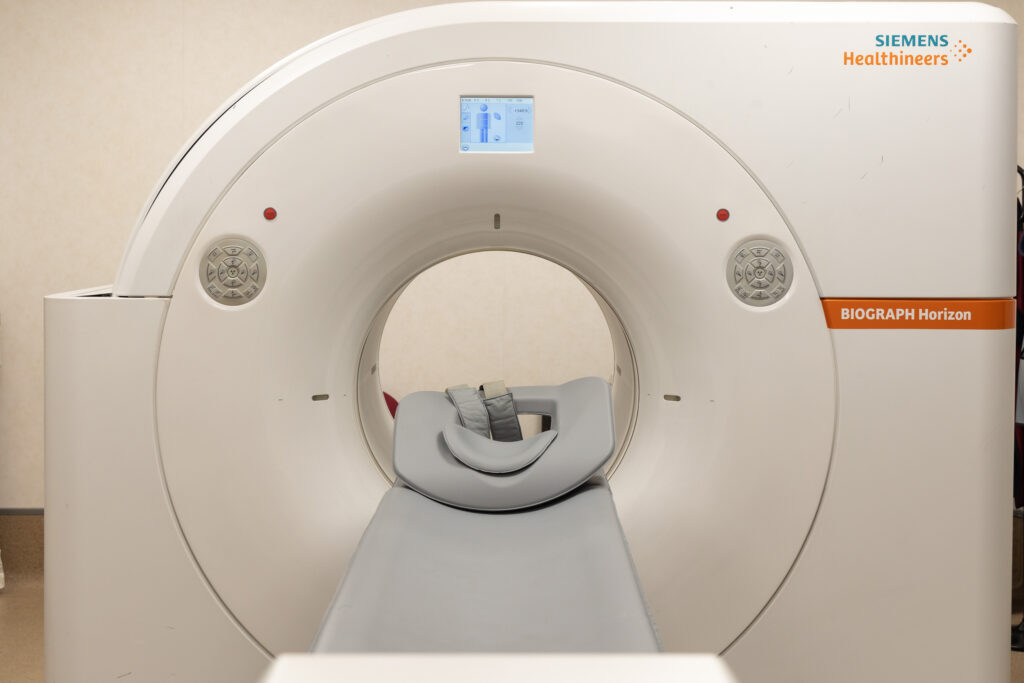
A small amount of a radiopharmaceutical (usually I-123 ioflupane) will be injected into a vein in your arm. This radiopharmaceutical will bind to dopamine transporters in the brain. After a waiting period (usually 3 to 4 hours), you will lie down on an examination table and have images of your brain taken with a SPECT camera. Image acquisition typically takes between 30 and 60 minutes.
-
After the procedure:
You can resume your normal activities immediately after the procedure. You will be advised to drink plenty of fluids to help eliminate the radiopharmaceutical from your body.
Recommendations for the procedure
Remember that it is important to adhere to the following recommendations to ensure the quality of the test and your comfort:
- Report medications: it’s important to tell your doctor about all the medications you’re taking, including over-the-counter drugs and supplements.
- Avoid certain medications and foods: follow your doctor’s instructions about which medications and foods to avoid before the procedure.
- Drink plenty of fluids: drink plenty of fluids before and after the procedure.
- Inform about pregnancy or breastfeeding: if you are pregnant or breastfeeding, inform your doctor.
Are there any risks?
A DAT Scan (SPECT) is generally considered safe, but like any medical procedure involving radiation, there are some minor risks to consider:
- Exposure to radiation: radiation exposure is low and considered safe. Your doctor will assess whether the benefits outweigh the risks.
- Allergic reactions: in rare cases, allergic reactions to the radiopharmaceutical may occur.
- Discomfort at the injection site: you may experience discomfort at the injection site.
To ensure your procedure runs smoothly, we ask that you arrive before the scheduled time. This will allow us to complete the necessary administrative and clinical preparation.
Before the procedure, we will give you the Informed Consent form, a document with important information that you must read and sign.
If your appointment is for an MRI, it is crucial that you inform us about the presence of pacemakers, metallic objects, prostheses (including dental prostheses), tattoos, or drug infusion devices such as insulin pumps.
These diagnostic tests are very safe, but as with any medical procedure, there is still the unlikely possibility of an incident.