Breast wire localization
What is breast wire localization?
Breast wire localization is a procedure performed to precisely mark a lesion in the breast prior to surgery. The wire is a thin, flexible metal thread inserted into the breast under the guidance of an ultrasound or mammogram, allowing the surgeon to accurately locate the area to be removed.
What is the purpose of this procedure?
Breast wire localization is used to:
- Facilitate the localization of non-palpable lesions: It allows the surgeon to find and remove lesions that cannot be felt by touch.
- Guide breast-conserving surgery: It ensures that the amount of healthy breast tissue removed is kept to a minimum, preserving the shape and function of the breast.
Benefits of the latest technology in breast wire localization
Breast wire localization is guided by ultrasound or a mammogram. The radiologist uses the ultrasound or mammography machine to visualize the lesion in real time and guide the wire precisely.
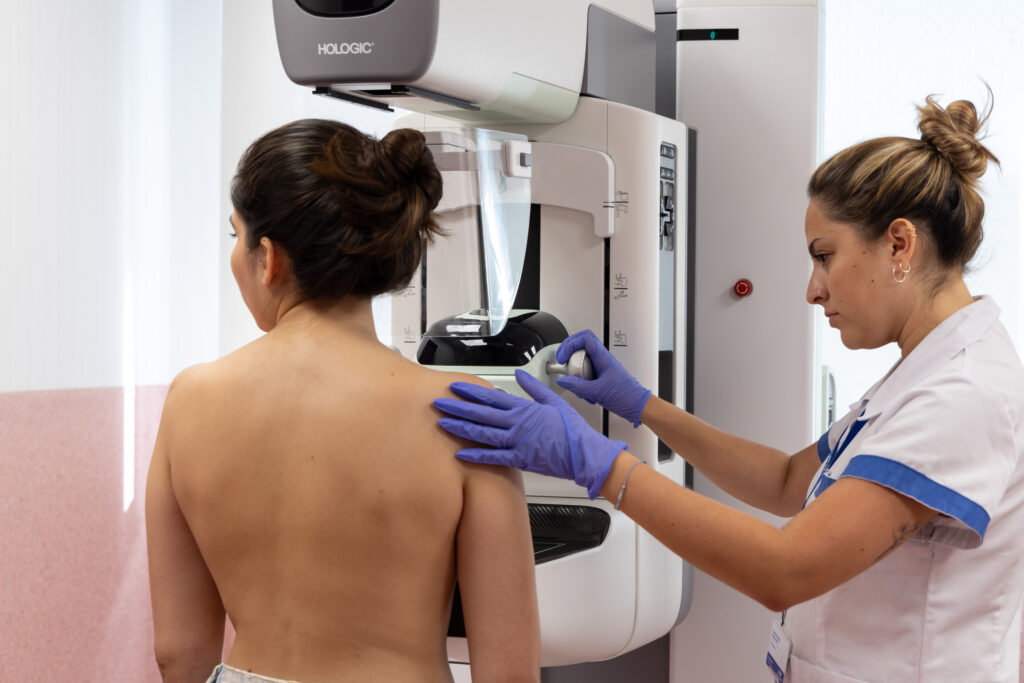
The breast wire localization procedure consists of:
-
Preparation:
Before the procedure, your case will be reviewed by the HM Hospitales Breast Committee. The team of radiologists and surgeons on the committee will evaluate your case and plan the best strategy for your situation.
It is essential to inform your doctor if you are taking anticoagulant medication (blood thinners) or if you have any allergies. If your surgery is scheduled for the same day, follow the fasting instructions given by your doctor. Additionally, we suggest wearing comfortable, easy-to-remove clothing for added comfort.
-
During the procedure:
In order to perform the procedure, you will be asked to position yourself correctly for the ultrasound or mammogram. Before starting, the skin will be cleansed with an antiseptic to ensure hygiene. Local anesthesia will be applied to the area where the wire will be inserted to numb it and minimize discomfort.
With the help of ultrasound or mammography guidance, the radiologist will locate the lesion and insert the wire. This device releases a small metal “thread” that remains in the breast, marking the location of the lesion with great precision.
Once the procedure is complete, the area will be covered with a dressing and a follow-up mammogram will be performed to confirm the position of the wire and help the surgeon pinpoint the exact location of the lesion. The procedure takes approximately 30 to 45 minutes.
-
After the procedure:
Follow your surgeon’s instructions regarding fasting and preparation before surgery. It is important to avoid strenuous physical activity before the procedure. If you notice any signs of infection, such as a fever, redness, or discharge at the entry site, tell your doctor right away.
Recommendations for the procedure
It is essential that you remain still while the wire is being placed to ensure that it is properly positioned. The wire will remain in place until surgery, so it is important to follow the instructions you have been given. Do not hesitate to inform the medical team if you experience any discomfort during the procedure.
Are there any risks?
In general, breast wire placement is a safe, minimally invasive, and well-tolerated procedure. As with any medical procedure, there are some risks:
- Bleeding or bruising: This is uncommon. A small bruise may appear at the entry site.
- Wire displacement: On rare occasions, the wire may move before surgery. Avoiding sudden movements is very important.
- Infection (very rare): It is rare, but there is a possibility of infection. Watch for redness, warmth, or fever in the area.
- Pain or discomfort: You may feel some pressure or discomfort in your breast after the procedure, but it is usually temporary and tolerable.
- Vasovagal response (rare): The procedure may cause dizziness or a vasovagal response. Stay calm and trust the medical team.
To ensure your procedure runs smoothly, we ask that you arrive before the scheduled time. This will allow us to complete the necessary administrative and clinical preparation.
Before the procedure, we will give you the Informed Consent form, a document with important information that you must read and sign.
If your appointment is for an MRI, it is crucial that you inform us about the presence of pacemakers, metallic objects, prostheses (including dental prostheses), tattoos, or drug infusion devices such as insulin pumps.