Breast MRI
What is a breast MRI?
Breast Magnetic Resonance Imaging (breast MRI) is an imaging study that uses magnets and radio waves to obtain detailed images of breast tissue, without using radiation.
This procedure does not replace mammography or breast ultrasound; rather, it complements them. It is particularly useful for women with dense breast tissue and those at high risk of developing breast cancer, as it allows the detection of abnormalities that might go unnoticed in other studies.
What is this diagnostic procedure for?
A breast MRI is used for:
- Evaluating breast tissue in women at high risk of breast cancer, such as those with a family history of the disease or carriers of genetic mutations (BRCA1, BRCA2).
- Detecting breast cancer in women with dense breast tissue, where mammography may be less accurate.
- Assessing the extent of breast cancer after a diagnosis, in order to help plan treatment.
- Monitoring the response to treatment (chemotherapy) in patients with breast cancer.
- Differentiating between scarring and cancer recurrence after surgery.
- Evaluating breast implants and detecting possible complications, such as ruptures.
What advanced technology stands out in a breast MRI?
A breast MRI uses advanced technology to obtain detailed images of the breasts:
- Powerful magnets: it uses powerful magnets to generate a strong magnetic field.
- Radiofrequency waves: it uses radiofrequency waves to create the images.
- Specialized coils: it uses coils specifically designed to obtain high-quality images of the breasts.
- Gadolinium contrast: gadolinium helps to highlight areas of interest and detect tumors.
Advanced software: specialized computer programs are used to process and analyze the images.
What does the procedure involve?
The breast MRI procedure involves:
-
Preparation:
Before the procedure, you may be asked to change your clothes and wear a gown to avoid any interference with the images. You should also remove jewelry and metal objects, as they can affect the equipment’s operation.
If you are pregnant or think you might be, it is important to inform your doctor before the procedure. Similarly, if you have an allergy to gadolinium, the contrast agent used in a breast MRI, you should inform your doctor in advance so they can assess safe alternatives.
In some cases, you may be advised to have the MRI at a specific time during your menstrual cycle, as this can improve the accuracy of the results.
-
During the procedure:
To carry out the procedure, you will lie face down on a special examination table designed with openings for the breasts, which allow for more precise images to be obtained. For your comfort, they may place a pillow under your abdomen.
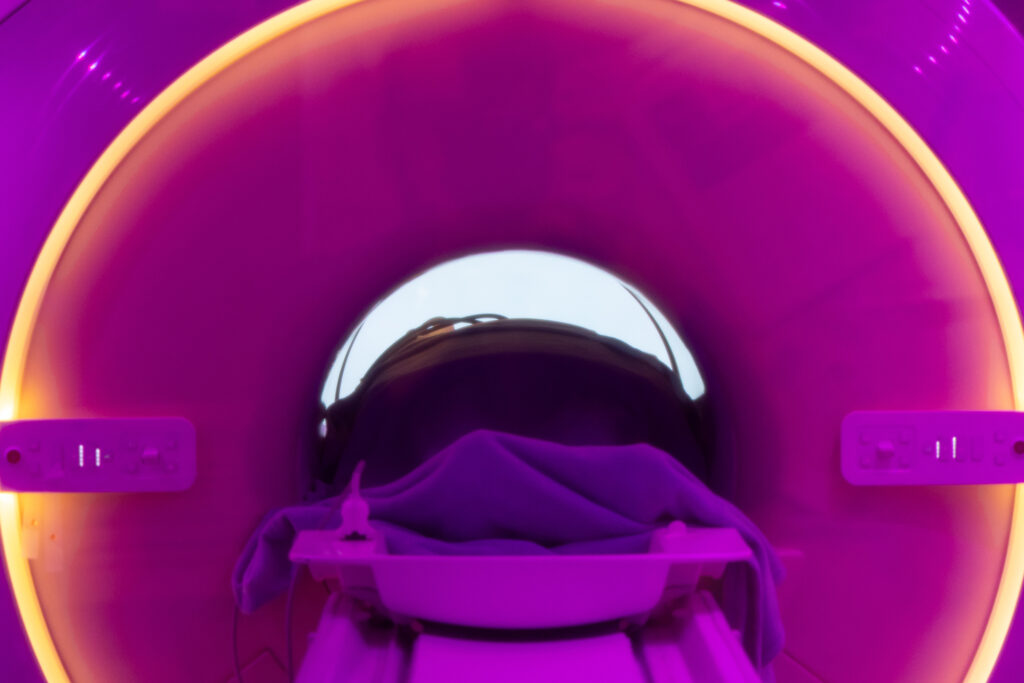
Once positioned, the table will slide into the magnetic resonance imaging (MRI) machine. It is essential that you remain still during the procedure to ensure the quality of the images. The device makes loud noises while taking images, so they may offer you earplugs or headphones for added comfort.
If the use of contrast is required, gadolinium will be administered through an intravenous line in your arm. The procedure usually lasts between 30 and 60 minutes, and once it is over, you can resume your normal activities.
Recommendations for the procedure
If you are pregnant or think you might be, it is important to inform your doctor before the procedure. You should also mention if you have an allergy to gadolinium or any other drug, as well as any kidney problems, since this could affect the use of contrast.
If you have breast implants, please let us know in advance so that this can be taken into account during the procedure. Also, if you feel anxious or suffer from claustrophobia, please tell the medical staff so they can help you feel more comfortable during the test.
Are there any risks?
A breast MRI is a safe procedure, but like any medical procedure, it carries some risks:
- Allergic reactions to gadolinium: This is uncommon, but it can happen.
- Nephrogenic Systemic Fibrosis (NSF): this is a rare complication that can occur in patients with severe kidney problems who receive gadolinium.
- False positives: A breast MRI can detect abnormalities that turn out not to be cancer.
- Claustrophobia: some people may feel anxious or claustrophobic inside the MRI machine.
To ensure your procedure runs smoothly, we ask that you arrive before the scheduled time. This will allow us to complete the necessary administrative and clinical preparation.
Before the procedure, we will give you the Informed Consent form, a document with important information that you must read and sign.
If your appointment is for an MRI, it is crucial that you inform us about the presence of pacemakers, metallic objects, prostheses (including dental prostheses), tattoos, or drug infusion devices such as insulin pumps.
Do you need to undergo this procedure?
Make an appointment