Breast and axillary marker seeds
What are breast and axillary marker seeds?
In the context of breast cancer treatment, “seeds” refer to small implants or localization markers that are placed in the breast or armpit to mark a tumor or a suspicious lymph node. These markers help surgeons and radiation oncologists precisely locate the area that needs to be removed or treated.
What are these markers used for?
The main uses of these markers are:
- Precise localization of non-palpable tumors: they allow for the precise localization of tumors that are too small or too deep to be felt during surgery.
- Biopsy guidance: they facilitate targeted biopsies of specific areas of the breast or armpit.
- Surgical planning: they help plan the extent of the surgery, ensuring that all affected tissue is removed.
- Radiotherapy guidance: they allow radiotherapy to be directed precisely to the target area, minimizing radiation exposure to surrounding tissues.
- Sentinel lymph node localization: they are used to locate the sentinel lymph node, which is the first lymph node to which breast cancer spreads.
Benefits of advanced technology in localization markers
The placement of these markers benefits from advanced-technology imaging techniques:
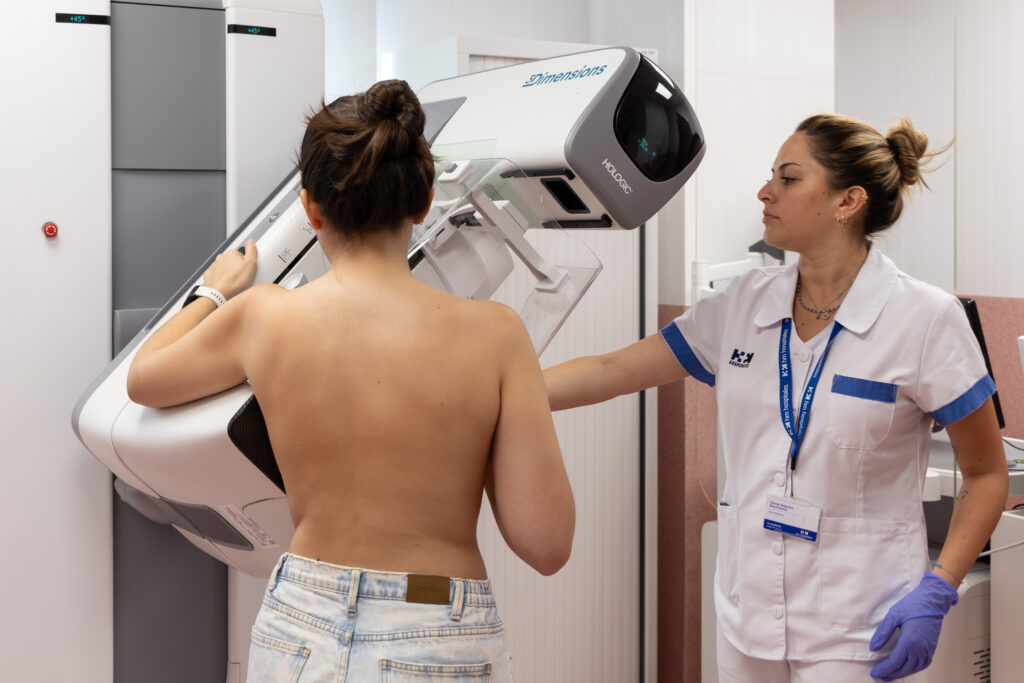
- Image guidance: the placement of the markers is done under image guidance, such as ultrasound or mammography, allowing for millimeter precision.
- Minimally invasive procedure: the procedure is minimally invasive, which reduces the risk of complications and recovery time.
Greater accuracy: image guidance allows for more precise marker placement compared to manual techniques.
What does the procedure involve?
The procedure for placing these markers is generally carried out as follows:
-
Preparation:
No special preparation is required for this procedure. You will be asked to inform your doctor if you are taking anticoagulant medication (blood thinners) or if you have any allergies to metal.
-
During the procedure:
You will sit or lie down, depending on the location of the area to be marked. Your skin will be cleaned with an antiseptic and local anesthesia will be administered to minimize pain. Using image guidance (ultrasound or mammography), the radiologist will insert a thin needle through the skin into the target area. The marker (the “seed”) will be placed through the needle. The procedure lasts approximately 30–60 minutes.
-
After the procedure:
The needle will be removed, and pressure will be applied to the area to stop any bleeding. You will be given instructions on how to care for the area and what signs of infection to watch for.
Recommendations for the procedure
Remember that it is important to adhere to the following recommendations to ensure the quality of the test and your comfort:
- Inform your doctor: if you are taking anticoagulant medication (blood thinners) or if you have any allergies to metal, inform your doctor.
- Clothing: wear comfortable clothing and a supportive bra after the procedure.
- Aftercare: follow your doctor’s instructions on how to care for the area and what signs of infection to watch for.
Are there any risks?
The placement of these markers is generally considered safe, but like any medical procedure, there are some minor risks to consider:
- Bleeding or bruising: there may be a small amount of bleeding or bruising at the needle puncture site.
- Infection: there is a small risk of infection at the needle puncture site.
- Marker displacement: on rare occasions, the marker may move from its original position.
- Allergic reaction: if you are allergic to some kind of metal, you may have an allergic reaction to the marker.
To ensure your procedure runs smoothly, we ask that you arrive before the scheduled time. This will allow us to complete the necessary administrative and clinical preparation.
Before the procedure, we will give you the Informed Consent form, a document with important information that you must read and sign.
If your appointment is for an MRI, it is crucial that you inform us about the presence of pacemakers, metallic objects, prostheses (including dental prostheses), tattoos, or drug infusion devices such as insulin pumps.