Brain tractography
What is brain tractography?
Brain tractography is an advanced medical imaging technique that uses magnetic resonance imaging (MRI) to study the brain’s white matter tracts. These tracts are nerve fibers that connect different areas of the brain, allowing communication between them. Tractography makes it possible to visualize and map these connections, which is essential for the diagnosis and planning of neurological treatments.
What is this procedure for?
Brain tractography is primarily used in:
- Neurological diagnosis: It helps identify alterations in white matter tracts related to diseases such as brain tumors, strokes, epilepsy, and multiple sclerosis, among others.
- Surgical planning: It helps neurosurgeons locate and preserve critical nerve pathways during complex surgical procedures, such as brain tumor resection.
- Clinical research: It is used to study developmental disorders, neurodegenerative diseases, and other conditions that affect brain connectivity.
- Assessment of traumatic injuries: It is used to analyze the impact of traumatic brain injuries on brain connections.
Benefits of advanced technology in brain tractography
Tractography uses images obtained through Diffusion Tensor Imaging (DTI). This technique measures the movement of water molecules within the brain, allowing the identification of the orientation and integrity of white matter tracts. The data is processed using specialized software to generate detailed 3D maps of brain connections.
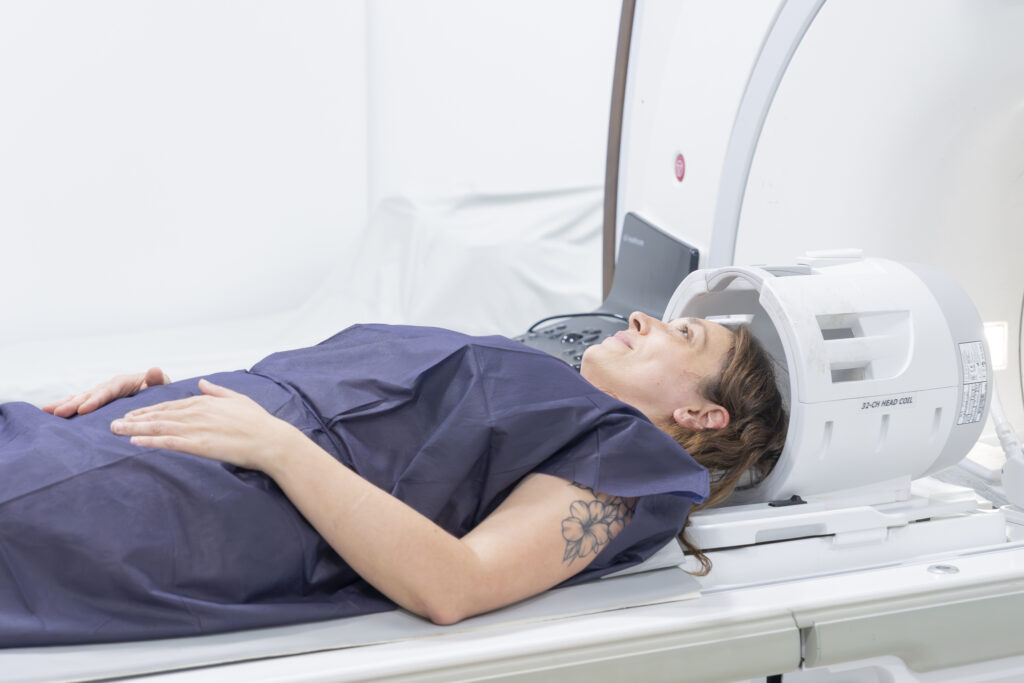
Brain tractography involves:
-
Preparation:
Before the exam, your doctor will assess whether you are a suitable candidate for brain tractography. In most cases, fasting is not necessary, but it’s best to confirm this with your specialist.
On the day of the scan, wear comfortable clothing and avoid any garments or accessories containing metal. Also, if you have a pacemaker, metal implants, or other medical devices, be sure to inform the team before the procedure.
-
During the procedure:
You will lie down on the MRI scanner table and the staff will adjust your position for the scan. Next, images will be taken using special diffusion tensor imaging (DTI) MRI sequences. It is essential that you remain still to ensure the quality of the images. The procedure usually lasts between 30 and 60 minutes.
-
After the procedure:
After the procedure, you will be able to resume your normal activities, unless your doctor advises otherwise.
The results of the tractography will be analyzed by a specialist radiologist and sent to your doctor, who will explain the findings and recommend the appropriate treatment, if necessary.
Recommendations for the procedure
It is important that you remain still during the procedure to ensure the quality of the images. In addition, follow all medical instructions before, during, and after the procedure to ensure optimal results.
Are there any risks?
Brain tractography is a safe and non-invasive procedure. Ionizing radiation is not used, nor is the injection of contrast agents required in most cases. However, there are some minor considerations:
- Claustrophobia: Some people may experience anxiety while inside the MRI scanner. Please inform the staff if this happens to you, as they can take steps to help you feel more comfortable.
- Interference with metal devices: MRI uses magnetic fields, so it is important to inform the medical team if you have metal implants, pacemakers, or other devices.
To ensure your procedure runs smoothly, we ask that you arrive before the scheduled time. This will allow us to complete the necessary administrative and clinical preparation.
Before the procedure, we will give you the Informed Consent form, a document with important information that you must read and sign.
If your appointment is for an MRI, it is crucial that you inform us about the presence of pacemakers, metallic objects, prostheses (including dental prostheses), tattoos, or drug infusion devices such as insulin pumps.
These diagnostic tests are very safe, but as with any medical procedure, there is still the unlikely possibility of an incident.
Do you need to undergo this procedure?
Make an appointment