Aortic valve interventions
What are aortic valve interventions?
An aortic valve intervention, also known as TAVI (Transcatheter Aortic Valve Implantation), is a minimally invasive procedure used to replace the damaged aortic valve in patients with severe aortic stenosis. This treatment is indicated for those who are not ideal candidates for open surgery due to their advanced age or specific medical conditions.
What is this procedure for?
Aortic valve interventions are primarily used to:
- Treat aortic stenosis: The narrowed aortic valve preventing proper blood flow from the heart to the rest of the body is replaced.
- Relieve symptoms: The discomfort associated with aortic stenosis, such as shortness of breath, chest pain, dizziness, fatigue, and syncope, is reduced.
- Reduce complications: Aortic valve replacement has been shown to increase survival rates by decreasing sudden cardiac death associated with aortic stenosis and reducing hospital admissions for heart failure.
- Improve quality of life: It helps restore normal heart function and allows the patient to perform their daily activities without limitations.
Benefits of advanced technology in an aortic valve intervention
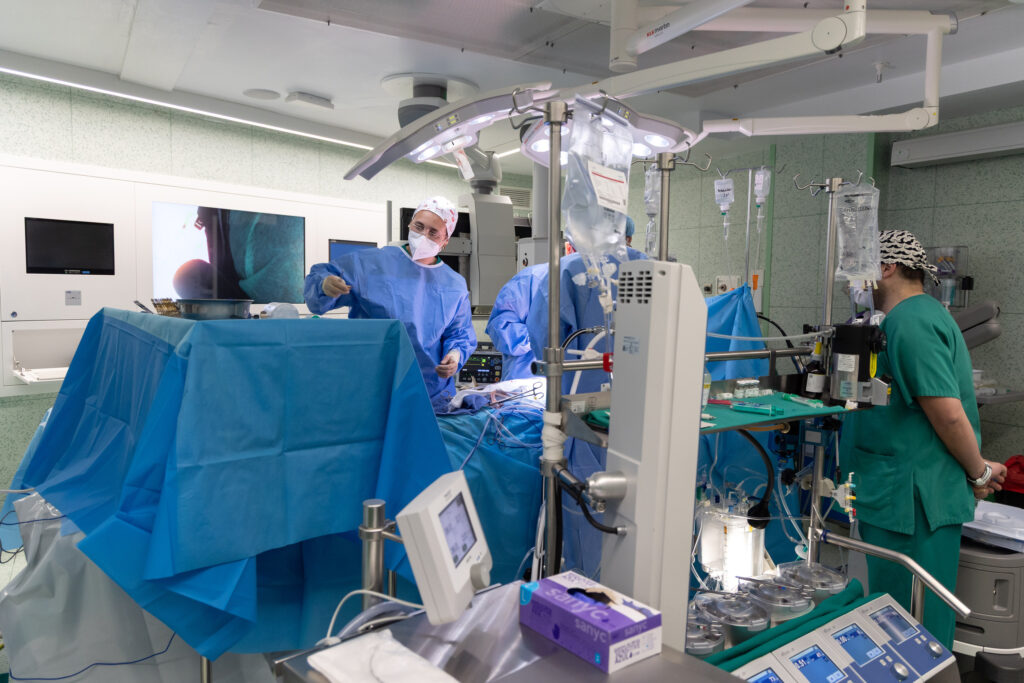
The procedure uses a catheter that is inserted through an artery (usually in the groin), under local anesthesia and sedation. The new aortic valve, mounted on a stent, is guided to the heart using real-time imaging. Once in position, the valve is deployed to replace the damaged valve.
What does the procedure involve?
An aortic valve intervention involves:
-
Preparation:
To prepare, the cardiologist will carry out a complete evaluation of your medical history and symptoms. You will undergo tests such as echocardiography and computed tomography (CT) scans, and catheterization to plan the intervention. It is recommended to fast for several hours before the procedure. Also, be sure to inform your medical team about any medications you are taking, especially if they are blood thinners (anticoagulants).
-
During the procedure:
During the procedure, you will receive local anesthesia and sedation, and in exceptional cases, general anesthesia. The catheter will be inserted through a blood vessel in the leg (femoral access), using real-time imaging to guide the new valve to the site of the damaged aortic valve. Then, the valve will expand and replace the original one. Throughout the procedure, your heart rate and blood pressure will be monitored to ensure your safety. The procedure usually takes between 1 and 2 hours.
-
After the procedure:
After the procedure, you will be taken to a recovery room where you will be monitored for a few hours. You may experience mild discomfort at the catheter insertion site or a feeling of tiredness. You will be advised to avoid strenuous physical activity for the first few days after surgery. The cardiologist will evaluate the results and explain the findings and necessary follow-up procedures.
Recommendations for the procedure
It is important to inform the medical team if you are allergic to any medication or material that will be used during the procedure. Also, follow all instructions carefully before, during and after the procedure to guarantee your well-being and the efficacy of the treatment.
Are there any risks?
An aortic valve intervention is a safe procedure, but like any medical intervention, there are risks involved:
- Bleeding or bruising: This can happen at the site where the catheter is inserted.
- Infection: Although rare, infection can occur in the area of the incision.
- Vascular injury: There is a low risk of damage to blood vessels.
- Clot formation: There is a risk of blood clots that could cause a stroke.
- Risks related to anesthesia: You may feel dizzy, nauseous, or suffer an allergic reaction.
- Atrioventricular blocks: In 5% of patients, a block occurs after the implantation of the prosthesis (which rests on the heart’s conduction system), requiring the implantation of a permanent pacemaker the day after the procedure.
To ensure your procedure runs smoothly, we ask that you arrive before the scheduled time. This will allow us to complete the necessary administrative and clinical preparation.
Before the procedure, we will give you the Informed Consent form, a document with important information that you must read and sign.
If your appointment is for an MRI, it is crucial that you inform us about the presence of pacemakers, metallic objects, prostheses (including dental prostheses), tattoos, or drug infusion devices such as insulin pumps. vos de infusión de medicamentos, como bombas de insulina.
Do you need to undergo this procedure?
Make an appointment