Advanced gastrointestinal endoscopy for cancer
What is advanced gastrointestinal endoscopy for cancer?
Advanced gastrointestinal endoscopy for cancer refers to a set of endoscopic techniques that go beyond conventional endoscopy and are used for the detection, diagnosis, staging, and treatment of cancers in the digestive tract (esophagus, stomach, duodenum, colon, and rectum). These advanced techniques provide a more detailed view of lesions, enable more precise biopsies, and allow minimally invasive therapeutic procedures to remove or destroy cancerous tissue.
What is this diagnostic procedure for?
Advanced gastrointestinal endoscopy for cancer is used for:
- Early detection of cancer: it helps detect precancerous lesions or early-stage cancers when they are easier to treat.
- Accurate diagnosis: it enables high-quality biopsies to confirm a cancer diagnosis and determine its type and grade.
- Cancer staging: it helps determine the extent of the cancer and whether it has spread to the lymph nodes or other organs.
- Minimally invasive treatment: it enables minimally invasive treatments to remove or destroy cancerous tissue without open surgery.
- Post-treatment follow-up: it allows for monitoring treatment response and detecting cancer recurrence.
Benefits of advanced technology in advanced gastrointestinal endoscopy
Advanced gastrointestinal endoscopy for cancer offers a number of key benefits thanks to the technology it uses:
- Chromoendoscopy: it uses special light filters or dyes to highlight the features of the mucosa and improve the detection of precancerous lesions.
- Confocal endomicroscopy: it provides real-time microscopic images of the mucosa, helping differentiate between benign and malignant lesions.
- High-resolution endoscopy: it provides high-definition images that allow for a more detailed view of the lesions.
- Endoscopic ultrasound (EUS): it combines endoscopy with ultrasound to obtain images of the digestive tract and surrounding organs, helping to stage cancer and guide biopsies (tissue sampling).
- Endoscopic mucosal resection (EMR): it enables the removal of precancerous lesions or early-stage cancers from the digestive tract mucosa.
- Endoscopic submucosal dissection (ESD): it enables the removal of larger or more complex submucosal lesions in the digestive tract.
- Radiofrequency ablation (RFA): it uses radiofrequency energy to destroy cancerous tissue.
Photodynamic therapy (PDT): it uses a photosensitizing drug and a special light to destroy cancerous tissue.
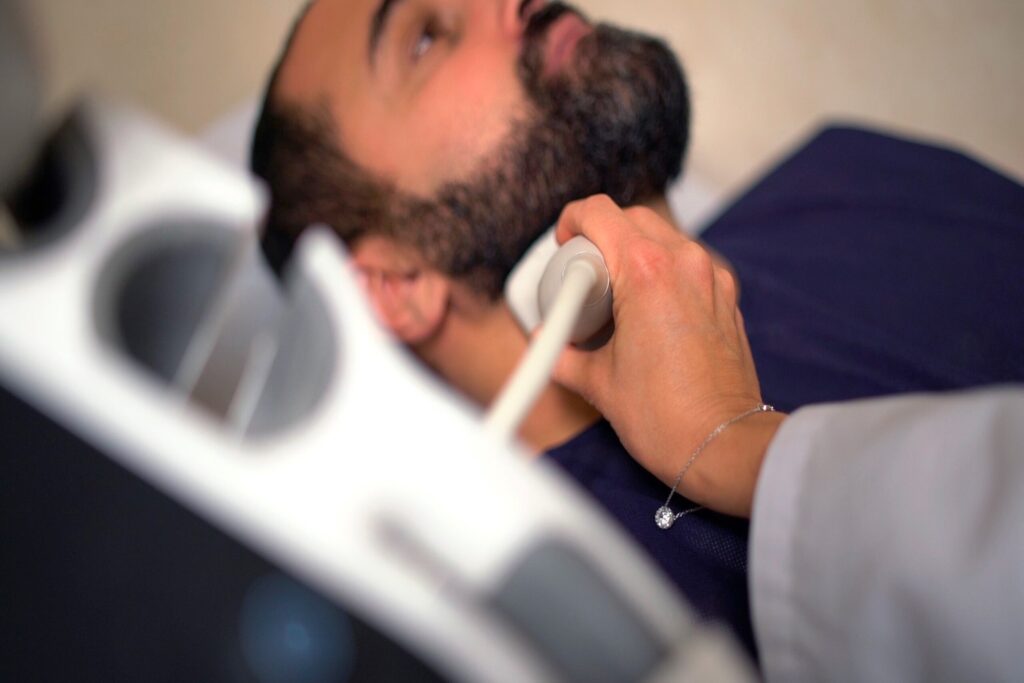
The procedure for this diagnostic test varies depending on the technique used and the location of the cancer:
-
Preparation:
You will be asked to follow a special diet and take a laxative to cleanse your colon before the colonoscopy. It’s important to tell your doctor about any allergies you have and about all the medications you’re taking, including over-the-counter drugs and supplements. You will be asked to fast for at least 6 hours before the procedure.
-
During the procedure:
You will be given sedation or general anesthesia to keep you calm during the procedure. An endoscope (a thin, flexible tube with a camera at the end) will be inserted through the mouth or anus and guided through the digestive tract. Images of the mucosa will be taken and biopsies will be performed if necessary. If a therapeutic procedure, such as EMR or ESD, is to be performed, special instruments will be used to remove or destroy the cancerous tissue.
-
After the procedure:
You will be monitored in the recovery room until you are fully awake. You may experience some mild side effects, such as a sore throat, abdominal bloating, or gas. These side effects usually disappear quickly. You will be given instructions on how to care for the treated area and what signs of complications to watch for.
Recommendations for the procedure
Remember that it is important to adhere to the following recommendations to ensure the quality of the test and your comfort:
- Follow the preparation instructions: follow all preparation recommendations provided by your doctor or hospital staff carefully.
- Report allergies and medications: it’s important to tell your doctor about any allergies you have and about all the medications you’re taking, including over-the-counter drugs and supplements.
- Arrange transportation: you will need someone to drive you home after the procedure, as you will not be able to drive or operate heavy machinery for at least 24 hours due to the sedation or anesthesia.
- Follow the postoperative instructions: follow all postoperative instructions provided by your doctor or hospital staff carefully.
Are there any risks?
Advanced gastrointestinal endoscopy for cancer is generally considered safe, but like any medical procedure, there are some minor risks to consider:
- Bleeding: there may be bleeding at the biopsy site or at the site of the therapeutic procedure.
- Perforation: in rare cases, the endoscope can perforate the wall of the digestive tract.
- Infection: there is a risk of infection at the biopsy site or at the site of the therapeutic procedure.
- Reactions to sedation or anesthesia: allergic reactions or complications related to sedation or anesthesia may occur.
To ensure your procedure runs smoothly, we ask that you arrive before the scheduled time. This will allow us to complete the necessary administrative and clinical preparation.
Before the procedure, we will give you the Informed Consent form, a document with important information that you must read and sign.
If your appointment is for an MRI, it is crucial that you inform us about the presence of pacemakers, metallic objects, prostheses (including dental prostheses), tattoos, or drug infusion devices such as insulin pumps.