Adaptive radiotherapy
What is adaptive radiotherapy?
Adaptive radiotherapy is an advanced cancer treatment technique that uses real-time imaging to adjust the radiation dose during each session. This approach allows the treatment to be adapted to the patient’s anatomical changes (such as variations in tumor size or organ movements) with the aim of maximizing the effectiveness of the treatment and minimizing side effects on the surrounding healthy tissues.
Thanks to innovative systems such as EthosTM, developed by Varian, adaptive radiotherapy has evolved towards a more personalized and dynamic approach. EthosTM combines artificial intelligence (AI) and advanced imaging technology to provide real-time, data-guided treatment, enabling clinicians to make quick and accurate decisions during each session.
What is the purpose of this procedure?
Adaptive radiotherapy is primarily used in:
- Treatment of solid tumors: such as those located in the prostate, lung, head and neck, bladder, among others.
- Precision in complex anatomical areas: it allows for the safer treatment of tumors near critical organs.
- Reduction of side effects: it minimizes the exposure of healthy tissues to radiation.
- Dynamic tracking: it adjusts the treatment according to the changes in the patient’s body during the course of therapy.
- Treatment personalization: thanks to technology such as EthosTM, the radiotherapy plan can be modified in real time to adapt to the specific needs of the patient.
Benefits of advanced technology in adaptive radiotherapy
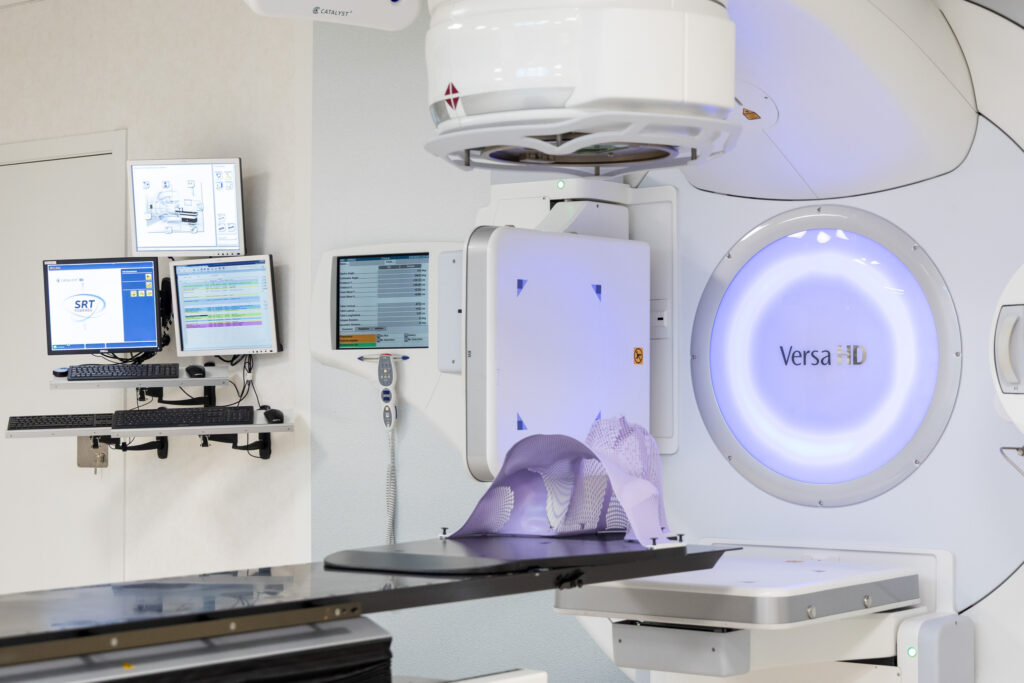
HM Hospitales leads the way in linear accelerator radiotherapy, an innovative technology that enables precise, personalized cancer treatments while minimizing side effects and improving patients’ quality of life. This pinpoint precision directly attacks cancer cells, protecting healthy tissues, while personalized treatments optimize the dose for each patient. The Radiation Oncology Service at HM CIOCC has high-precision linear accelerators for cranial and body radiosurgery, including the Varian Edge with ExacTrac Dynamic and the Elekta Versa HD with 6D robotic table and IGRT. HM Hospitales is a pioneer in incorporating Ethos technology, which uses artificial intelligence to adapt radiotherapy in real time, and features Varian Medical Systems technology, providing advanced and effective treatments, with fewer sessions and a faster return of the patient to their daily life.
With platforms such as EthosTM, the benefits include:
- Intelligent automation: artificial intelligence helps automate the treatment planning and adjustment process, reducing the time needed to make modifications.
- Integrated images: the high-quality images obtained before each session allow for the evaluation of daily anatomical changes and the adjustment of the treatment accordingly.
- Patient-centered approach: EthosTM is designed to provide a more comfortable and personalized experience, improving accuracy and reducing waiting times.
Informed clinical decisions: the data collected in real time allows doctors to make evidence-based decisions during each session.
What does the procedure involve?
The adaptive radiotherapy procedure involves:
-
Preparation:
During the initial consultation, your radiation oncologist will review your medical history and analyze the results of previous tests, such as biopsies, imaging studies, and molecular analyses. To design the initial radiotherapy plan, you will undergo studies such as computed tomography (CT) or magnetic resonance imaging (MRI). In some cases, internal or external markers will also be placed to locate the tumor more precisely.
-
During the procedure:
Before each session, updated images of the area to be treated will be taken to ensure the precision of the procedure. With this data, the medical team will be able to adjust the radiation distribution according to the anatomical changes that are detected. The radiation will be applied using advanced linear accelerators, ensuring precise treatment. Each session usually lasts between 15 and 30 minutes, depending on the complexity of the case.
With EthosTM, this process is optimized through the use of artificial intelligence, which automatically analyzes the images obtained and proposes adjustments to the treatment plan in a matter of minutes. This allows for quick and precise adaptation in each session.
-
After the procedure:
You will be monitored regularly to assess how you respond to the treatment and to detect any possible side effects. To do this, you will undergo regular tests, such as blood tests and imaging studies, which will help measure the radiotherapy’s effectiveness. Next, your radiation oncologist will review the results, who will adjust your treatment plan if necessary.
Recommendations for the procedure
During the session, it is essential that you remain still to ensure the accuracy of the treatment. You must also follow all instructions carefully before, during and after the procedure to guarantee your well-being and the efficacy of the treatment.
Are there any risks?
Adaptive radiotherapy is a safe procedure, but it can have side effects related to radiation exposure:
- Fatigue: You may experience a feeling of extreme tiredness during treatment.
- Skin irritation: redness or sensitivity of the skin in the treated area.
- Local discomfort: inflammation or discomfort in the organs near the treated area.
- Specific side effects: depending on the area treated, they may include difficulty swallowing, nausea, or changes in urinary function.
Thanks to technology such as EthosTM, the associated risks are minimized even further, as the treatment is constantly adapted to the patient’s anatomical changes, ensuring that the radiation is directed exclusively at the affected tissue.
To ensure your procedure runs smoothly, we ask that you arrive before the scheduled time. This will allow us to complete the necessary administrative and clinical preparation.
Before the procedure, we will give you the Informed Consent form, a document with important information that you must read and sign.
If your appointment is for an MRI, it is crucial that you inform us about the presence of pacemakers, metallic objects, prostheses (including dental prostheses), tattoos, or drug infusion devices such as insulin pumps.
These diagnostic tests are very safe, but as with any medical procedure, there is still the unlikely possibility of an incident.
Do you need to undergo this procedure?
Make an appointment