
When we talk about breast cancer, most people immediately think of women. However, breast cancer in men is a reality that, although very rare, should not be ignored.
In this article, we explain everything you need to know about male breast cancer, how to detect it, and what steps to take if you find a lump in your chest.
What is male breast cancer?
Male breast cancer is a disease in which malignant cells develop in the breast tissue. Although men do not develop functional breasts like women, they do have a small amount of breast tissue behind the nipple and surrounding area. It is in this area that lumps or changes may appear and should be examined.
It’s important to note that male breast cancer is sporadic, accounting for less than 1% of all diagnosed breast cancer cases. However, its incidence has increased recently, highlighting the importance of awareness and early detection.
Risk factors for male breast cancer
Although any man can develop breast cancer, certain factors increase the risk:
- Advanced age: Most cases are diagnosed in men over 60.
- Family history: Especially if there are cases of breast cancer in male first-degree relatives (father or sons).
- Genetic mutations: Mutations in genes like BRCA1 and BRCA2 increase the risk of several types of cancer, including breast cancer.
- High estrogen exposure: Whether due to hormone therapies or conditions like liver cirrhosis.
- Klinefelter syndrome: A genetic condition that affects hormone levels.
- Obesity: Excess fat tissue can increase estrogen levels.
- Radiation exposure: Particularly if the radiation was directed at the chest area.
Symptoms of male breast cancer
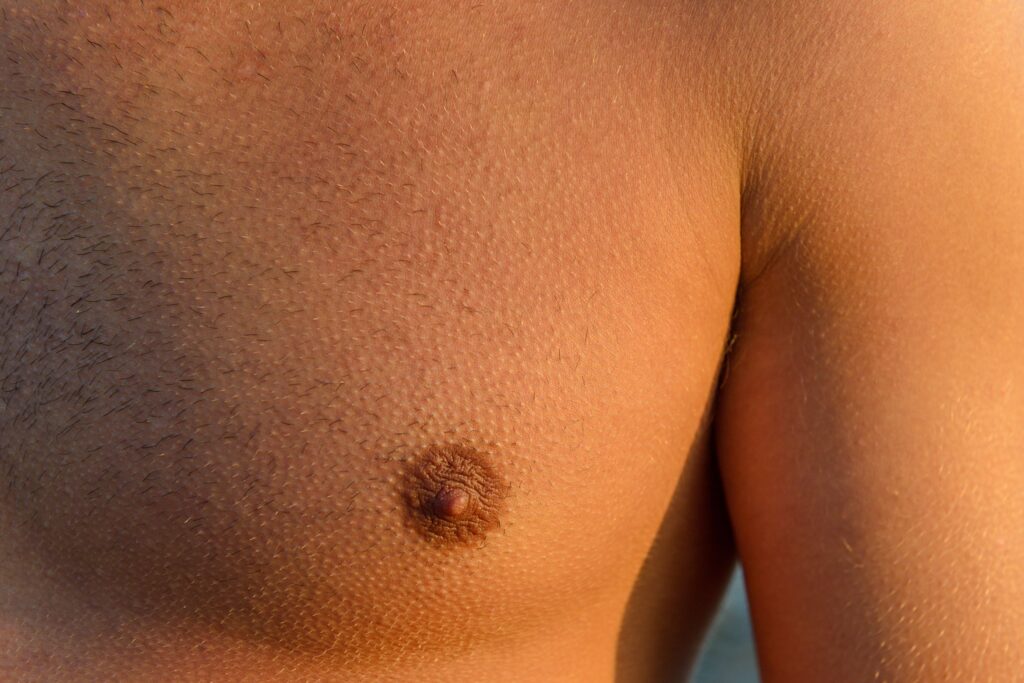
Knowing the symptoms of male breast cancer is crucial for early detection. Here are the most common signs to watch for:
- Lump in the chest: This is the most frequent symptom. It is usually a firm, painless lump that doesn’t move.
- Changes in the nipple include inversion, retraction, or unusual discharge.
- Changes in the skin of the chest: Redness, scaling, or dimpling.
- Pain or discomfort in the chest or nipple.
- Swelling in the chest.
- Lumps in the armpits.
It’s important to remember that not all chest lumps indicate cancer. For example, gynecomastia is a benign growth of breast tissue in men. However, any unusual changes should be evaluated by a medical professional.
What to do if you find a lump in your chest
Finding a lump in your chest can be unsettling, but knowing how to act to protect your health is essential. If you discover a lump or notice any unusual changes, follow these steps:
- Don’t panic: It’s understandable to feel worried, but remember that most lumps are not cancerous. However, it’s crucial to investigate any changes.
- Consult your doctor: Contact your primary care physician as soon as possible. Don’t wait to see if the lump goes away on its own.
- Prepare for the appointment: It’s helpful to note when you first noticed the lump and any other symptoms you’ve experienced.
- Be honest: Provide your doctor with a complete medical history, including a family history of cancer, so that they can assess your situation correctly.
- Follow recommendations: Your doctor may suggest additional tests, and following their instructions is essential.
Diagnostic tests for male breast cancer
If your doctor suspects the lump could be cancerous, they may recommend some of the following tests:
- Physical exam: Your doctor will carefully examine the lump and surrounding area.
- Mammogram: Although typically associated with women, mammograms can also help diagnose breast lumps in men. This test uses X-rays to create images of breast tissue, assisting doctors to identify potential abnormalities.
- Ultrasound: This test can help determine if the lump is solid or fluid-filled.
- Biopsy: If imaging results are suspicious, a biopsy may be performed to examine the lump’s cells under a microscope. This involves taking a small tissue sample from the lump to determine if it’s cancerous.
- Magnetic Resonance Imaging (MRI): In some cases, an MRI may be used to obtain more detailed images of the chest.
Treatment of male breast cancer
If breast cancer is diagnosed, treatment will depend on several factors, including the cancer’s stage and the patient’s overall health. In general, there are no significant differences between the treatment of breast cancer in women and men. Treatment options may include:
- Surgery: Typically, a mastectomy (removal of all breast tissue) is performed.
- Radiation therapy: This may be used after surgery to eliminate any remaining cancer cells.
- Chemotherapy: This may be recommended before or after surgery, depending on the patient’s needs.
- Hormone therapy: Since many male breast cancers are hormone-sensitive, hormone therapy can be effective in reducing the risk of recurrence.
- Targeted therapies: Medications targeting specific cancer cell characteristics, allowing for a more personalized approach.
Prevention and early detection of male breast cancer

Although male breast cancer cannot be prevented, there are steps you can take to reduce your risk and detect the disease early:
- Know your body: Familiarize yourself with your chest’s normal appearance and feel.
- Perform regular self-exams: Although there are no official guidelines for male self-exams, checking yourself periodically is a good idea.
- Maintain a healthy weight: Obesity can increase the risk of breast cancer and other types of cancer.
- Limit alcohol consumption: Excessive alcohol intake has been linked to a higher risk of cancer.
- Exercise regularly: Regular physical activity can help maintain a healthy weight and reduce cancer risk.
- Know your family history: If you have a family history of breast cancer, talk to your doctor about appropriate screening tests.
Debunking myths about male breast cancer
Several myths and misconceptions about male breast cancer are necessary to address:
- Myth: Only older men develop breast cancer.
Reality: Although it’s more common in older men, it can occur at any age. - Myth: Male breast cancer always has severe consequences.
Reality: If detected early, male breast cancer has a good prognosis, just like in women. - Myth: Men with larger breasts have a higher risk.
Reality: Breast size is not related to the risk of male breast cancer. - Myth: A lump in a man’s chest is always cancer.
Reality: Most chest lumps in men are not cancerous, but a professional should constantly evaluate them.
The importance of awareness and early action
Male breast cancer, although very rare, is a reality that should not be ignored. Awareness and early detection are crucial for improving outcomes. If you’re a man and notice any unusual changes in your chest, don’t ignore them out of embarrassment or the belief that “men don’t get breast cancer.” Your health comes first.
At HM Hospitals, we have a multidisciplinary team of oncology and breast surgery specialists with extensive experience in diagnosing and treating breast cancer in both women and men. Our comprehensive approach allows us to provide accurate diagnoses and personalized treatment plans for each patient.
A lump in the chest doesn’t always mean cancer, but it always deserves medical attention. Don’t hesitate to seek help if you notice something unusual. We’re here to take care of you and provide the support you need every step of the way.
Remember: This article is for informational purposes only and does not replace medical advice. If you have any concerns, consult a healthcare professional.